
Szunyog: EU considers mayors' resignations a faster and more effective way forward than a petition
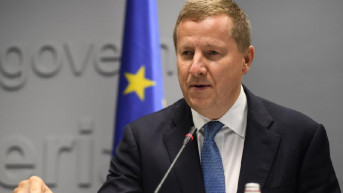
The way forward is through the dialogue led by the European Union, and initiating the collection of signatures needed for a petition to recall the mayors would be a significant signal and guarantee that the boycott of the April elections will not be repeated, however, at the same time, the EU continues to view the mayors' resignations as a faster and more efficient path forward, Tomas Szunyog, the head of the EU Office in Kosovo, says in an interview with Kosovo Online.
Szunyog believes that what happened on September 24th was a strong alarm bell and that all actions that could further escalate the situation on the ground must be avoided.
''The Kosovo Police was attacked by heavily armed individuals. The scale of the operation was unprecedented and constitutes a major escalation, which goes against the European Union’s repeated calls for de-escalation in the north of Kosovo. The repercussions of this terrorist attack are felt not only in the north of Kosovo but also across Kosovo and across the region. We can also see that the attack has certainly increased the concerns of the international community over the situation in the north of Kosovo. Swift de-escalation and stabilization of the security situation is now more urgent than ever. In the broader picture, the way forward has not changed, it has actually become more needed: we expect Pristina and Belgrade to work on normalising their relations through the EU-facilitated Dialogue. This is the platform where they can address various issues, which burden inter-communal relations in Kosovo. Any actions that might further escalate the situation on the ground must be avoided. At a time when Europe is threatened by Russia’s war on Ukraine, we should not allow for violence and instability in Kosovo. We simply cannot afford it,'' Szunyog said.
You said that the EU needs to see evidence about Banjska before deciding on possible measures against Serbia, which all 27 EU members decide on. Who should provide this evidence to EU members?
The position of the EU is very clear: all facts about the attack need to be established through a full, timely, and efficient investigation by Kosovo authorities. The EU, through EULEX, is closely monitoring the ongoing investigations. The scale of the operation was unprecedented, the size of ammunition and weapons confiscated was massive. This evidently suggests that it was not organised by only one person. We expect the unconditional cooperation from Serbia as well as the cooperation of any other party that can shed light on the details of the attack. We expect each and every perpetrator to be brought to justice.
The demands of the EU to reduce the presence of special police units near municipal offices, as well as for mayors to perform their work from alternative locations, are still not fulfilled. Why is that so, and will there be additional measures when it comes to Kosovo if those demands are not met?
Actually, Kosovo has taken steps towards reducing the police presence in and around the municipal buildings in the north of Kosovo. It has also adopted an Administrative Instruction, which defines a legal path for the recall of mayors. However, since your question is about the measures, I want to stress that the 27 EU Member States decide the measures. Let me remind you that the September 19 statement by the EU High Representative on behalf of all EU Member States highlights that the EU stands ready to lift these measures in case of progress in fulfilling the existing requests, or assess further measures towards both parties, if needed.
The Serbian List agreed to the elections, but now the question arises as to when they will be held, because the Government of Kosovo insists on administrative instructions. Should elections be called immediately in order to deescalate the situation and for the Serbs to return to institutions?
We have made repeated calls to all political actors, at all levels of governance, in both Kosovo and Serbia, to engage constructively in the process leading to early local elections in the north of Kosovo. As we have stated many times so far, although the April 2023 by-elections took place in line with the legal framework of Kosovo, they do not offer a long-term political solution. Swiftly holding early local elections in the north of Kosovo with the unconditional participation of Kosovo Serbs remains crucial. Starting the collection of signatures needed for the recall petitions on the mayors would constitute an important signal and a guarantee that a repetition of the boycott of the April elections will not happen again. At the same time, the EU continues to consider the resignation of the mayors a faster and more effective way forward.
Why hasn't the ban on Serbian goods been lifted yet, and how can the EU influence that ban to be lifted?
Free movement of goods, services, capital, and people helps economic growth and are the EU’s fundamental freedoms. I have been underlining the importance of free trade and of ending restrictions on goods from Serbia on several occasions, including during my recent meeting with the President of the Kosovo Chamber of Commerce. This ultimately affects businesses and Kosovo’s trade.
Could you please comment on the statements of Serbian doctors that there is a shortage of medicines in the north of Kosovo and that a humanitarian disaster threatens?
I am following closely public statements by officials managing hospitals and health centres in Kosovo Serb-majority community areas on reported shortages of medicines and medical supplies. The Minister of Health, Arben Vitia, recently assured me that there is full readiness from the side of the government to accommodate requests for medicines and medical supplies, so that there are no shortages at these facilities, which treat patients from all communities, not only Kosovo Serbs. I would like to encourage the involved institutions to cooperate and undertake the necessary procedural steps, which will ensure that hospitals and health centres are adequately supplied. It is important that all patients across Kosovo get the medical care they deserve. There should be no political considerations when we talk about the right to health.
In your opinion, has the trust between the Albanian and Serbian communities been further damaged, and how can it be repaired?
We are unfortunately witnessing a gradual decrease of trust between Kosovo Albanians and Kosovo Serbs and a deterioration of interethnic relations. This is exacerbated by negative narratives used both by certain officials, and by some media. Media should consider the consequences of their reporting and elected leaders should communicate more responsibly and inclusively, especially on matters sensitive to non-majority communities or national minorities. A narrative that contributes to creating a space where members of all communities feel safe, coupled with inclusive policies, is the first step towards restoring trust. In addition, we would like to see a more meaningful interaction between Kosovo Albanians and Kosovo Serbs with initiatives aimed at fostering peaceful coexistence. Likewise, it would be necessary to include members also from other communities composing Kosovo’s social fabric. This is not only needed, it is also possible. The EU-facilitated Dialogue can help address existing contentious points and prevent future escalations. The two parties should genuinely engage in the Dialogue, implement all existing agreements, and honour the important commitments made over the years.
You have recently visited the monastery in Banjska. How important is the role of the Serbian Orthodox Church for the Serbian people in Kosovo?
Indeed, I visited the Banjska Monastery last week together with the Deputy Managing Director for Europe of the European External Action Service who was visiting Kosovo, and the Head of EULEX. We had an important discussion with representatives of the Serbian Orthodox Church in Kosovo about the latest developments, with a focus on the role that religious leaders can play in fostering peaceful inter-communal relations. I understand that the Serbian Orthodox Church in Kosovo represents a point of reference and moral authority for the Kosovo Serb community, providing spiritual support to many believers. In the EU, we have always upheld the freedom of religion and the importance of being able to practice it.
How realistic is it for Belgrade and Pristina to continue the dialogue, because on the one hand we hear representatives of the EU saying that it is necessary to continue the dialogue as soon as possible, but also the statements of many Kosovo politicians that there is no dialogue before the introduction of sanctions on Serbia?
Addressing security concerns in the north is crucial. However, I want to make clear that a comprehensive approach, which includes a political solution, is of utmost importance to normalise relations between Kosovo and Serbia towards long-lasting stability and peace. Therefore, the way forward is the EU-facilitated Dialogue. This is not only my message; this is the message of the 27 EU Member States who stressed that the European path of both Kosovo and Serbia goes through the EU-facilitated Dialogue and through the normalisation of their relations.
Is there a danger that the EU will lose "interest" in Kosovo and the Balkans after the latest events and the war in Israel and Ukraine?
The EU is prioritizing enlargement, and the Western Balkans region has long been considered a priority in this context. The Western Balkan countries have all expressed their desire to join the EU. The EU's approach to enlargement follows a merit-based process, which means that aspiring countries need to meet certain criteria and resolve outstanding issues to progress towards EU membership. For Kosovo and Serbia, the normalisation of relations is a key aspect of this process. The EU’s robust interest in the Western Balkans is also seen through our concrete actions and engagement. Only last week, the Deputy Managing Director for Europe of the European External Action Service visited Kosovo to receive first-hand information about the current political and security situation. Being the EU Special Representative in Kosovo and Head of the EU Office, I also engage daily with interlocutors and partners to assist Kosovo in its EU path. Kosovo is also home to the largest civilian Mission under the Common Security and Defence Policy of the European Union, EULEX. The EU’s engagement in the Western Balkans is also visible through the work of EU Special Representative for the Belgrade-Pristina Dialogue and other Western Balkan regional issues, Miroslav Lajcak. All this engagement should be read together with the statements of the Commission President that the future of the Western Balkans is in the EU. Stay assured that the EU will continue to be engaged in Kosovo and in the Western Balkans.
0 comments