
Ulutas: The security situation in Kosovo is calm, but fragile, with the possibility of new tensions
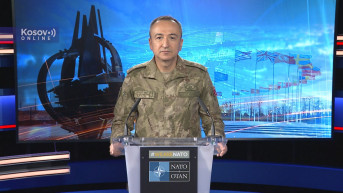
The security situation in Kosovo remains calm, but at the same time fragile, with the possibility of new tensions erupting, KFOR Commander Major General Ozkan Ulutas says in an interview with Kosovo Online, also emphasizing that KFOR is ready to respond to any developments that could affect security in Kosovo and regional stability.
Ulutas stresses that it is necessary to continue the Belgrade–Pristina dialogue with the mediation of the European Union, and that KFOR will continue to contribute by supporting this process.
“First of all, it is a privilege for me to lead NATO’s longest and currently biggest mission for the second time, and to continue making sure that through KFOR, NATO contributes to lasting security across Kosovo and to regional stability. KFOR is laser-focused on the execution of its mission, based on UN Security Council Resolution 1244 of 1999, towards a safe and secure environment, for all people living in Kosovo; at all times, impartially, and in close cooperation with the Kosovo Police (KP) and the EU Rule of Law Mission (EULEX), in their respective roles as security responders. Overall, the security situation across Kosovo continues to be calm, but it also remains fragile and open to potential risks of renewed spikes of tensions. This is due to several causes, including unresolved issues, unhelpful rhetoric at times, and recurring use of disinformation. Above all, though, are the challenges related to moving forward the process of normalization of relations between Belgrade and Pristina, under the EU-facilitated dialogue, which NATO continues to fully support. This is the framework to resolve outstanding issues and reach solutions that respect the rights of all communities, which is key to lasting security across Kosovo and to regional stability,” Ulutas stated for Kosovo Online.
In the previous period, there were many media reports and claims by representatives of the Kosovo authorities about incidents at the administrative boundary line (ABL). Were there really incidents, or is this incorrect information?
To date, KFOR has not observed any significant changes in the security posture or any major incidents in this area that would compromise regional stability. We remain vigilant and maintain a visible presence to ensure a safe and secure environment for all local communities. So KFOR continues to closely monitor the situation along the ABL, including through regular patrols on the Kosovo side of the ABL. Also, over the years, KFOR has developed a good level of cooperation with the Serbian Armed Forces. This is reflected in many ways. For instance, we conduct regular, synchronized patrols with the Serbian Armed Forces along the respective sides of the ABL; and I am in close contact with the Chief of Staff of the Serbian Armed Forces, General Mojsilovic. All of this helps to maintain our situational awareness, to consolidate mutual transparency and trust, and to reduce the likelihood of incidents or misunderstandings.
How do you view the situation in northern Kosovo, and do tensions still exist?
As I have said, the security situation across Kosovo, including in northern Kosovo, is calm, overall, but it also remains fragile, for the reasons I have mentioned. Therefore, we are closely following any relevant security developments, including in northern Kosovo, through a visible and flexible posture on the ground, especially with regular patrols, engagements with local communities, and constant training to maintain the highest level of operational readiness. All of this allows us to prevent or at least minimize risks of potential escalation, and to be ready to tackle any relevant developments that could affect security in Kosovo and regional stability, in accordance with our long-standing UN mandate. At the same time, we maintain regular and transparent communications with all of our main counterparts, including representatives of the security organizations in Kosovo, of the European Union Rule of Law Mission (EULEX), and of the Serbian Armed Forces.
How important is KFOR’s role in Kosovo?
KFOR's presence and role have been fundamental in ensuring a safe and secure environment for all people living in Kosovo. This is valid to this day. That’s why we are – as I have said – laser focused on the daily execution of our mission, through different efforts on the ground. Without a doubt, there is a direct inter-connection between security across Kosovo and regional stability. I think it’s fair to say that together with the international community, KFOR has been successful in creating a security framework that allowed all people in Kosovo to go by their lives and focus on the future, after so many years of violence. That is not a small result and should not be overlooked. Having said that, as I have said, we need to keep our eyes on the ball. That’s why KFOR remains well-equipped and postured to continue doing what it has been mandated to do. On the other hand, the solution to lasting security across Kosovo is not military. Ultimately, it is political. That is why, as I have said, there is a need to ensure that the EU-led dialogue for the normalization of relations between Belgrade and Pristina moves forward. We will continue to provide our own contributions in support of this important endeavour.
Does the purchase of military equipment by the Kosovo Security Forces (KSF) negatively affect the security situation? For example, the Chief of the General Staff of the Serbian Army, General Mojsilovic, expressed his protest against equipping Kosovo with Turkish combat drones.
KFOR engages with the KSF based on its original civil protection mandate. The primary interlocutor of the KSF is the NATO Liaison Team (NALT), which is a separate NATO-led entity from KFOR, although it is located within the same KFOR Headquarters, since 2016, the NALT has been supporting the development of the KSF through capacity-building, education, and training coordination. KFOR maintains regular contact with all regional security counterparts, including the Serbian Armed Forces, to ensure transparency and prevent misunderstandings. Our priority remains the maintenance of peace and the prevention of any escalation that could affect security across Kosovo and regional stability.
Can the KSF use drones, including “Bayraktars,” along the administrative line?
The management of Kosovo airspace falls under the authority of the KFOR Commander, as per United Nations Security Council Resolution 1244 of 1999. Throughout, KFOR Commanders have successfully exercised this important role, also as a result of a very good cooperation developed between KFOR and the Institutions in Kosovo, which has helped to ensure a deconfliction, when needed, between the use of the airspace over Kosovo by military and civilian aircrafts. The use of all categories of unmanned aerial vehicles (UAVs) is therefore subject to strict regulation and designated restricted areas. Any UAV operations in Kosovo require advance notification and explicit authorization from KFOR. With regards to the Kosovo Security Forces, in line with existing commitments between NATO and Pristina, the KSF may only undertake a mission in northern Kosovo with the prior concurrence of the KFOR Commander.
Will KFOR continue to guard the Visoki Decani Monastery and maintain a presence at the Main Bridge over the Ibar River in the coming period?
KFOR is watching closely any relevant security developments and assessing the security situation continuously. KFOR remains vigilant and maintains a visible and flexible presence across Kosovo in order to continue implementing its long-standing UN mandate, effectively, at all times and impartially. KFOR currently maintains a fixed presence on the main bridge over the Ibar/Iber River, in Mitrovica, and at the Visoki Decani Monastery.


0 comments