
Vasquez: The position of the Serbian Community in Kosovo remains delicate and deeply concerning
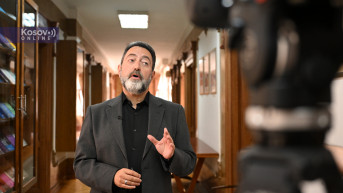
Carlos Vasquez, Director of the European Institute for the Study of Totalitarianism and the Holocaust, stated in an interview for Kosovo Online that the situation of the Serbian community in Kosovo remains “delicate and deeply concerning,” and that from a European perspective, every national community must enjoy full guarantees of rights, dignity, and security.
Written by: Djordje Barovic
“The situation of the Serbian community in Kosovo remains delicate and deeply troubling. Historical tensions have not been overcome, and mutual mistrust continues to fuel an atmosphere of exclusion — which is a very serious issue — and vulnerability. From a European standpoint, every national community must be able to live with full guarantees of rights, dignity, and security. That is essential,” Vasquez said.
The Spanish historian emphasized that it is “unacceptable that episodes of violence or discrimination still occur” against the Serbian community in Kosovo, and warned that efforts to obstruct the preservation of cultural, religious, and linguistic identity are dangerous.
“It is unacceptable that episodes of violence or discrimination still occur, or that efforts are made to hinder the preservation of cultural, religious, and linguistic identity. Kosovo will not be able to consolidate itself as a truly democratic state until its institutions effectively protect all minorities, including the Serbian, Roma, and other vulnerable communities,” Vasquez stressed.
When asked whether Spain might change its position on the recognition of Kosovo, and what might be a decisive factor for such a move, Vasquez responded: “That is impossible.”
“This question is simple. It’s a matter of our internal policy. In cases of recognizing a state, it is crucial to respect international law. In this case, it is not possible for Spain to recognize Kosovo as a state under the current circumstances,” he clarified.
Commenting on the EU’s role in the Belgrade–Pristina dialogue, and the fact that most countries have recognized Kosovo, Professor Vasquez said this stems from “different national interests.”
“Different interests are not the same across Europe. That’s why all European countries must truly understand the situation regarding Kosovo. At this moment, it is not easy, but progress will surely come if Kosovo recognizes the need for real political changes. After that moment, perhaps EU countries will also revise their positions on Kosovo,” Vasquez said.
Regarding the rise of the right across the EU, he described it as a phenomenon that is not easy to explain.
“Perhaps this is not merely a matter of internal European politics. Perhaps it also reflects foreign policy — but without Europe. It’s not simple,” he said.
He believes the rise of far-right movements reflects a broader “political and cultural crisis.”
“These parties often exploit fear, xenophobia, and nationalist pride to undermine democratic values. It is especially alarming when such rhetoric manages to penetrate mainstream politics, normalizing discourse that should be unthinkable in democratic societies. We cannot afford to treat this as a normal occurrence,” Vasquez emphasized.
Speaking about historical revisionism across the EU — particularly in the Western Balkans — Vasquez warned that this trend is dangerous.
“History follows a single path. Right now, there is a lot of tension, and many new policies are coming from different parts and countries of Europe. That’s why we must change them — especially when it comes to attempts to revise history. At this moment, a shift in perspective is absolutely necessary so people can understand the truth about key historical events. But the current situation is far from good,” Vasquez warned.



0 comments