
Vukcevic: Bilateral relations between Serbia and Albania improved, Kurti's regime strives to expel Serbs from Kosovo
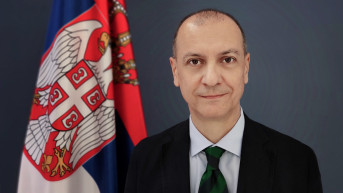
The Government of Serbia believes that the dialogue between Belgrade and Pristina, with EU mediation, and the implementation of existing agreements and commitments within this process, including the Community of Serb Municipalities, is the only way to resolve issues between Kosovo and Serbia, stated the Serbian Ambassador to Albania, Slobodan Vukcevic. However, he emphasized that on the other hand, Kosovo's Prime Minister Albin Kurti, instead of seeking agreements, is striving to make life completely difficult for Serbs in Kosovo.
In an interview with “Albanian Daily News,” Vukcevic pointed out that the administration in Pristina is trying in every way to intimidate Serbs and expel them from Kosovo.
“The ruling administration used various tricks to complicate the lives of Serbs. The price was paid by Serbian families (20 percent of them) who have left in recent years due to harsh living conditions, humiliations, and other hardships imposed by Kurti's regime. The shutting down of post offices, the ban on using the Serbian dinar as currency, the closure of various offices including one for social protection, etc., all were done forcefully, in the presence of heavily armed personnel. How far Kurti's regime's harassment has gone is shown by the latest developments in the electoral process. The illegal closure of 32 institutions funded by the Government of Serbia has led to several thousand people losing their jobs, while 40,000 people lost social benefits,” Vukcevic noted.
After an unsuccessful attempt to prevent the Serb List, the dominant party of Serbs, from participating in the electoral process, Kurti's regime has taken many additional steps to worsen the atmosphere of fear and insecurity, the Serbian diplomat pointed out.
He expressed hope that the new EU envoy for the dialogue between Belgrade and Pristina would be objective and would steer the dialogue towards fulfilling existing obligations.
What did you know about Albania before your engagement, and what are your impressions of the country?
Initially, allow me to thank you for the opportunity to express our views to your readers in your esteemed newspaper, which has been my daily source of information from the first day of my mandate in Tirana. My knowledge of Albania before coming as ambassador was limited to the political and economic perspective of your country based on our embassy reports and news from sources available online. The moment I entered Albania, the image and impression that had been formed before my arrival began to change. The hospitality of the people, along with the food and landscape, has positively changed my previous attitude. Prejudices that are still part of public opinion on both sides, one about the other, began to fade. The pace of development, especially in Albania's capital, is impressive. The construction of new roads across the country is commendable and necessary as one of the solutions to constant traffic jams.
Your comment on the duality of the Berlin Process and the Open Balkans—well-known initiatives involving both Albania and Serbia—with a focus on regional cooperation and European integration, which have had different outcomes?
The Open Balkans initiative, previously known as Mini Schengen, was an initiative launched by our leaders, President Vucic and Prime Ministers Rama and Zaev in Novi Sad in 2019, tailored to the needs of our region. It was the only initiative born within the region itself aimed at promoting the four European freedoms; the freedom of movement of people, goods, services, and capital. The idea was to better connect our countries as if we were members of a common EU market, to encourage trade, travel, cultural, and every other aspect of mutual cooperation. The idea was to simulate a unified European market to better prepare for future full membership in the European Union. Open Balkans and the Berlin Process are not competing initiatives, as some local politicians have claimed, but are compatible, going hand in hand with the same goal. How productive Open Balkan has been is evidenced by the number of documents signed from 2019 to 2022; especially three joint declarations, eight trilateral agreements, three bilateral agreements, eight memoranda, and three protocols.
One of the most prominent results of the Open Balkan initiative is the "Wine Vision of the Open Balkans," although there have only been three editions so far. Wine Vision in 2024 was a successful story with more than 640 exhibitors from numerous wineries, distilleries, and gastronomic companies from 38 countries, including Albania. Simultaneously, alongside the wine fair, the "Food Vision by Open Balkan" was organized in cooperation with the Junior Chef Club.
Kosovo is Undoubtedly an Issue Over Which Albania and Serbia 'Agree to Disagree.' With the Dialogue Process Seemingly Restarting and the EU Appointing a New Special Representative, What Would Serbia Consider a Positive Outcome of This Dialogue?
Yes, you are absolutely correct about the difference in our perspective regarding Kosovo and Metohija. My government believes that only dialogue between our negotiation team, representatives of the Pristina authorities, with the help of EU representatives, is the right way to solve this problem. Specifically, the fulfillment of the Brussels Agreement (2013), which stipulated Pristina's obligation to establish the Community of Serb Municipalities, something that has been avoided since then. This is a "conditio sine qua non" for breaking the deadlock brought about by Kurti's policy of unilateral decisions that led to a stalemate. The ruling administration used various tricks to complicate the lives of Serbs. The price was paid by Serbian families (20 percent of them) who have left in recent years due to harsh living conditions, humiliations, and other hardships imposed by Kurti's regime. The closure of post offices, the ban on using the Serbian dinar as currency, the shutting down of various offices including one for social protection, etc., all were done forcefully, in the presence of heavily armed personnel.
The extent of harassment by Kurti's regime is shown by the latest developments in the electoral process. The illegal closure of 32 institutions funded by the Government of Serbia has led to several thousand people losing their jobs, while 40,000 people lost social benefits. There were no isolated acts, but systematic undermining of the collective rights and identity of the Serbian population with the goal of sending a clear message that they are not welcome and have no right to exist in Kosovo and Metohija. After an unsuccessful attempt to prevent the Serb List, the dominant party of Serbs in Kosovo and Metohija, from participating in the electoral process, Kurti's regime has taken many additional steps to worsen the atmosphere of fear and insecurity. Imposing such repressive measures is not consistent with the pledge of constructive behavior in the dialogue process, nor with the basic values and principles of the EU. We expect the new EU special representative to respect legally binding documents and to be impartial in their work.
The next question concerns the Albanians in the "Presevo Valley." Local Albanian representatives accuse Serbia of passivizing the addresses of residents in the "valley," a concern to which the Ministry of Foreign Affairs in Tirana responded with a statement last November. What is your stance on this issue?
In the Pcinja District, which has its administrative center in the town of Vranje (so-called "Presevo valley"), there are two municipalities, Bujanovac and Presevo, where ethnic Albanians are the majority population. In total, according to the 2022 census, there are 61,687 citizens of Albanian descent living in the Republic of Serbia, of which 56,834 are in the Pcinja District. The majority live in the municipalities of Presevo (31,340) and Bujanovac (25,465). Unfortunately, the Albanian minority boycotted the 2011 census, so there are no comparable statistics between them (2011 and 2022). The passivization of addresses is an administrative procedure conducted by the Ministry of Internal Affairs initiated by an authorized person with a legal/legitimate public or private interest. I am aware that in the municipalities of Presevo and Bujanovac, there was a significant number of cases of address passivization involving ethnic Albanians. On one hand, I possess no official information, except for numerous newspaper reports and statements by local Albanian politicians who allegedly accused the state of misusing its prerogatives to the detriment of the Albanian minority. On the other hand, I am aware that a significant number of residents in the mentioned municipalities have emigrated to Western countries and were possibly out of reach of local police officers during searches for reasons unknown to me. Regarding the statement from the Ministry for Europe and Foreign Affairs about the Albanian minority in Serbia, I can inform you that it has been duly noted.
How would you define the current state of Albanian-Serbian relations at both the state and human level?
Bilateral relations between Serbia and Albania have significantly improved as a result of the change of government in Serbia in 2014. Relations with neighboring countries gained new momentum and a new perspective with then-Prime Minister Aleksandar Vucic, who excellently applied the promotion of Serbia as a leader in good relations with our neighboring countries, including the Republic of Albania. Differences from the past were left behind, and a new path was chosen for the benefit of the people of Serbia and Albania, as well as the entire Western Balkans region. Prime Minister Rama's bilateral visit to Belgrade marked a new beginning, after a 68-year hiatus, of pragmatic relations focused on our political and economic relations. Prime Minister Vucic stated at a press conference: "I know that in Serbia and Albania, it is easy to inflame ethnic tensions because it gains political points. But I was not elected to make easy decisions, but to care about the future of Serbia." As a result, we are witnessing an increase in trade between Serbia and Albania, which amounted to about 370 million euros in 2024. The number of Serbian tourists visiting your coastal places and cities has exponentially increased compared to a decade ago. We would like to host more Albanian tourists in our attractive tourist spots and mountains along with city breaks that are dominant in Belgrade and Novi Sad. The Exit Music Festival in Novi Sad has been a magnet for young people from all over Europe, and I know that there were also Albanian visitors who enjoyed the good music and atmosphere at the fortress above the Danube.
Which areas, in your opinion, still have untapped potentials for further development of bilateral relations?
Thank you for this question. One of the main tasks of an ambassador is to develop and enhance bilateral relations with the country of accreditation. Theoretically, there is always room for improvement, only the political will and the goal to do so are essential. My opinion is that there is the will and the way to do it. Specifically, I see room for cooperation in the field of agriculture, and our knowledge of using IT to reduce costs and increase the quantity and quality of crops. Cooperation in cyber security and security in general, especially the control of illegal immigration, is a constant need between Balkan countries. We can find many examples where criminal organizations cooperate excellently when they have a converging interest. This example should be a reason why our police and security services should cooperate more closely.
Let me remind you and your readers that we (the Football Associations of Serbia and Albania) jointly applied to host the UEFA 2027 championship, which will be a clear example of our excellent cooperation in sports. The choice of the host country for 2027 is scheduled for February 2025.
Finally, in May 2027, Serbia will host the Belgrade Fair titled "Sports and Music for All." What does this event mean for Serbia and could you tell us more about it?
Hosting the Specialized Expo 2027 in Belgrade was a tough fight among five applicants (Belgrade-Serbia, Minnesota-USA, Phuket-Thailand, Malaga-Spain, and San Carlos de Bariloche-Argentina) vying for this prestigious exhibition. Belgrade won after four rounds of voting. This will be the first Expo ever organized in the Western Balkans region (it's worth noting that the last specialized Expo organized in the Balkans was in Plovdiv in 1991, Bulgaria). Hosting the Expo, which will start on May 15 and last until August 15, will enable Serbia to draw deserved positive world attention to this region of the Western Balkans. Expo 2027 Belgrade will make both the host country and the wider region more visible on the world map, bringing numerous benefits to the countries and economies in the vicinity.
Expo 2027 Belgrade is an opportunity for the world to see the true potential of our region. It will show that Serbia, along with other countries in the WB region, not only keeps up with the latest global trends in infrastructure, tourism, science, technology, artificial intelligence, etc., but also has the capacity to be a leader in some of these domains. The Expo site, being built from scratch, is expected to be an innovative and modern exhibition complex that will host over 4 million visitors and likely more than 120 participating countries, including Albania, during the three months of 2027. In addition to engaging in the main activities of the Expo, international participants will organize cultural programs and events, which will be available daily to tens of thousands of people. We anticipate over 10,000 events during the 92-day program, covering a wide range of activities. In these globally challenging times, Serbia hopes that Expo 2027 in Belgrade will start a bright new chapter in history for the entire Western Balkans region marked by harmony, friendship, and celebration.

0 comments