
About an unnoticed book or how the crisis became a system
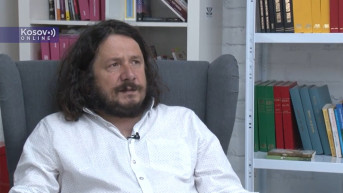
Writing for Kosovo Online: Muharem Bazdulj
Maybe even more than a showcase of new releases, the Belgrade Book Fair is an opportunity for the avid reader to return to titles that, for some reason, eluded them in one of the previous publishing "seasons". One of the most interesting books that I bought at the Fair in October and have read so far is a book fourteen years old, "Kosovo and Other Topics", by Jovan Miric, published by the Serbian Cultural Society "Prosvjeta" from Zagreb (2009).
It's actually strange to me that I hadn't noticed this book earlier. I follow what "Prosvjeta" is doing, and I have respected Miric ever since Dejan Jovic pointed out his pioneering role in recognizing the "systemic errors" of the 1974 Constitution with an analysis of probably the key Miric book, "System and Crisis". However, I didn't know that Professor Miric, already deep into retirement, addressed the Kosovo issue so confidently and systematically. At the time of the publication of this book, Jovan Miric was 74 years old. Unfortunately, in the meantime, Professor Miric has passed away. He lived from 1935 to 2015.
On an ideal bookshelf, Miric's "Kosovo and Other Topics" has the perfect neighbor – Branko Horvat's book "The Kosovo Question" from 1988, which we already discussed in this same column on "Kosovo Online" a few weeks ago. What connects these two books, separated by more than twenty years (in terms of time)? Firstly, of course, the topic of Kosovo, then Zagreb as the place of publication, the fact that their authors were respected professors at the University of Zagreb and holders of doctoral degrees in the humanities, that they were convinced Yugoslavs who were born and practically spent their entire lives in (S)R Croatia but were not ethnic Croats. The differences primarily concern timing: Horvat writes at a time when it seems that a more or less just solution to the Kosovo crisis is possible, while Miric writes post-festum. In that sense, the books are conducive to comparative reading.
Miric was born near Korenica, so there is some deeper logic to his interest in the Kosovo issue in the way this topic is "framed" in the West. Namely, during World War II, when the communists were still considering the details of the future construction of a federalized Yugoslavia, and taking the USSR as a model, they did not shy away from the idea of autonomy for the Serbs in Croatia. There were at least two good reasons for this: the historical identity of the "military frontier" and the ongoing genocide that the Independent State of Croatia was carrying out against the Serbs. The idea was ultimately rejected, so the practice of autonomy was only exercised within Serbia through Vojvodina and Kosovo.
As a top-notch legal expert and one of the better connoisseurs of the 1974 Constitution, Miric starts precisely from that point. Despite the whole story about the "constituent elements of the federation", the crucial difference in the status of republics and provinces was that the latter did not have the right to "self-determination up to secession". With the expert style easily understood by both experts and laypeople, Miric shows and proves the illegality and illegitimacy of Pristina's "declaration of (in)dependence". In a comparative European framework, he illustrates the absurdity of creating two states for one nation. With particular satisfaction, one might say, he comments on the absurd views of the Croatian political and media elite towards Serbia and Serbs. Although the book, as we said, is about fifteen years old, it mostly deals with the same people and the same names who today, in the Croatian public and media, create anti-Serbian hysteria. However, he also addresses the role of the international community in turning the crisis in Kosovo into a systematic one.
Although not a historian by profession, Miric, again similar to Horvat, showed an unusually intense interest in the subject, and the book contains interesting historical excursions. Regarding Korenica and Krajina, there are effective comparisons on the topic of how the uprisings of two minorities were received in the West: the Serbian one in Croatia and the Albanian one in Serbia (i.e., Kosovo). Although their rights were institutionally diminished (reduced from the status of a constituent nation to that of a minority), the Serbian uprising was declared as banditry, log-revolution, an orgy of violence, without any awareness of the historical trauma that made the atmosphere in Croatia ominous for the Serbs at that time. For the Albanian uprising in Serbia, all possible explanations and relativizations were found.
I could go on and on about other virtues of this book, but that would exceed the scope and discourse of a column. My intention is practically just to shed some light on this book, even belatedly, so that interested readers give it at least a fraction of the attention it undoubtedly deserves.


comments