
Bazdulj: The renewal of the Zagreb-Tirana-Podgorica alliance doesn't surprise me; the goal is to weaken Serbia
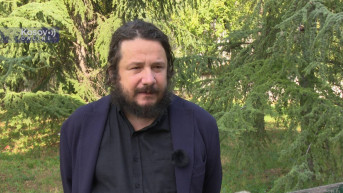
Writer and journalist Muharem Bazdulj, assessed for Kosovo Online, that the unified political tones directed against Serbia, emerging from Zagreb, Tirana, and even Podgorica after the events in Banjska, represented the renewal of old alliances. In his opinion, it is evident that two blocks are forming in the Western Balkans.
"I would say these are new-old alliances because this greatly resembles the situation in the early 1990s, maybe even in the late 1980s, with the exception of Podgorica, which was then close to Belgrade. These are alliances that, during the time of Yugoslavia, had a common goal: to separate from Yugoslavia and Belgrade. Now, their goal is to make Serbia's position as unfavorable as possible," Bazdulj says.
Bazdulj isn't particularly surprised by the alliance between Zagreb, Tirana, and Podgorica, as well as the nearly identical political messages coming from these centers.
"You can see a consensus here, as if it comes from the same brain, metaphorically speaking. Interestingly, a left-leaning Croatian historian, Damir Markovina, recently noticed that among all the peoples in the Balkans, Albanians and Croats are closest because they have no unresolved issues. They don't share borders, they're not in competition with each other in any way, not even concerning the Janjevci. The issue of the small Croatian minority in Kosovo is resolved because Tudjman resettled them in areas where the Serbs used to be the majority. So, it seems to me this is a renewal of old alliances in new circumstances," Bazdulj believes.
Bazdulj believes that Serbia is not entirely alone and without allies, and that due to the size of the Serb population, there are those who will support it. The current situation in the Balkans is leading to the creation of two blocs.
"Serbia has that potential because of the large Serb population in Montenegro and the existence of the Republika Srpska. It definitely has allies in the region. A relationship was also established with North Macedonia, which relaxed after the resolution of the issue of the Macedonian Orthodox Church. So, the creation of two blocs in the Western Balkans, in which Serbia, even if it were completely alone, is the largest and most populous," Bazdulj emphasizes.
He points out that there is nothing unusual or illogical about this bloc division and adds that these alliances cannot change much in the context of Serbia and its position.
"This can, of course, slightly change the balance on some regional scales. But it seems to me that these countries forming alliances, if there isn't external mentorship, such as German or British influence, are not particularly strong on their own. In the context of Serbian-European integration, for example, Croatia might have the right to veto or attempt some kind of pressure, but it seems that Croatia is too small to do something like that if, at some point, France or Germany were to set their priorities. I don't see how this could inflict significant damage on Serbia," Bazdulj concludes.



comments