
Albanian Demonstrations in Kosovo in 1981: The beginning of a lasting drama (1)
Tectonic shakes of Yugoslavia from student rooms 310 and 312
Writing for Kosovo Online: Dragan Bisenic
The student demonstrations in Pristina on March 11, 1981, after so many years, remain a mysterious event that has not been fully clarified either by the immediate participants or by those who later sought to understand the logic of the Kosovo and Yugoslav crises. In any case, these demonstrations changed the course of history in Yugoslavia. Yugoslav President Josip Broz Tito had died 10 months earlier. There were two strong trends in the country at the time. The first was a popular mood under the platform "After Tito - Tito," which suggested the belief that Yugoslavia would continue to be independent, unified, and prosperous just as it was in Tito's time. The second trend consisted of numerous controversial processes that complicated the previous goals, from the growing economic crisis to the different, even conflicting, ambitions of the Yugoslav republics in the process of Tito's legacy.
The US CIA, in its intelligence assessment 1579 dated September 25, 1979, a few months before Tito's death, extensively dealt with the process of political and social post-Tito succession in Yugoslavia. It anticipated the "traps" existing in Yugoslavia's functioning, with nationalism and regionalism being among the most important. It was assumed that nationalism would not explode because Tito was leaving the scene, but that Tito's successors would continue a "pragmatic policy" in resolving differences and conflicts, which, if correctly and reasonably applied, could contribute significantly to keeping the country united in its existing diversity.
Two things related to Kosovo were immediately highlighted here. The first was the "old enmity" between Serbs and their main rivals - Croats, Muslims, and Albanians - which had a worrying "explosive potential." In the context of the second issue, the gap in development between the north and south, which was "especially charged with explosives in Kosovo, where Albanian impatience due to unfulfilled promises was very strong," was noted.
The CIA emphasized that the "greatest problem is that these issues are interconnected and cannot be viewed in isolation." "Thus, for example, an eruption in Kosovo, although it may have economic motives and reasons, 'contains within it the danger of inciting Serbian nationalists to rebel against Albanians.' The aggressiveness of the Serbs in the federation will inevitably ignite similar reactions among Croats."
It is interesting how the model of the Kosovo crisis is presented here. Nationalism is attributed to the Serbian side, with Serbian nationalism being shaped as the root of the problem, and it is not assumed that Albanian nationalism in Kosovo could be a motive for Kosovo's turbulence. For the "eruption" in Kosovo, it is said that it "may have economic motives and reasons," but it is expected that on the other side, "Serbian nationalists" will react with rebellion against Albanians. Thus, the problem is framed unilaterally. An "eruption" in Kosovo could indeed provoke a response from the Serbian side, but that response came several years later and only when Albanian nationalism in Kosovo had already become public policy. A simple reconstruction of events related to the demonstrations in March and April 1981 shows how erroneous and misguided this assumption was, but it provided a distorted perspective through which the US side viewed and interpreted events in Kosovo from then until today, that the "aggressive actions" of Belgrade were the trigger for Kosovo's events.
It was assumed that the situation in Yugoslavia faced by the "regime in Belgrade" would be similar to a "pressure cooker," so it is predicted that the ruling military and police circles would suppress the crisis like Tito's "mass action" in Croatia in 1971, and moreover, the regime has "pathological fears of the ability of emigrants to infiltrate from abroad into any national movement to the detriment of party control from Belgrade. All these factors lead Belgrade to be inclined towards repressive, exaggerated reactions." Stane Dolanc was singled out as a leader who is said to be trying to prevent problems, but it is noted that he is in the "minority."
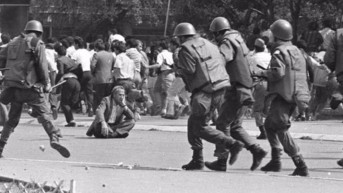
In Pristina on March 11th, the Belgrade "Partizan" football club was visiting. There were about 20,000 spectators at the City Stadium. The home team lost 1-0, but no one was overly dissatisfied because it was a friendly match, and the only goal was scored by Xhevat Prekazi, the most famous Albanian footballer from Kosovo at the time. The spectators left the stadium, and the usual walk began on the avenue between the Bozur and Grand hotels. Around 7:00 p.m., students were waiting in line in front of the Student Cafeteria, where there was a crowd because only one of the six self-service lines was open. Then there was loud dissatisfaction in the line. At one point, a student overturned a tray, and then table-turning started in the cafeteria with shouts of "Conditions!", "Conditions!". Later interpretations suggested that everything happened because a cockroach was found in the soup, but the events were far from such absurdities.
The gathered students headed towards the city center, calling on others to join them. There were many young people on the avenue, but the majority did not join the demonstrators. When party activists and several professors from the University arrived, including the Vice President of the Executive Council of Kosovo, Pajazit Nushi, the students agreed to return to the cafeteria and discuss everything there. While discussions were ongoing, a new group of 200 students gathered outside, continuing to chant slogans.
According to the testimony of direct participants, this protest - which began in the Student Cafeteria - was planned on the night of March 10, 1981, in rooms 310 and 312 of the Student Dormitory. The demonstrations on March 11th and 26th, and April 1st and 2nd, 1981, were among the strongest actions of the Albanians "ever organized by the Albanians against the former Serbian-Yugoslav occupiers," as it is evaluated today in Kosovo media.
The demonstrations initially started in the student cafeteria on the evening of March 11th around 7 p.m., after student organizers in room number 310, Murat Musliu (from Srbica, later a member of the KLA, sentenced to 13 years in prison), Gani Koci (active member of the KLA since 1996, during the war commander in the Drenica zone, and later a member of the Kosovo Assembly (2001-2011). He served as Deputy Minister for Economic Development), along with students from room number 312 (Kadri Krieziu - obtained a doctorate and became a judge of the Constitutional Court of Kosovo with a significant political and professional biography), Ramadan Gashi (former mayor of Srbica and member of the Kosovo Assembly), Bedri Deliu, Jonuz Jonuzi, Ramadan Gashi, and Bedri Deliu, decided on March 10th to organize demonstrations the next day.
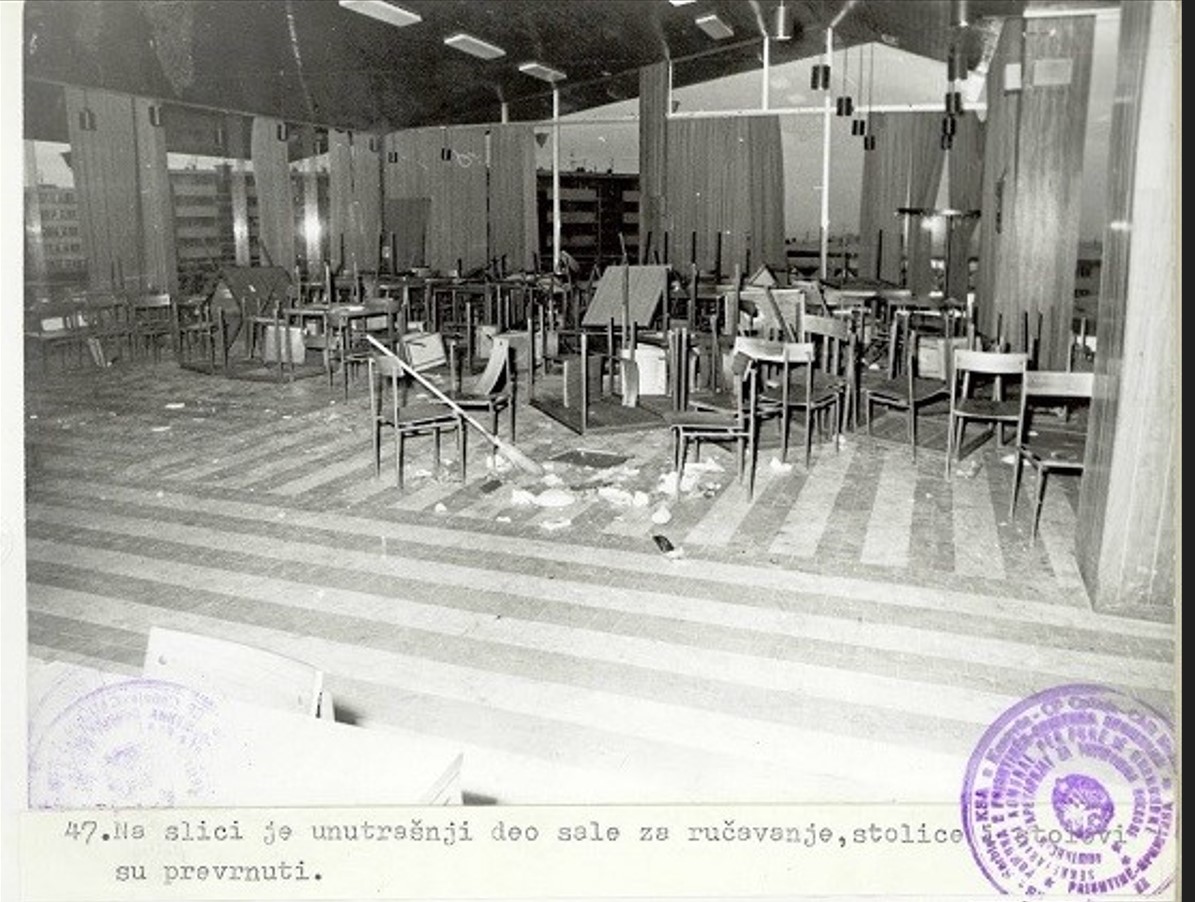
They agreed to inform those students they trusted to initiate the demonstrations, using poor conditions in the student cafeteria as the excuse, which was considered a justified reason for reasonable dissatisfaction.
The next demonstrations were held on March 25th and 26th, when the Relay of Youth was supposed to arrive in Pristina, which was carried out every year and dedicated to the birthday of the recently deceased Yugoslav President Tito. On the day the Relay of Youth arrived in Pristina on March 26, 1981, students took to the streets and squares, but this time there were also high school students among them. The demands were now clearly political, which was enough for the police to react harshly. At that time, members of Albanian illegal groups, such as Mehmet Hajrizi and Hadayet Hyseni's group (Marxist-Leninist Organization of Kosovo - OMLK), were already leading the protests. Immediately after that, demonstrations were announced for April 1st and 2nd, which were supposed to take place across Kosovo, partially happening as planned. Demonstrations were held then - apart from Pristina - in Podujevo, Vucitrn, Viti, Lipljan, Urosevac, Mitrovica, Djakovica, Gnjilane, Prizren, and other cities. It was also the time when the first casualties occurred, with 7 participants and two police officers killed. Hidayet Hyseni spoke at the April 1st rally, holding a megaphone, demanding self-determination for Kosovo Albanians.
Hyseni was arrested in 1981, and after his release, he became the vice president of Rugova's Democratic League of Kosovo. He was considered an informal leader of the radical so-called "prisoner's wing" within the movement. He was the chief and responsible editor of "Rilindja" during the nineties, and after the war in 1999, he was a member of the Kosovo Assembly, on the list of Thaci's Democratic Party of Kosovo. After parting ways with Thaci, he became a member of "Self-Determination". Today, he is an active member of the Association of Former Political Prisoners, whose strong activity was recently supported by the Kosovo Prime Minister, Albin Kurti.
During the demonstrations, participants carried banners with social and political messages. The main slogans were: "We demand better conditions", "Trepca works, Belgrade 'builds'", "Republic, Constitution, there for hatred, there for war", "We are Albanians, not Yugoslavs", "Kosovo for Kosovars", "We love our fellow citizens", "Long live Adem Demaci", "Long live the brotherhood of the Albanians", "Alliance of Albanian countries", "Unity", "Trepca works for others", "Kosovo is ours", "Long live Greater Albania", "Unification of Albanian territories", "We want political prisoners to return to Kosovo", "Today with fists - tomorrow we will resist with guns", as well as those of Albanian Enverist ideology: "Long live Marxism-Leninism", "Down with revisionism", "No dialogue with the red bourgeoisie", "Long live the working class", and "Long live Enver Hoxha".
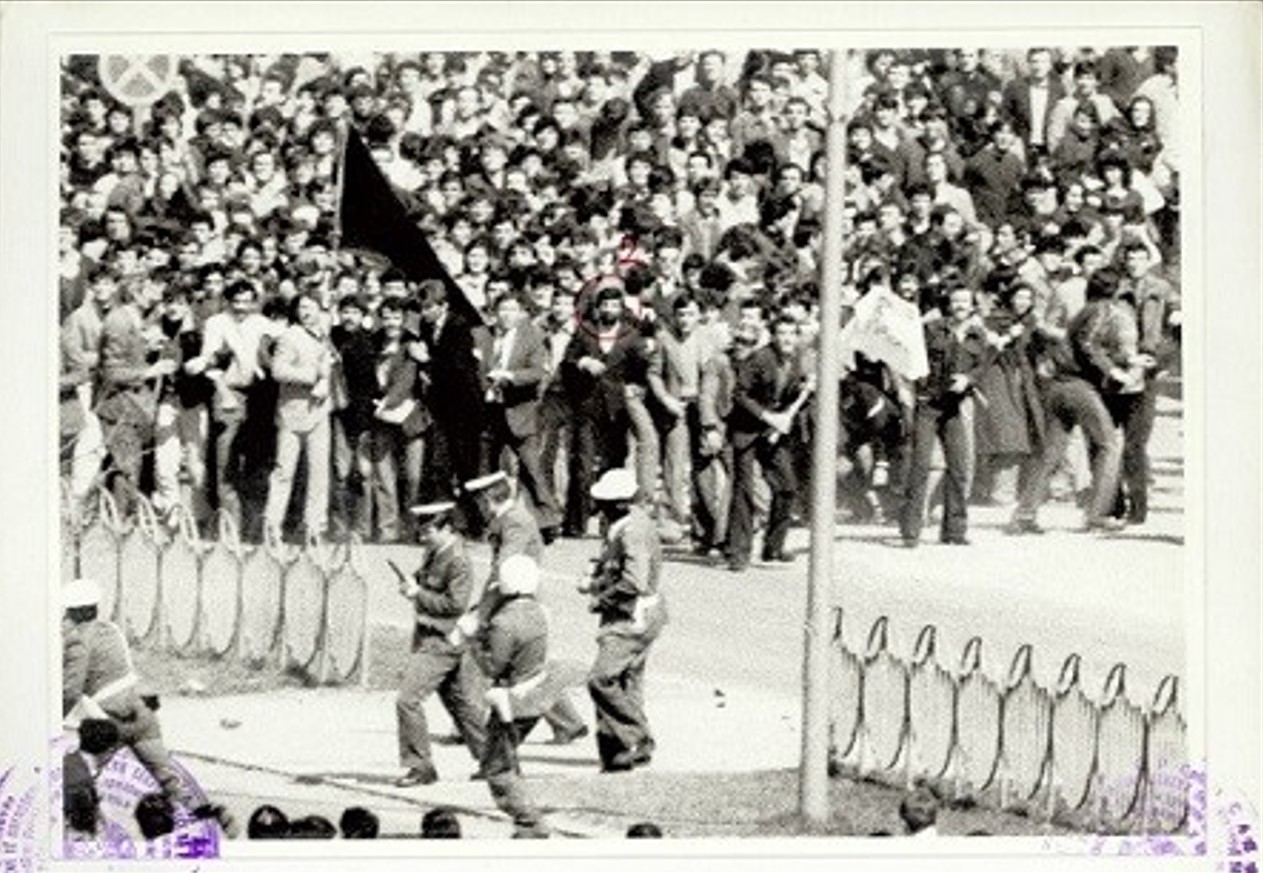
These demonstrations were met with no small surprise in the country's leadership. The post-Tito consolidation had just begun, and no one expected anyone to challenge it. The domestic media did not report on the demonstrations on March 11 at all. The initial qualifications of the Provincial Committee of the League of Communists of Kosovo for the March 11 demonstrations were that they had a character of social dissatisfaction.
During a joint session of the Presidency of the Socialist Autonomous Province of Kosovo and the Presidency of the Provincial Committee of the League of Communists of Kosovo on March 13, the events were noticeably given less importance than they had. They were discussed only under item 4 of the agenda. Mahmut Bakali assessed that the events had a social character and were not characterized as hostile. Azem Vllasi, who participated in the discussion with the demonstrators, claimed that there was a militant core among the demonstrators that deliberately imposed slogans on others. Mahmut Bakali and Cerim Gashi, the executive secretary of the Presidency of the Provincial Committee of the League of Communists of Kosovo, responded very harshly to him. Mustafa Sefedini demanded that the hostile character of the demonstrations not be mentioned. Serbian cadres Bogoljub Nedeljkovic and Sveta Jaksic also supported Bakali. Bakali made the decisive decision: "It would be best to compose such information for the public that it does not gain any weight, significance, and that in terms of placement in newspapers and on TV, it is at the end of the political chronicle, and not at some central place, as the most significant, most attractive news from the country because it practically does not have such a dimension, it has not left us consequences that significantly shake the unity of the country."
To be continued tomorrow: Firming the distance from the Slavic peoples

0 comments