
FEUILLETON: Dissolution of Yugoslavia, NATO aggression, and the seizure of Kosovo (2): The spark that ignited the Balkans
Writing for Kosovo Online: Miroslav Stojanovic
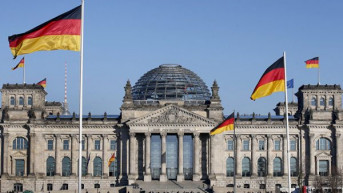
Radical German turn - from assurances that it would not use its growing power, to a rough demonstration of force - was received (even) in Washington itself with surprise. And undisguised concern. The State Department openly and directly expressed dissatisfaction with Bonn "flexing its muscles" in the Yugoslav case.
"The New York Times" wrote those days about "the end of the era of Germany as an economic giant, and a political dwarf," while the US Ambassador to the United Nations, Pickering, openly warned of the "birth of a great Germany."
At the time, Washington was still against recognizing the independence of Slovenia and Croatia, so from across the Atlantic, Bonn's stance was understood as a direct and provocative challenge - Germany's determination to confront even the United States!
Because of Bonn's position, there was an exchange of letters and sharp words between the Chairman of the Conference on Yugoslavia, Peter Carrington, and the German Foreign Minister, Hans-Dietrich Genscher.
Carrington warned the German Minister that premature recognition of Slovenia and Croatia would mean the end and collapse of the conference. And a spark that would "ignite the Balkans."
Sometime later, the old lord, with resentment and bitterness, stated that the recognition of Slovenia had been a MISTAKE, Croatia a FATAL MISTAKE, and Bosnia and Herzegovina a CATASTROPHIC MISTAKE. In that gradation, the tragic consequences of the bloody Yugoslav unraveling were also expressed.
The latest President of the Czech Republic, Milos Zeman, recently stated that "the collective recognition of Kosovo was and remains shameful. A dangerous precedent has been set, great powers impose their will and ruthlessly change existing borders..."
Why did the German leadership, after caution in the first half of 1991, start vigorously and unstoppably "setting the pace" in the dismantling of Yugoslavia in the "second half"?
Michael Martens, a journalist from the most influential German political daily "Frankfurter Allgemeine Zeitung" (and the author of the first biography in German about Ivo Andric), had the opportunity in 2022 - two years before the Wilson Center published intriguing documents from Chancellor Kohl's office - to "leaf through" two and a half thousand pages of secret documents from the German Ministry of Foreign Affairs on the breakup of Yugoslavia.
In an extensive article published in his newspaper (February 28, 2022), Martens attempted to answer rhetorical, dramatically intoned questions: whether Germany is to blame for the outbreak of the worst wars in Europe since 1945 (Ukraine is yet to come), and whether German policy bears responsibility for the collapse of a state, for years of bloodshed, with numerous massacres, for more than 120,000 dead and hundreds of thousands displaced and refugees...

If those who accuse were right, Martens notes, it would mean that the Federal Republic of Germany is an aggressive, rogue state that recklessly starts wars. And that it was precisely with the premature recognition of the independence of Slovenia and Croatia in 1991 that it "triggered the bloody breakup of Yugoslavia.“ He illustrated such claims (which, as we will see, he will relativize and refute at the end of the author's text) with several examples.
Firstly, Noam Chomsky, the famous American linguist and public intellectual. Chomsky noted that Bonn's policy had been a "recipe for civil war" in Yugoslavia. And that Kohl and Genscher, as a kind of continuation of Hitler's expansionist policy, had revived the alliance Germany had had from 1941 to 1945, with a "criminal and murderous Ustasha state." By overthrowing the multi-ethnic, socialist state, Germany regained dominance in southern Europe.
Paris's "Le Monde": German-Croatian Nazi bells are ringing again. Misha Glenny, a British journalist: Germany recognized Croatia and Slovenia by a political act of "questionable moral value," disregarding "democratic standards."
And two statesmen, French President Francois Mitterrand and British Prime Minister John Major, Martens says, later in their memoirs "nourished various versions of that legend."
By labeling this "legend" as an "absurd claim," Martens sets the stage for his eventual (relatively problematic) conclusion - there are no indications (in the secret documents of the German Ministry of Foreign Affairs) to confirm that Bonn intentionally led to the breakup of Yugoslavia.
He often says there's a prevalent view that Yugoslavia must be preserved at all costs. He mentions that the German and Italian foreign ministers, Hans-Dietrich Genscher and Gianni De Michelis, conveyed a joint stance to their Yugoslav colleague Budimir Loncar on June 25, 1991, the day when two secessionist republics declared independence: Germany and Italy recognize only Yugoslavia and its territorial integrity.
Then, as Martens explains, circumstances took their course. In the autumn of 1991, the prevailing view in Bonn was that recognition of Slovenia and Croatia was "the lesser evil." After months of "hesitation," it was believed "that Yugoslavia has no future, just like the Soviet Union, which was in the process of collapsing..."
The documents released by the Wilson Center, which were the immediate reason for the creation of this text, explain Kohl's and Genscher's "hesitation" and caution before deciding to recognize Slovenia and Croatia in a different light. And, ultimately: they had a decisive influence on the dissolution of Yugoslavia...
To be continued tomorrow: Germany's setting with the Vatican in a leading role

0 comments