
The Bahrain Resolution further exposed deep polarization among the permanent members of the UN Security Council
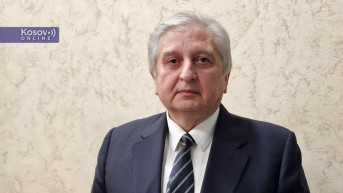
Written by: Zeljko Sajn, special correspondent of Kosovo Online from New York
The Bahrain resolution in the United Nations Security Council clearly demonstrated that its fate was ultimately decided by the veto, further laying bare the deep polarization among the Council’s permanent members.
Although the majority of states supported the proposal, opposition from Russia and China blocked its adoption, with the explanation that the text was not sufficiently balanced and failed to address all the causes of regional tensions.
Such an outcome also had broader implications—the resolution, in a certain way, indirectly contributed to the achievement of a two-week ceasefire, but without formally legitimizing the use of military force to protect key maritime routes, particularly those of vital importance for the transport of energy resources through the Strait of Hormuz.
In this highly polarized atmosphere, discussions are also expected on the issue of Kosovo and Metohija, as well as on the outcomes of the Brussels Agreement and compliance with UN Security Council Resolution 1244.
The positions of major powers on this issue remain deeply divided: while United Kingdom, United States, and France treat Kosovo as an independent state, Russia and China insist on respect for the territorial integrity of Serbia.
The Security Council session scheduled for April 9 is therefore seen as another important moment in which the conflicting positions of the great powers will come to the fore, but also as an opportunity to emphasize the importance of preserving Serbia’s territorial integrity.
The failure to adopt the Bahrain resolution has further highlighted the complexity of international relations. Although 11 states voted in favor of the text, the veto prevented its adoption, meaning that the Security Council missed an opportunity to provide a unified response to security challenges in the region.
At the same time, this situation once again confirms that key decisions in international politics often depend on the balance of power among major powers, rather than solely on the majority will of member states.



0 comments