
Belgrade - Pristina normalisation talks: the west must bridge the divide
Written for Kosovo Online by Helena Ivanov, associate research fellow at the Henry Jackson Research Center
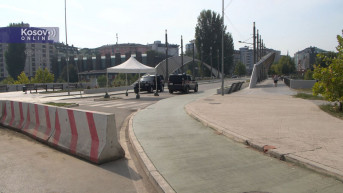
Another month, another challenge in Kosovo – this time, it is the reopening of the Ibar River bridge. The bridge, which divides the town of Mitrovica, separates the predominantly Serb north from the mostly ethnic Albanian south. Despite numerous discussions within the ongoing normalisation talks between Belgrade and Pristina, progress has been minimal. As it stands, a temporary solution has been reached: the bridge is open to pedestrians but remains closed to all other traffic.
Earlier this year, the Kosovo government, under the leadership of Prime Minister Albin Kurti, decided to fully reopen the Ibar River bridge, sparking outrage and protests among Kosovo's Serb population. Many in Serbia, including the Serbian government and Serbs in northern Kosovo, have condemned the move as a unilateral action by Kosovo, arguing that it could escalate existing tensions in the region. The international community shares these concerns, with the Quint countries (the US, UK, France, Germany, and Italy), along with the EU and KFOR (NATO's peacekeeping force in Kosovo), expressing clear opposition to the decision. They have insisted that any decisions regarding the bridge’s reopening should be addressed within the framework of normalisation talks between Belgrade and Pristina, mediated by the EU.
In response to strong reactions from international partners, PM Kurti softened his stance, assuring that he would not make any unexpected moves regarding the reopening of the bridge. However, he also emphasised that he would not allow the issue to be postponed indefinitely. The future of the bridge remains uncertain, and whether it will eventually be reopened is still unclear. While the international community may have succeeded in pressuring PM Kurti to delay the reopening, a closer analysis of the past few years reveals a more significant issue – the gradual erosion of the international community’s influence in the region.
For instance, in recent years, PM Kurti has repeatedly taken unilateral actions, often bypassing international concerns. These actions have included banning the use of the Serbian dinar, which caused significant disruption for Serbs in northern Kosovo who receive their salaries and pensions in dinars or shutting down Serbian post offices. In many of these instances, the international community opposed such unilateral moves and occasionally managed to delay their implementation, but ultimately failed to prevent them.
While the international community has imposed some measures against Kosovo in response to these actions, these measures have proven insufficient to dissuade the Kosovo government from continuing to make and enforce unilateral decisions.
The ability to make unilateral moves without facing significant consequences is a dangerous game in the Balkans. It risks encouraging all sides to act similarly, which could ultimately lead to chaos – a chaos in which ordinary people often suffer the most. If the international community is serious about preserving stability in this fragile region, it is crucial that all decisions and policies are made within the framework of normalisation talks.
But, this ability to act unilaterally without facing significant repercussions has also taken a toll on the normalisation talks, which are at best stalled and at worst on the brink of failure. More than a decade has passed since the Brussels Agreement was signed, yet many of its provisions remain unimplemented, including the creation of the Association of Serb Municipalities. Meanwhile, the political representatives of Serbs in Kosovo continue to boycott political processes, further complicating efforts towards normalisation.
Similarly, the two agreements verbally accepted in Brussels and Ohrid in 2023 initially sparked hope but have resulted in little tangible change on the ground. In fact, most rounds of talks have been followed by new rounds of escalation in Kosovo culminating in Banjska incident last year where an exchange of fire resulted in the deaths of one Kosovo police officer and three Serb gunmen. All of this highlights the fragile and deteriorating state of the normalisation process.
Certainly, both Belgrade and Pristina bear responsibility for their respective failures to engage in constructive dialogue and implement their sides of the agreements. However, the international community's role in the current stalemate cannot be overlooked. Inch by inch, step by step, international partners have allowed crucial issues to go unaddressed, leading us to the situation we face today. While it may not be the disaster, and the region is not on the brink of war as some claim, it is far from a satisfactory state of affairs.
Make no mistake, this was a challenging task from the outset – after all, we are dealing with two sides whose political goals are fundamentally at odds. Few could envy the position of those tasked with mediating the normalisation talks. Yet, this difficulty cannot excuse inaction. The international community responsible for the Balkans must confront the harsh reality that these talks are failing, and it is the people of Kosovo, of all ethnicities, who are paying the price.
Looking ahead, it is crucial that all parties fulfil their commitments, and that the international community finds effective ways to ensure they do so. The stakes are too high for anything less.



0 comments