
Between dialogue and attrition
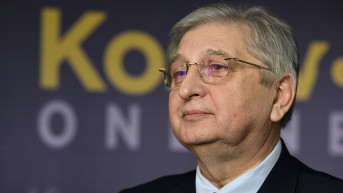
Written for Kosovo Online by Zeljko Sajn
Europe stands before a choice that can no longer be concealed behind procedures and diplomatic phrases. The European Union still lacks a unified answer to the question of relations with Russia, and differences among member states have become a lasting political reality.
Sanctions, security, and economic interests are interpreted in divergent ways, while the European space simultaneously faces pressure from the United States, whose policies in certain periods rely on a quasi-normative framework and the selective application of international rules.
Such an approach does not strengthen the rules-based order; rather, it gradually drains it of substance. The result is a policy of prolonged confrontation that brings Europe neither stability nor strategic advantage, but instead depletes economic capacities and deepens internal divisions.
It is therefore in this light that the messages of European leaders—Emmanuel Macron and Giorgia Meloni on the one hand, and Viktor Orbán and Slovak Prime Minister Robert Fico on the other—that dialogue with Moscow is necessary should be viewed. These messages do not signal weakness, but rather an attempt to return to a politics of interests and realism, despite deep political differences.
In that context, the messages of Vladimir Putin should also be seen. He has emphasized Russia’s readiness for dialogue with Europe on economic and security issues, while insisting that lasting stability can be achieved only by addressing the root causes of the current situation, not by concealing them. References to the United Nations Charter and criticism of the selective application of international law further underscore the fragility of the current international framework.
Europe is thus being offered cooperation not as a matter of trust, but of choice: either the EU will begin to act in line with its own interests, or it will continue to exhaust itself in the political calculations of others.
0 comments