
Vladimir Putin’s annual press conference as a political barometer of a new phase
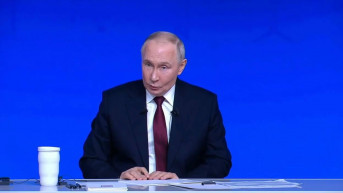
The issue of NIS goes beyond the framework of energy policy and becomes an indicator of Serbia’s broader geopolitical position amid war, sanctions, and announced peace talks.
Written by: Zeljko Sajn, Special Correspondent from Moscow
In the closing moments of another of Vladimir Putin’s “Direct Line” events—an occasion that has long transcended the format of a traditional press conference to become a kind of political barometer of the era—the President of the Russian Federation delivered a message that extends beyond Russia and Ukraine to the Balkans, and specifically to Serbia, its energy security, and its place in a broader geopolitical reconfiguration.
The issue of the Oil Industry of Serbia (Naftna industrija Srbije, NIS) in Putin’s response to Politika was not treated as a mere ownership or market dilemma. On the contrary, it was presented as an intergovernmental issue and a test of trust at a time when economics and geopolitics can no longer be separated. When Putin speaks of seeking solutions in cooperation with the “friendly Serbian leadership,” he sends a dual message: to Serbia—that Russia counts on long-term cooperation; and to potential investors—that business stability in the region remains a politically relevant issue, even amid global instability.
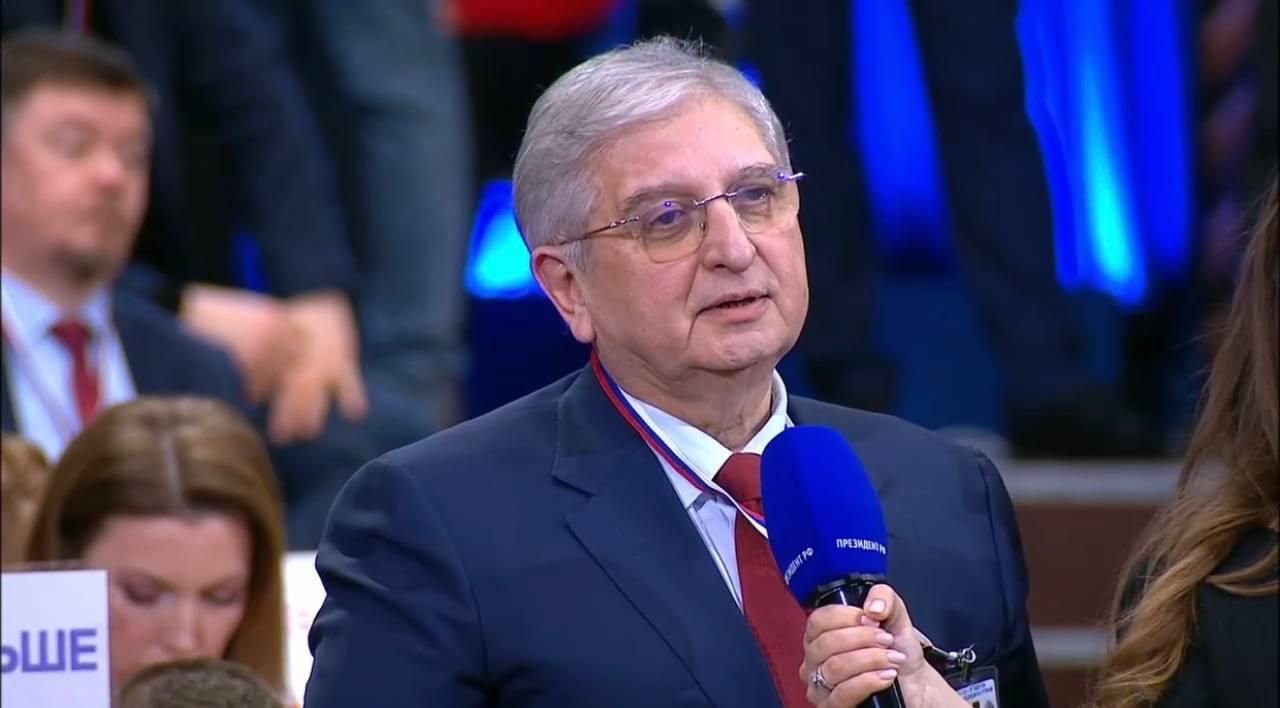
In this context, NIS emerges as a political lever of far broader significance. If Moscow and Washington are indeed moving closer to talks on normalizing relations, a key question arises: why does the administration of Donald Trump simultaneously introduce or support sanctions against a Russian company in Serbia and insist on pushing out Russian ownership? Such a policy is difficult to explain on purely commercial grounds. Energy today is a strategic instrument, and Serbia lies at the intersection of great-power interests. Consequently, the NIS issue is both economic and geopolitical, and its resolution depends not only on Belgrade and Moscow, but also on the outcome of the war in Ukraine and a broader agreement among major actors.
Particular weight is carried by Putin’s statement—also made in response to a Politika journalist’s question—that he hopes next year’s conference will be devoted to peace rather than war. This sentence does not read as diplomatic courtesy, but rather as a signal that Moscow is leaving room for a political solution—albeit under clearly articulated conditions: the removal of everything that stands in the way of peace. In that sense, the NIS issue can be viewed as part of the same puzzle—an obstacle that must be resolved in order to stabilize the wider security landscape.
Putin also addressed relations with NATO, recalling that Russia was not merely a partner of the Alliance, but at one point even considered the idea of membership, before it became clear—according to his interpretation—that the West did not view Russia as an equal actor. The expansion of NATO infrastructure toward Russia’s borders, in this framework, is not a technical matter but an existential security issue, inevitably leading to the need for a new European security architecture.
The reference to the ideas of Egon Bahr and the concept of inclusive security suggests that Moscow is contemplating an order in which no one is excluded in advance—neither Russia, nor Eastern Europe, nor the United States. Were such a model to be negotiated in dialogue with Trump, Europe would face a profound transformation: from a continent divided by lines of conflict into a space of shared security, albeit with recognition of Russian interests as a legitimate factor.
In this context, Putin’s remark about the potential political influence of some five million Ukrainians living in Russia on future parliamentary elections in Ukraine should also be seen as part of a broader discussion about the post-war legitimacy of government in Kyiv. Moscow thereby signals a desire for political legitimacy in future processes, as well as an intention to shape the post-war internal dynamics of a neighboring state. This is part of a wider strategy in which peace is understood not merely as a ceasefire, but as a redefinition of the political space after the war.
Putin’s “Direct Line” once again confirmed that behind the language of peace lies a struggle for positions in the post-war order. In that sense, the NIS issue is not an exception, but a textbook example of how energy infrastructure is transformed into an instrument of geopolitical pressure. Serbia finds itself in a zone where it is expected to bear the consequences of others’ conflicts, while lacking the capacity to influence their resolution. Precisely for this reason, Moscow’s insistence on agreement rather than ultimatums carries additional weight, as it reflects an awareness that destabilizing the Balkans would produce far-reaching consequences.
If the announced peace talks fail to materialize, the NIS issue could become a precedent for the systematic marginalization of Russian presence in the region. If, however, global actors truly turn toward compromise, Serbia could find itself in the rare position of a state whose stability becomes an argument rather than an obstacle. That choice will not be decided in Belgrade, but by the readiness of the great powers to give peace real political substance, rather than merely rhetorical value.
0 comments