
Annalena Baerbock’s amnesia: The Greens criticize Trump, forget violations of international law in Kosovo
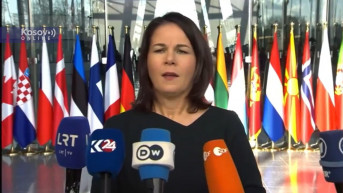
The demand by Germany’s Green Party that the policy of US President Donald Trump toward Venezuela be condemned is at odds with their support for the NATO intervention in Kosovo in 1999 – a turning point in international law, Berliner Zeitung notes.
NATO’s military action against the Federal Republic of Yugoslavia created a precedent, because the Kosovo model provides a perfect blueprint for any great power that wants to militarily enforce its geostrategic interests, the German newspaper points out.
The military intervention in Caracas ordered by US President Donald Trump and the abduction of the disputed Venezuelan president Nicolas Maduro have triggered sharp international criticism. At the same time, they have reignited a fundamental debate: Is international law facing its ultimate loss of relevance? And is it in danger of being replaced by an order in which force replaces law? A return to an era in which only the law of the strongest prevails?
While many observers characterize the US intervention as an unprecedented, obvious violation of international law and an act of aggression against a sovereign state, this interpretation is taken out of historical context.
The foundations of the rules-based international order were not violated only yesterday, nor only with Russia’s attack on Ukraine, which also runs counter to international law.
Decisive cracks in the international order appeared more than a quarter of a century ago, with the active participation of precisely the political force that today most fiercely insists on respect for those rules: the Green Party.
Under then Foreign Minister Joschka Fischer, the party bore responsibility for politically enabling the NATO bombing of Yugoslavia in 1999 – Germany’s first military engagement since World War II – without a legitimate United Nations mandate.
That decision opened Pandora’s box: the so-called West created the precedent of “humanitarian intervention,” a framework that weakens international law and which other powers now invoke to justify their own aggression.
But, step by step.
A cautious German government
For years, the United States has not recognized Nicolas Maduro as Venezuela’s legitimate president and, as early as 2020, during Donald Trump’s first term, accused him and other members of the Venezuelan leadership, among other things, of drug trafficking. Washington therefore presents the intervention against Maduro as the enforcement of criminal prosecution.
In Berlin, the German government is striving for a balanced response to the facts created in Caracas.
Chancellor Friedrich Merz wrote on the social network “X”:
“The legal classification of the American intervention is complex. We are not rushing to judgment. International law remains the benchmark. Political instability in Venezuela must not be allowed to arise. The goal should be an orderly transition to a government legitimized by elections.”
His party colleague Armin Laschet, chairman of the Bundestag’s Foreign Affairs Committee, also expressed a cautious stance in a special report on ZDF television. He spoke of a “very complicated situation under international law,” further complicated by the fact that the EU has never recognized Maduro as the legitimate president.
Even when ZDF host Andreas Klinner unequivocally characterized the intervention as “contrary to international law,” Laschet avoided a clear condemnation. Instead, he drew a historical comparison with the US intervention in Panama in 1989, which at the time was also considered a controversial, unilateral act under international law. Laschet dismissed a final assessment of the current case as premature.
In contrast, their coalition partner, the Social Democratic Party of Germany (SPD), reached a judgment more quickly. Adis Ahmetovic, the party’s foreign policy spokesperson, said it was a “turning point” and was certain: “Donald Trump has violated international law.”
Green outrage
The loudest outrage, however, came from the ranks of the Green opposition. The list of comments is long; practically the entire party leadership spoke out, and the general mood was unanimous: the German government is hesitating and failing to clearly condemn Trump’s actions.
“It is imperative that the German government unequivocally criticize this violation of international law,” party chairwoman Franziska Brantner demanded on “X.”
MP Katrin Goering-Eckardt wrote: “The world order as we know it is not eroding, it is being deliberately destroyed.”
Parliamentary group leaders Katharina Droge and Britta Hasselmann joined this view.
Droge described the air strikes as a “violation of international law and a dangerous military escalation,” while Hasselmann stressed that she expects the German government “to unequivocally advocate de-escalation, respect for international law, and respect for national sovereignty vis-a-vis the United States.”
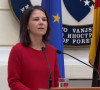
Annalena Baerbock, former foreign minister from the Green Party and now president of the UN General Assembly, also commented on the events in Venezuela on “X,” citing Article 2 of the United Nations Charter.
That article obliges all members, in their international relations, to refrain from the threat or use of force against the territorial integrity or political independence of any state.
“The UN Charter is not optional,” Baerbock wrote.
Green political veteran Jurgen Trittin, who also spoke out on the issue, was relatively brief:
“The attack on Venezuela violates international law. Period.”
The Kosovo precedent
This fierce defense of international law would be entirely credible if it did not come from a party whose history in government reveals a fundamental contradiction. A brief lesson in history seems appropriate, because politicians, especially figures like Trittin, should still clearly remember the time when international law played a rather subordinate role in their own political actions.
We look back to 1999. At that time, under the red-green coalition government, of which Trittin was also a member, the German armed forces, the Bundeswehr, participated in a NATO operation against the then Federal Republic of Yugoslavia.
For three months, the Western military alliance bombed targets in Serbia and Montenegro. NATO states justified their actions by citing the need to prevent an impending humanitarian catastrophe in Kosovo. This referred to brutal actions by Serbian security forces against the civilian population of Kosovo, from systematic expulsions to massacres.
Under international law, the attack was highly controversial because it violated a triple legal taboo. It violated the ban on the use of force enshrined in the UN Charter, to which Annalena Baerbock so strongly refers, since there was neither a case of self-defense nor a mandate from the UN Security Council. Moreover, NATO acted contrary to its own statute as a purely defensive alliance and, for the first time, attacked a state outside its own territory.
For Germany, that intervention represented a conflict with its Basic Law: Article 26, a direct lesson learned from World War II, prohibits the preparation and conduct of a war of aggression.
The so-called Kohl doctrine, which stipulated that German soldiers must never again be present in countries occupied by the Wehrmacht during the Nazi era, became meaningless with the first participation of the German military.
A prophetic warning
The then ruling red-green coalition government under Chancellor Gerhard Schroeder and Foreign Minister Joschka Fischer nevertheless opted for German participation in the war. The argument that the military action, although illegal, was morally legitimate helped many Greens overcome their pacifist principles.
The internal conflict within the party culminated in the almost legendary incident when a paint-filled bag was thrown at Joschka Fischer at a party conference in Bielefeld. An activist hit the foreign minister’s eardrum and injured him.
How prophetic the warnings of critics at the time were is shown by an outstanding historical document.
Green Party MP Ludger Volmer, later a state minister at the German Foreign Office, said in a Bundestag debate on October 16, 1998:
“Let us not deceive ourselves: the argument that this is an exception and not a precedent is throwing dust in our eyes. Any regional power in the future that wants to establish order in its neighborhood and can cite only an approximately suitable UN resolution will point to this example. The door has been opened to self-issuing mandates by military alliances.”
It would be shown in a dramatic way that Volmer, who shortly thereafter changed his position and also insisted on the legitimacy of the intervention, was right. His analysis from back then reads like a scenario of 21st-century geopolitics.
Vladimir Putin still refers to the Kosovo intervention to justify his own aggression against Ukraine, which violates international law.
A matter of style
The real explosive potential lies in the universal applicability of the justification that was created. The Kosovo model provides a perfect blueprint for any great power that wants to militarily enforce its geostrategic interests. Even a Chinese president aiming for an intervention in Taiwan would not have to invent new arguments. He could directly refer to the Western precedent.
The law of the strongest, whose application the Greens now criticize in Trump’s case, has been relevant again since at least 1999. The then Democratic US president Bill Clinton did not consider respect for international law any more important than Donald Trump does today. The difference lies less in principle than in style, and perhaps in the former greater need to at least offer some legitimizing argument.
Once the law is stretched, others can invoke it, that is the lesson.
The fact that precisely the party that supported the precedent back then is now pointing the finger at others is evidence of astonishing historical amnesia. The current outrage over Trump may be justified, but it is accompanied by deep irony and reveals a political double standard without equal.
0 comments