
Between European unrest and a new dance of the great powers
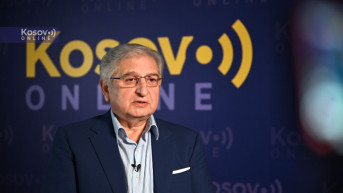
Written by: Zeljko Sajn for Kosovo Online
A single telephone conversation cannot stop a war on its own, but it can open doors that have long been closed. The October 27 conversation between Finnish President Alexander Stubb, Norwegian Prime Minister Jonas Gahr Store and Russian President Vladimir Putin on the war in Ukraine and European security has once again raised a question weighing heavily on European capitals: who speaks for Europe today, and how much influence can it exert over decisions that will shape its future? The conversation showed that diplomatic channels remain open, but not that the differences between Moscow and European capitals have been overcome.
The Finnish and Norwegian leaders stressed that they were speaking on behalf of their own countries, not Europe as a whole. That qualification reveals a deeper problem for a continent that aspires to be one of the actors shaping international decisions but faces difficulties in reconciling divergent interests. Europe cannot shape its own security if it remains merely an observer of negotiations that directly concern its own continent. Yet direct dialogue is no guarantee of an agreement either. Its value is measured by whether it opens the way for concrete diplomatic steps.
In this context, the argument advanced by American economist Jeffrey Sachs, who has long emphasized the need to restore direct diplomacy between Washington and Moscow, is once again gaining relevance. A single conversation between the American and Russian presidents could set in motion a process that until recently seemed politically impossible, but its outcome would depend on the parties’ willingness to turn words into decisions. A telephone call is not a peace agreement, just as an open door does not mean that the road to peace has already been traveled. Nevertheless, without a decision to talk, it is difficult to see how a way out of the conflict can be found.
This diplomatic dilemma is unfolding alongside a wave of protests and discontent across Europe. Their causes are not the same everywhere: in some countries, the cost of living and fears over jobs are at the forefront; elsewhere, distrust of political elites, a sense of social inequality or the belief that institutions are becoming less responsive to citizens’ needs predominate. There are no grounds for attributing all these movements to a single center or coordinated plan. Yet many of them raise the same underlying question: who actually makes the decisions, and to whom is political power accountable?
The way governments respond to protests also raises the question of where the line lies between maintaining public order and the disproportionate use of force. The right to peaceful assembly does not negate the state’s duty to protect public safety, but neither can that duty be used to justify arbitrary restrictions on civil liberties. European institutions insist on the rule of law, democratic standards and freedom of expression. Their credibility, however, depends on the consistent application of those principles—both to member states and to countries seeking to join the European Union.
In the Balkans, this gap between expectations and political reality is particularly pronounced. In North Macedonia, the change of government was accompanied by hopes that European integration would gain new momentum. However, the path toward membership continues to be burdened by constitutional amendments and the issue of including the Bulgarian community in the Constitution, amid disagreements over the conditions and sequencing of the next steps. Montenegro and Albania have different accession dynamics, and their circumstances should not be equated with North Macedonia’s experience. Nevertheless, the same question matters throughout the region: does the European perspective remain a clearly defined objective accompanied by tangible steps, or is it turning into a protracted process with no end in sight?
The protests, European security and the stalled enlargement process are not parts of a single, prearranged narrative. What connects them, however, is a crisis of confidence. Citizens demand accountability from their governments, states expect equality in international relations, and candidate countries insist that European principles be applied consistently. When the gap between promises and political practice becomes too wide, disappointment grows, trust in institutions weakens and space opens up for alternative political and international orientations.
Under such circumstances, the debate about a multipolar world ceases to be merely theoretical. Russia, the United States and China represent major centers of power competing over the future rules of the international order. A possible meeting between Donald Trump, Vladimir Putin and Xi Jinping, should it take place, would attract global attention, but it should not be portrayed in advance as an agreement capable of resolving the world’s key international disputes. Multipolarity does not simply mean the existence of several great powers. It also raises the question of whether their competition will be conducted through negotiations and rules or turn into a new struggle for spheres of influence.
Russian diplomat Alexey Drobinin and Sachs, each from his own perspective, point to changes in the international environment in which European security can no longer be viewed separately from relations among the great powers. In that sense, the experience of Henry Kissinger and the historical legacy of Yalta serve as reminders of how agreements among great powers can affect the fate of smaller states.
History, however, is not a template that can simply be replicated. Today’s world is not Yalta revisited, and long-term stability cannot rest on the assumption that great powers have the right to determine the fate of everyone else.
Russia and the United States can extend a hand to new partners without letting go of the old hand with which they once danced as a pair. New partnerships need not erase previous ties, just as change does not require the destruction of every bridge inherited from an earlier era. Carefully calibrated continuity need not be an obstacle to multipolarity; it can contribute to its stability. Such an approach, however, makes sense only if it is based on mutual respect, clear rules and consideration for the interests of states that are not seated at the negotiating table of the great powers.
For Serbia, as for other countries outside the center of global decision-making, the key question is how to preserve strategic autonomy in a rapidly changing world. This requires a willingness to engage in dialogue with all relevant international actors, including countries with which there are historical burdens, political disagreements or unresolved disputes, among them the United States. Talking to former or current adversaries does not mean abandoning one’s own interests. On the contrary, diplomacy provides an opportunity to defend those interests, reduce risks and broaden the scope for independent decision-making.
For the Balkan states, therefore, the challenge is not to choose in advance the winner of the competition among the great powers, but to build a sufficiently broad network of relationships to preserve their own freedom of choice. European integration, where it represents a strategic objective, does not preclude maintaining open diplomatic channels with other partners. Foreign policy is not the art of alignment at any cost, but the ability to recognize change, assess risks and protect national interests without closing the door to dialogue.
comments