
What position will Serbia’s new government take on the Kosovo issue?
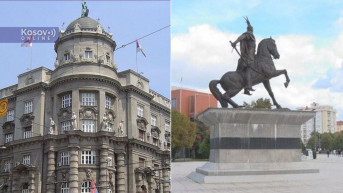
The composition of the new cabinet in Nemanjina 11 following the Student List’s victory in Serbia’s elections is not yet known, while prior to the elections the movement proclaimed the fight to preserve Kosovo as part of Serbia as one of the elements of its program. Kosovo Online’s interlocutors in Belgrade believe that the new government will approach the Kosovo issue within the framework of the preamble to the Serbian Constitution and seek to maintain Serbia’s current positions in Kosovo, particularly in healthcare and education. They warn that, as before, the Kosovo issue will be subject to various pressures, which will require clear responses. At the same time, analysts in Pristina expect the new government to take a constructive approach to the Brussels Dialogue.
Written by: Dusica Radeka Djordjevic
The ink on the ballots had barely dried when, on Monday, Serbia’s elections and Kosovo were already the subject of talks between EU Special Representative for the Belgrade-Pristina Dialogue Peter Sorensen and German Bundestag member Peter Beyer.
Following the meeting, Beyer said that both sides must fulfill their obligations under the Brussels and Ohrid agreements and that Kosovo must guarantee the promised self-management for the Serbian community. At the same time, he noted that a change of government in Serbia did not automatically mean a change of course on Kosovo.
Ilija Srdanovic, who headed the Student List, said yesterday that the List’s platform regarding talks and the future of Kosovo and Metohija was in accordance with the Constitution of the Republic of Serbia and that they remained open to dialogue and to resolving issues in the interests of citizens and the international community.
As for whether the Brussels Agreement reached in the Belgrade-Pristina Dialogue would be implemented in full, Srdanovic indicated that the future government, as a responsible authority, would respect internationally agreed protocols, but that all protocols agreed by Serbian officials on behalf of Serbia could be reviewed to determine whether they were in compliance with the Serbian Constitution.
An EU spokesperson today outlined Brussels’ expectations of Serbia’s future government regarding the dialogue with Pristina. These include a constructive approach to the normalization dialogue and the implementation of all agreements reached to date.
“The EU-facilitated Dialogue does not depend on individual political leaders. All existing obligations remain in force, including the 2023 Agreement on the Path to Normalisation and its Implementation Annex (the Ohrid Agreement),” the EU spokesperson said.
Status quo
According to historian Stefan Radojkovic, the future Serbian government’s position on Kosovo will be that there can be no recognition of the Pristina administration.
He believes that the new Serbian government, to be led by the Student List, will at this stage seek to maintain the status quo on the Kosovo issue. This, he explained, means preventing any further deterioration in the position of Serbs in Kosovo, avoiding inflammatory rhetoric, while at the same time not allowing any further erosion of the Republic of Serbia’s position in Kosovo.
“The major question is whether, over the next year or two, they will view the issue of Kosovo and Metohija exclusively as an internal matter of the Republic of Serbia or within the framework of the Brussels Dialogue,” Radojkovic told Kosovo Online.
If the issue were addressed within the framework of the Brussels Dialogue, he believes this would, in essence, represent a degree of departure from their program because it would entail more intensive relations between Serbia’s new administration and the Brussels administration.
“Judging by everything we have heard, the government that will be constituted in the post-authoritarian period will primarily focus on strengthening and restoring institutions, establishing democracy and freeing the media, while there will probably also be a change to the electoral system, which certainly needs to be reformed. In that sense, it seems to me more likely that Kosovo and Metohija will be viewed exclusively as an internal matter of the Republic of Serbia. However, there will be a certain status quo in which efforts will be made to maintain Serbia’s current positions in Kosovo and Metohija. By that I mean institutions in the fields of culture, healthcare and education. Once administrative matters in the Republic of Serbia begin to be resolved, more intensive work on the issue of Kosovo and Metohija could then begin,” Radojkovic assessed.
As for how the new government will approach the agreements reached in the Dialogue in Brussels and Ohrid in 2023, Radojkovic said that anyone who knew the answer to that question could probably make millions from bookmakers.
He also said that those agreements were de facto on life support.
“In that sense, it seems to me that the Student List or its government will not become involved in that issue for the time being, because it effectively entails talks within the Brussels Dialogue, which are currently not among the new government’s priorities. It seems implicit that Kosovo and Metohija will be viewed within the constitutional framework and the preamble to the Constitution, but there will neither be insistence on those agreements nor a review of them. That does not mean they will not come up at some point, but during the first year or two it seems to me that the issue will, in a sense, be put on the back burner, just as the issue of EU accession also appears to have been put on the back burner. It is not on the table, it is not a subject for discussion. There will be a time and place to discuss those issues and take certain concrete steps,” Radojkovic said.
Easing of relations, but no major shift
Pristina-based analyst Melazim Koci believes that Serbia’s new government will take a constructive approach to the dialogue with Kosovo and to the Agreement on the Path to Normalisation between Kosovo and Serbia, but says he does not expect a major shift in the process.
According to Koci, the Student List is highly heterogeneous, and he believes its priority will be internal consolidation.
“They secured their victory by promising to fight corruption, not on foreign policy or Kosovo issues. This is particularly relevant because their positions on foreign policy are relatively unclear. Nevertheless, I believe that Kosovo will eventually come onto the agenda among those issues. The EU has made it clear to both Belgrade and Pristina that the Franco-German proposal—the Agreement on the Path to Normalisation between Kosovo and Serbia—is internationally binding. I believe Serbia’s new government will take a constructive approach to that proposal and to the dialogue with Kosovo. I expect the Kosovo Government to take the same approach to the Franco-German proposal. Therefore, I do not expect any major shift, but rather a continuation of the dialogue on the basis of the Franco-German proposal,” Koci said in a written statement to Kosovo Online.
Although he is not highly optimistic, he believes the dialogue will resume in a somewhat better atmosphere.
“Following Banjska, relations between Kosovo under Kurti and Serbia under Vucic were extremely tense. I believe the Student List’s victory will allow relations to ease and the dialogue to continue,” Koci said.
Sustainable return should be put back on the table
Commissioner for the Protection of Equality Milan Antonijevic says Serbia’s new authorities are expected to formulate a clear policy on Kosovo and Metohija, one that must primarily focus on the Serbian community, its rights, the protection of human rights, freedom of movement, property rights and all the issues that successive Serbian governments have addressed since the 1990s.
“We expect a clearer policy. There was no such policy during the election campaign, probably because they did not want to divert attention from issues that were more important to the Student List. But now, given that this issue will also be on the table and that they will face the same various pressures as the previous government, they will have to provide clear answers. Institutions are there to assist them, to explain how rights can be protected and what guidelines should be followed,” Antonijevic told Kosovo Online.
He said he could not envisage a situation in which anyone would neglect the Serbian people in Kosovo or their rights.
“Perhaps now is the time to put the issue of sustainable return back on the table, along with many other issues that have not been addressed. Of course, there is also the Association of Serb-majority Municipalities and everything that was signed under the Brussels agreements, so that we can finally have a clearer picture,” Antonijevic said.
He added that it would not be easy for the authorities in Pristina to no longer have someone on the other side against whom they could wage negative campaigns.
“International media are welcoming the elections in Serbia, the democratic nature of the entire process and the winners in general, so nothing will be quite the same anymore. But I do not believe this can or should in any way jeopardize our people in Kosovo and Metohija. They have the protection of Serbia’s institutions and will continue to have it regardless of who is in power in Serbia,” Antonijevic said.
Regarding the Belgrade-Pristina Dialogue, he believes that the process cannot simply be unblocked.
“Even when Belgrade was highly constructive, it did not encounter a corresponding willingness on Pristina’s part. Therefore, I do not see the process being completely unblocked, because unfortunately that does not suit Kosovo society either, while at the same time there is considerable pressure on the Serbian community, resulting in some of our fellow citizens deciding to leave Kosovo and Metohija. That practice really must stop. We will see how strong Brussels and the United States will be in unblocking the dialogue and actually bringing back to the table those who signed many of these commitments—primarily the authorities in Pristina—but have yet to implement them,” Antonijevic said.


0 comments