
Can Kosovo 'escape' from UN Security Council Resolution 1244 and what is its significance for the further development of events?
"Despite the political West largely behaving as if UN Security Council Resolution 1244 does not exist, its mention still causes discomfort among the Albanian political leaders in Kosovo. Some among them, however, realistically assess the facts and point to the crucial significance of this international document in further resolving the status of Kosovo."
Prepared by: Milos Garic
Kosovo cannot become a member of the European Union as long as it is under the auspices of Resolution 1244 and without the ratification of the border with Serbia, warned Hisen Berisa, one of the most influential members of the Democratic Party of Kosovo and a lawmaker, a few days ago.
The official of the party founded by Hashim Thaçi reminded the authorities, primarily Vjosa Osmani and Albin Kurti, that Pristina is still in dialogue with Belgrade and that the process of Kosovo's independence and secession from Serbia is not completed.
"We have declared independence, but we have more than 300 kilometers of undefined borders with Serbia. Kosovo cannot integrate into the international system while under Resolution 1244 and without border ratification," Berisa stated.
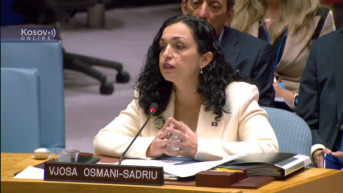
This statement by the Albanian politician, from the current opposition in Pristina, was indirectly confirmed by Kosovo's President Vjosa Osmani at the Democracy Summit in Copenhagen, where she expressed criticism of the European Union's attitude towards Kosovo. Osmani stated that Kosovo has long submitted an application for EU membership, but the application "has not even been processed," which she says sends a very difficult message.
"We were among the first to impose sanctions on Russia and Iran, not only political sanctions but also economic ones, as well as the rule of law and all other reforms that the EU has requested from us. Absolutely, Kosovo deserves to become part of the EU by 2028 or by 2030. However, I do not expect the EU to do this. They do not tell us what to do; we are blocked, this endangers peace and stability in the Balkans," Osmani expressed dissatisfaction.
Acrobatics in the Council of Europe
"As born crooked, time will not mend," wisely stated the renowned 19th-century jurist Baltasar Bogisic. In the case of Kosovo's "statehood," this sentence takes on its full meaning, no matter how much the Kosovo Albanians and influential Western countries want to portray things differently than they actually are. The reckless attempt to push Kosovo into the Council of Europe in its current state and condition, against all principles, is an excellent illustration of how some countries trip themselves up and compromise.
Naturally, it is not surprising that since the unilateral declaration of independence in 2008, Albanian politicians in Kosovo are very reluctant to talk about Resolution 1244. According to the document unanimously adopted by the UN Security Council 25 years ago, shortly after NATO's bombing of the FRY, Kosovo is a United Nations protectorate on part of the territory of Serbia, as the legal successor of the Federal Republic of Yugoslavia.
They know in Pristina that what has been happening over the past 16 years represents a gross violation of the provisions of this key document of international law, and its importance for the further development of negotiations between Belgrade and Pristina remains undisputed. Particularly in the context of the necessity to bring the turbulent events on the global stage back within the framework of the basic principles of the United Nations Charter.
Can Kosovo "escape" from Resolution 1244 and how will this document further impact the events regarding the Kosovo issue?
Aleksandar Mitic, a research associate at the Institute for International Politics and Economy for Kontekst, reminds us that changes to Kosovo's status cannot occur without altering Resolution 1244.
"When it was adopted in 1999, UN Security Council Resolution 1244 was the expression of a compromise resulting from the peak of unipolarity, the brutality of NATO aggression, the resistance of the Serbian people, and what remained of international law after the Alliance members had shaken it before finally undermining it in 2008. Since then, unfortunately, it has been constantly attacked by Western 'creative interpreters' who have sought in it premises for the alleged 'statehood of Kosovo' and tried to negate what it states, which is that Kosovo and Metohija are an integral part of Serbia," explains Mitic.
By undermining UNMIK, Albanian leaders and their patrons hoped that Resolution 1244 would collapse like a house of cards.
“They served numerous 'agreements,' i.e., solutions based on ultimatums to Belgrade. Even in Belgrade, there was a moment of doubt that 1244 could survive. However, those who claimed that this resolution is the bulwark that most staunchly defends Serbia's territorial integrity were proven right. Undoubtedly, the key is the absolute support of Moscow and Beijing, which is further strengthened amid tense geopolitical competition on a global level, and which is most directly reflected in the Balkans," Mitic adds.
"Belgrade has, after a series of concessions that significantly weakened its position, drawn red lines at the UN level," notes Aleksandar Mitic.
"Even this line is being attacked sideways, through the Council of Europe, the insertion of the Franco-German plan into negotiation Chapter 35, and various hybrid attacks. However, it is clear to everyone that substantial changes in status cannot occur without changing Resolution 1244. Given that it will not be changed, we can expect continued pressure on Belgrade and the Kosovo Serbs, to prompt Moscow and Beijing to change their stance. This change will certainly not come," concludes Aleksandar Mitic.
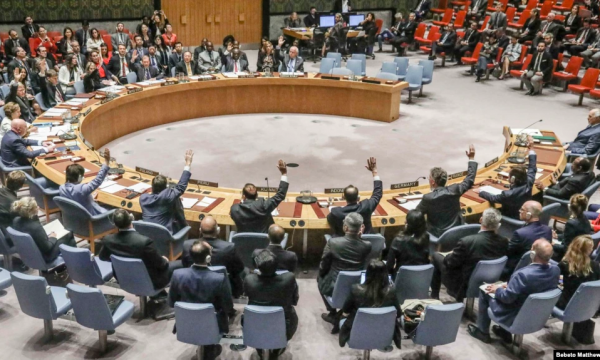
Historian and political analyst Srđan Graovac for Kontekst highlights the immeasurable importance of Resolution 1244 both today and in the future, no matter how, as he says, some Western countries try to ignore it.
"This was best seen back in 2008 when leading Western countries decided to recognize the self-proclaimed independence of Kosovo, thereby grossly violating international law and the UN Charter. However, this does not change the fact that the resolution is still in force, and in a legal sense, Kosovo is not a state. Resolution 1244 is the highest act of international law defining the current position and status of Kosovo and Metohija, as a territory under the protectorate of the United Nations, but also as territory within the Republic of Serbia, the legal successor of the Federal Republic of Yugoslavia. Resolution 1244 UN is therefore very important for Serbia; it represents the legal basis for preserving Kosovo and Metohija within its composition," emphasizes Graovac.
Serbia's consent is necessary
The resolution reminds all countries that anyone advocating for the independence of Kosovo is in conflict with international law.
"They try to deny the highest legal act that defines the position of the southern Serbian province. It is clear that Western countries will continue to try to ignore the resolution, and not only that but also to push the issue of Kosovo and Metohija out of the Security Council. Attempts to marginalize it and push it into the background have long been underway, as some Western countries wish to eliminate regular sessions and reports on the situation in Kosovo and Metohija," warns Graovac.
Regarding its impact on the further development of events related to Kosovo, on the negotiations, he believes that Resolution 1244 is the best proof that in the current international relations, which are based on the UN Charter, it is not possible to find a solution without the consent of the Republic of Serbia and other UN member states that do not accept the forcible secession of Kosovo.
"Because just as the UN Security Council member countries adopted the Resolution by consensus, without opposition and veto, so the only way to change anything in this regard, especially the status of Kosovo, is for all states in the Security Council to agree on it. This implies the potential adoption of a new resolution, which would put the old one under number 1244 to rest. Until then, all states and serious international institutions like the Council of Europe, for example, or the European Union, have an obligation to respect the fact that under Resolution 1244, Kosovo cannot be treated as an internationally recognized entity," concludes Graovac.

0 comments