
Jeremic: Serbia could present its interests much better as a non-permanent UN Security Council member
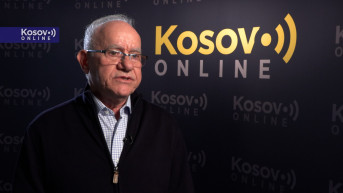
Former ambassador of the Federal Republic of Yugoslavia to Germany, Zoran Jeremic, tells Kosovo Online that it would be very significant if Serbia were to nominate itself and be elected as a non-permanent member of the United Nations Security Council because, as he points out, from that position, a country's interests can be much better presented and others can be influenced.
"That is a place where you can listen to what's happening and influence the realization of your interests in a specific, effective way. We should have attempted candidacy earlier, but it is never too late for a good thing. When you are in the Security Council, agreements with other countries regarding their and your interests are possible because it is a marketplace of interests, and it is always better to participate than to be the subject of international trade," Jeremic says.
Serbian President Aleksandar Vucic has announced the possibility of Serbia's candidacy in case the UN General Assembly adopts a resolution on the genocide in Srebrenica, stating that if Serbia submits its candidacy, it would decisively defeat two NATO countries from Eastern Europe that have already announced their candidacies.
Jeremic says that the potential "race" would probably be simpler if there weren't competitors who had started the procedure earlier, but that doesn't mean it is a lost battle if everything is well-prepared and done.
"The fact is that these candidacies are announced, and lobbying starts at least a year or two earlier, but it's all part of the trade. When it comes to the resolution on Srebrenica being prepared, if we were a Security Council member now, we would be in a different position, if nothing else, at least concerning the sponsor countries of that resolution like Germany or Croatia, Iceland, and Liechtenstein. We would have received signals much earlier that something like that was brewing, and we would be able to channel it in a direction where it's possible," Jeremic notes.
He believes the situation would probably look different if Serbia had been in the Security Council when the session to mark the 25th anniversary of the NATO aggression against Serbia was initiated, which was rejected.
Nevertheless, as he points out, if Serbia were to become a non-permanent member of the Security Council, it would represent a new moment because it hasn't been in this body before, while, he recalls, the former Yugoslavia was four times.
Regardless of whether Serbia would be elected as a non-permanent member for the period 2025-2026 or for some subsequent period, Jeremic says that position is always significant.
"We belong to the Eastern group of countries, and since this is a volatile region and since we will always be in some kind of trouble, the position of a non-permanent member of the Security Council is quite important," Jeremic concludes.


0 comments