
Ciric: The burning of the Patriarchate of Pec was planned, the attack on the Serbian Orthodox Church began in 1981

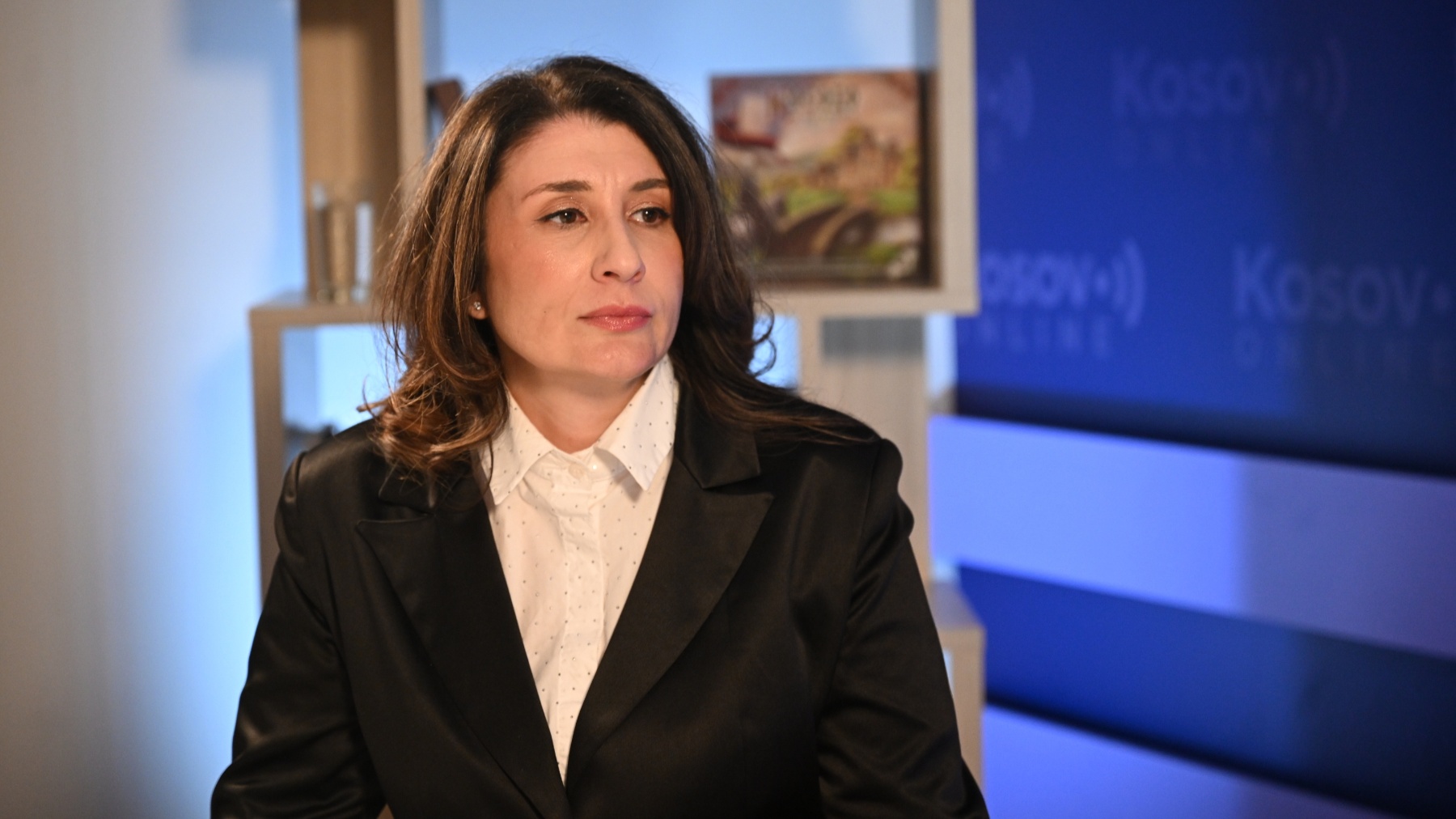
My conclusion regarding the fire at the Patriarchate of Pec is that there was an open intention for the monastic community to suffer. If the residential quarters were set on fire while the church itself was not touched, the intention is entirely clear. At the same time, the goal was also to burn manuscripts, because when material remains are destroyed—whether it is the Patriarchate of Pec in 1981 or the March pogrom of 2004—it becomes impossible to prove our presence in the area of Kosovo and Metohija, said art historian Jasmina S. Ciric while appearing on the Context podcast.
She notes that apart from several scholarly papers and newspaper articles, there is no reliable data on the fire that engulfed the residential quarters of the Patriarchate of Pec on the night between 15 and 16 March 1981.
“What remains interesting to me even today is the lack of reaction by the media at the time, even though information reached Belgrade newsrooms more slowly back then. The fact is—and we know this from several statements by Bishop Atanasije Jevtic—that five or six days passed before news about the damage to the residential quarters appeared, even though they had completely burned down,” Ciric says.
Testimonies of Possible Sabotage
The fire destroyed the 63-meter-long residential building and the chronicles—personal notes kept by the monastic community that represented a record of an entire era. Parts of the treasury of the Patriarchate of Pec were saved by those who happened to be in the monastery that night, primarily the then abbess, Mother Fevronija.
“At that time, the Patriarchate also had several guests. Among them was Bishop Damaskin Davidovic, then the Bishop of Western Europe, who was also a lecturer at the Prizren Theological Seminary. He also left several very useful records on this topic, stating that he personally saw traces of spilled gasoline on the beams of the new residential building that was under construction at the time,” Ciric explains.
Witnesses to the fire claimed that fire trucks did not arrive on time, and that one of them arrived without water.
“These are all facts that indicate a deliberate and planned act intended to erase everything from the scene,” the art historian emphasized.
Warnings from Experts and Silence from Politics
Ciric states that already in the 1970s, experts had warned about the vulnerability of the manuscripts kept in the Patriarchate of Pec and the fact that they were not available in photocopies. After the fire, they demanded urgent measures to protect what remained.
“A member of the program council of the Republic Institute for the Protection of Cultural Monuments was Professor Dejan Medakovic. He demanded that representatives of the political structures react to the burning of the residential quarters. The discipline of art history did its utmost, but further decisions regarding the Patriarchate of Pec were halted,” Ciric explains.
Social Context
The fire occurred during the crisis in Kosovo triggered by student demonstrations in Pristina only a few days earlier. By early April 1981, mass protests by Albanians had spread across major cities in Kosovo and resulted in clashes between demonstrators and the police.
“The demonstrations were used as a litmus test. The background to everything was the Patriarchate of Pec, and it became the cornerstone of everything that would happen over the next 20 years, when our presence gradually declined and the situation slipped out of control,” the guest of Context believes.
Pressure from Belgrade
The circumstances surrounding the fire have not been clarified to this day, although some sources claim that it was set by an Albanian, Mazlum Kelmendi.
“It should also be said that, under political pressure, Abbess Fevronija and the other sisters were blackmailed into signing an official document sent from the Federal Executive Council in Belgrade stating that they themselves had set the fire,” Ciric explains.
Pogrom and the Suffering of the Serbian Jerusalem
Serbian cultural heritage continued to suffer in the decades after the great fire in the Patriarchate of Pec. During the 2004 pogrom, 35 churches and monasteries were damaged, destroyed, or burned. A drastic example is Prizren—in a city with 33 Serbian shrines, one third were destroyed.
“It is widely known that Decani was protected by the Italian KFOR, and that many soldiers even embraced Orthodoxy. In Prizren, however, members of the German KFOR were deployed and directly enabled the vandalism and burning of medieval endowments. We can say that medieval Prizren, with so many small endowments concentrated in different parts of the city, was essentially a creation of the heavenly Jerusalem in the Middle Ages. If fires are deliberately set throughout such a sacred complex, it indicates an intention to erase the culture of memory,” Ciric emphasizes.
During the pogrom, the Church of Our Lady of Ljevis—an endowment of King Milutin from the early 14th century—was also set on fire.
“Someone did this knowingly because the fire was set above the western portal, where the fresco of Stefan Nemanja is located, while across from him is King Milutin. The Nemanjic dynasty is depicted there as well. It is clear that someone received instructions to set fire to that specific part. If the exterior of an endowment is desecrated, bricks can be replaced, regardless of differences in the material structure. With frescoes, however, the problem is far more serious—once they are burned, it becomes extremely difficult to save them,” the interviewee states.
Social Media – A New Battlefield for Heritage
Serbian cultural heritage in Kosovo is not endangered only through physical destruction. Jasmina Ciric warns that Albanians are appropriating it in order to build a new Christian identity upon it.
“Relying on Christian heritage is a form of perfidy by Albanian historiographers working at newly established Albanian universities in Pristina. They are not alone in this, as they have assistance from Western Europe, particularly from British historians. It is not entirely unfounded when they use the argument that an older church once stood at the site of a Serbian shrine, because that was indeed a common model for medieval rulers when building churches. It could have been an ancient necropolis or a church from the 6th century, and that is not disputed. However, that belonged to the Byzantine cultural context, not the Albanian, Dardanian, or Illyrian context as they claim,” Ciric concludes.
The campaign to appropriate Serbian heritage is also being conducted on social media, she says. The falsification of facts, she believes, must be countered through scholarly research. In that struggle, teams of IT experts and art historians should be involved, whose task would be the daily monitoring of digital narrative manipulation and the refutation of false claims.
The full appearance of Jasmina S. Ciric on the Context podcast can be viewed in the accompanying video.











comments