
Europe between rearmament and peace: The UN Charter and the unresolved questions of Kosovo and Ukraine

Written by Zeljko Sajn for Kosovo Online
The fundamental objective of the international order established after the Second World War was the preservation of peace, the prevention of new wars, and the resolution of international disputes through diplomatic means in accordance with the Charter of the United Nations. For this very reason, current changes in Europe's security architecture raise important questions regarding the balance between military capabilities, states' security needs, and the enduring obligation to preserve peace through international law and dialogue.
The European Union seeks to eventually incorporate the countries of the Western Balkans, yet the enlargement process is unfolding at a time when Europe itself is undergoing profound political, economic, and security transformations. The war in Ukraine, the deterioration of relations between the West and Russia, and the growing number of security challenges have led to a significant increase in military spending in certain European countries. Germany, in particular, stands out for substantially increasing investment in the Bundeswehr and assuming a more active security role within NATO. German military expenditure reached approximately €95 billion in 2025, while estimates suggest it could rise to around €160 billion annually by 2029. This strengthening of Germany's military capabilities represents one of the most significant shifts in German security policy since the end of the Second World War and has sparked debates about the relationship between deterrence policy, peace preservation, diplomatic solutions, and the role of military force in contemporary Europe.
Such developments have direct implications for countries aspiring to join the European Union. The process of European integration no longer entails merely aligning economic and legal standards but also requires closer alignment with the EU's Common Foreign and Security Policy. For Serbia, this presents a particularly complex challenge due to its historical, cultural, and energy ties with Russia, as well as the unresolved issue of Kosovo.
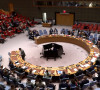
The Kosovo issue remains one of the most sensitive matters in relations between Serbia and the European Union. United Nations Security Council Resolution 1244 remains a valid international legal document governing the framework for the international presence and political process in Kosovo. From Serbia's perspective, the fact that the majority of EU member states have recognized Kosovo's independence constitutes a departure from the principle of territorial integrity and reflects insufficient regard for Resolution 1244. States that recognize Kosovo, on the other hand, maintain that it is a unique case arising from specific historical and political circumstances. The fact that five EU member states do not recognize Kosovo demonstrates the existence of differing positions within the Union itself.
The historical legacy of NATO's 1999 bombing of the Federal Republic of Yugoslavia, which Serbia considers an act of aggression carried out without the authorization of the United Nations Security Council and in which Germany also participated, continues to significantly shape perceptions of Western security policy in Serbia. The current strengthening of Germany's military capabilities and its increasingly prominent role in shaping European security strategy raise questions about how the need for defense and deterrence can be reconciled with the principles of international law, the role of the United Nations, and the long-term preservation of peace.
The war in Ukraine has further opened complex questions concerning territorial integrity and the application of international law. Following referendums held in the regions of Donetsk, Luhansk, Kherson, and Zaporizhzhia, the Russian Federation incorporated these territories into its constitutional order and regards them as part of its territory. However, the majority of United Nations member states, including the member states of the European Union, do not recognize these territorial changes and consider them contrary to the principles of the United Nations Charter and Ukraine's territorial integrity. These conflicting interpretations illustrate the complexity of issues relating to sovereignty, territorial integrity, and the right of peoples to self-determination in contemporary international relations.
Under such circumstances, the future of the European continent cannot be based solely on the growth of military capabilities, but above all on the ability of states to restore political dialogue, respect international agreements, and utilize United Nations mechanisms for the peaceful resolution of conflicts. The experience of international relations demonstrates that lasting security is achieved through a combination of deterrence capabilities, diplomacy, and internationally recognized legal frameworks.
Therefore, the enlargement of the European Union into the Western Balkans is not merely an administrative process of fulfilling accession criteria, but rather part of a broader transformation of the European and international order. It encompasses interconnected issues of peace, the role of the United Nations, United Nations Security Council Resolution 1244, relations between Serbia and Russia, the war in Ukraine, Germany's security transformation, and NATO's future role.
The future of the Western Balkans and Europe will depend on whether international actors are able to strike a balance between security interests, respect for international law, and the need to resolve unresolved conflicts through political agreements rather than military force. The preservation of peace, adherence to the Charter of the United Nations, and the strengthening of diplomatic mechanisms remain the fundamental principles upon which Europe's future security architecture should be built.
At the same time, Europe's growing reliance on military strengthening, increased defense budgets, and the development of new defense capabilities raises the question of whether Europe is moving away from the idea of a new international order based on equal dialogue, collective security, and respect for the interests of different civilizational and political centers of power. If security policy becomes predominantly founded on the logic of military deterrence and a new arms race, there is a risk of deepening global divisions, intensifying confrontations, and undermining international peace. Consequently, the future international order requires the restoration of trust among states, a return to diplomacy, and a stronger role for the United Nations as the universal framework for the peaceful settlement of international disputes.

0 comments