
Kosovo and Metohija between law and power in the emergence of a New World Order
Written by: Zeljko Sajn for Kosovo Online
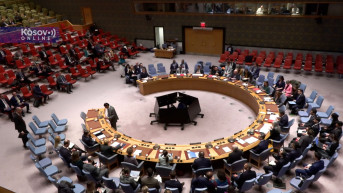
Kosovo and Metohija, within the emerging geopolitical order, represents an issue that transcends regional boundaries and enters the sphere of global power relations. The most recent debate in the United Nations Security Council clearly demonstrated that this issue remains one of the key unresolved questions in contemporary international relations.
Discussions among representatives of the permanent members confirmed deep divisions in approaches, as well as the fact that this is not merely a regional problem, but a matter that directly reflects relations among major powers.
Representatives of the United States, the United Kingdom, and France emphasized the need for a “realistic approach” and the further strengthening of existing political and security structures, implicitly accepting the situation on the ground as a starting point.
In contrast, Russia and China insisted on the consistent respect for international law and UN Security Council Resolution 1244, pointing to the risks of unilateral actions and the need for the Security Council to remain the central framework for resolving the issue.
This division confirms that Kosovo and Metohija represents a fault line between differing concepts of the international order.
The contemporary world is entering a phase of multipolarity, in which power is distributed among several centers. In such an environment, the Balkans is once again gaining strategic importance as a space through which key energy and transport routes pass, but also as a zone where the security interests of major powers intersect.
Within this framework, Kosovo and Metohija functions as a geopolitical crossroads. Its significance goes beyond a territorial dispute and encompasses legal, military, energy, and economic dimensions.
A particularly important aspect is the issue of international military presence. KFOR, formally based on Resolution 1244, represents a key security factor but also an instrument of broader strategic projection. In this context, the question of redefining its role is increasingly being raised.
A potential reduction of KFOR’s presence would not signify a withdrawal of the West nor a weakening of NATO. On the contrary, it would represent part of a broader transformation of the alliance within a new security architecture. NATO is not undergoing formal reorganization but is evolving—shifting from a model of large-scale and permanent military presence to more flexible, mobile, and indirect forms of engagement.
Such an approach implies a reduction in direct involvement while maintaining political, security, and strategic influence. In this process, the Balkans is transforming from a zone of direct military control into a space of monitoring and managed influence, with the capacity for rapid redeployment of forces in the event of destabilization.
The energy dimension further reinforces the region’s importance. Control over gas and transport routes is becoming a key instrument of political influence, while infrastructure projects define long-term power relations.
At the same time, global politics is shifting toward direct decision-making among major powers. Key processes are increasingly conducted less through formal institutions and more through strategic agreements at the highest level. Within this framework, the issue of Kosovo and Metohija is becoming increasingly dependent on the broader geopolitical balance.
For this reason, it is clear that a lasting solution cannot be the result of an isolated dialogue or expedited political decisions. Rather, it will form part of a broader process of redefining the balance of power in a changing world.
In such circumstances, responsible policy requires the preservation of stability, avoidance of hasty actions, and the maintenance of strategic flexibility. Managing this issue demands a long-term approach and an understanding of the global context.
Today, Kosovo and Metohija is not merely a territorial issue. It is a space where international law, geopolitical interests, and the transformation of security structures intersect.
Kosovo and Metohija will not be resolved solely within the region—it will be resolved within the framework of a new global distribution of power.



0 comments