
FEUILLETON 25 years of NATO bombing of Serbia (2): 78 days of bombing, 415,000 projectiles, and 1,100 aircraft
Writes: Dragan Bisenic
Former Czech Presidents Vaclav Klaus and Milos Zeman, on the occasion of the 25th anniversary of the Czech Republic's membership in NATO, assessed that the bombing of FR Yugoslavia in 1999 was a huge mistake and that Kosovo is a terrorist state that Prague should not have recognized.[1]
"When our government, as the last one, approved the overflight of planes, that was the first moment when I told myself that NATO had made a mistake. Although I supported the entry into NATO and still do, for heaven's sake, it doesn't mean that I will see everything as a clear sky, even without clouds," said Zeman.[2] Vaclav Klaus reminded that he was angry with Zeman's government, which gave its blessing to the bombing of FR Yugoslavia. "I was categorically against the bombing of Serbia and Kosovo and all those areas. I was angry with Zeman's government for giving consent," Klaus said.[3]
Current US President Joe Biden actively participated in debates and the shaping of American policy throughout the Yugoslav crisis. "I proposed that we bomb Serbia. I proposed that we send pilots to bomb the bridges over the Drina. I proposed that we destroy their oil reserves. I proposed very specific actions," said Trump.[4]
Former US President Donald Trump said: "I would have done it a little differently, and I know that sounds terrible, but ... look at the mess they made in Kosovo. We can say that we lost a few people. Of course, when we had planes dropping bombs from 75,000 feet (about 23 kilometers). But look at what we did to that country and those people and the deaths that occurred because of us. So, there were no losses for us and our allies because we were up there in the planes. The war wasn't triggered by us and our allies because we were up there in the planes, but at some point, you have to introduce ground forces, so not everyone can cross borders, and many people agree with that. Would there be casualties? Maybe, maybe even more than now, but in the end, it would end with fewer deaths and without the chaos and terror we have now. Now, would people be killed? Maybe. Maybe even more. But at least we would have a lot fewer deaths and you wouldn't have the upheaval and chaos you have now. So, I don't know if they consider it a success because I don't consider it a success. They heavily bombed the country and the entire region, everyone is fleeing in all possible directions, and no one knows what's going on. And there are thousands of deaths."[5]
According to the first statement from the General Staff of the Yugoslav Army, on March 24th around 8:45p.m., over twenty targets were struck in the initial wave. The first projectiles hit the barracks in Prokuplje at 7:53p.m. This was followed by attacks on Pristina, Kursumlija, and Batajnica.
US President Bill Clinton announced the need to "demonstrate NATO's seriousness in opposing repression" the same evening, emphasizing the need to "intimidate Serbia and Yugoslavia" and "destroy Serbia's military capabilities," in order to prevent actions against Kosovo Albanians. British Prime Minister Tony Blair stated on the same evening that NATO aggression was undertaken because the "people of Kosovo" demanded it. To further clarify, he meant "the people of Kosovo" as Kosovo Albanians.
Nineteen NATO countries began the bombing from ships in the Adriatic Sea and from four air bases in Italy. Initially, anti-aircraft defenses and other targets of the Yugoslav Army were targeted. Ten countries participated directly in the bombing with 1,100 aircraft.[6] According to Serbian experts, up to June 10th, there were recorded 18,168 aircraft takeoffs. According to NATO sources, there were 38,004 sorties, of which 10,484 were combat actions, while the rest were reconnaissance, AWACS, tankers, etc. Initially, about 70 combat aircraft were involved in operations daily, but later this number increased to around 400 daily. In the end, NATO carried out over 38,000 flights but failed to inflict significant damage to the Yugoslav Army in Kosovo.
NATO's human and technical losses were denied. The authorities in Belgrade at that time claimed that dozens of aircraft were shot down, although this was not confirmed. According to data from the Ministry of Defense of Serbia, during the NATO bombing and military actions that began on March 24, 1999, 2,500 civilians were killed, including 89 children and 1,031 members of the military and police.
According to the same source, around 6,000 civilians were injured, including 2,700 children, as well as 5,173 soldiers and police officers, while 25 people are still listed as missing. The Russian agency APN reported that NATO lost over 400 soldiers and over 60 aircraft, while US President Bill Clinton stated in a speech on June 10, 1999, that NATO had suffered "no casualties". In the Aviation Museum in Belgrade, remnants of downed aircraft such as F-117, F-16, drones, and cruise missiles are kept. The F-117 aircraft, known as the "invisible" symbol of American technological superiority until then, ended up in a field in the vicinity of the Serbian village of Budjanovci.
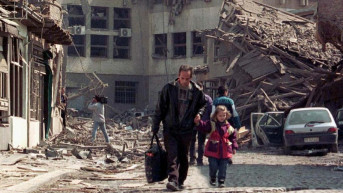
Almost every city in Serbia was targeted during the 11 weeks of aggression. NATO conducted 2,300 strikes and dropped 22,000 tons of projectiles, including 37,000 banned cluster bombs and those filled with depleted uranium. Besides attacks from ships in the Adriatic Sea and from four air bases in Italy, operations were carried out from bases in Western European countries and the USA. NATO fired 415,000 projectiles totaling 22,000 tons, and even 112 strikes were carried out using depleted uranium ammunition, with a total of 31,000 uranium projectiles fired according to NATO's admission, and according to Russian sources, 90,000. Almost half of these attacks occurred in the last 10 days of the aggression.
Infrastructure, industrial facilities, schools, healthcare institutions, media houses, cultural monuments, churches, and monasteries were destroyed, totaling about 50% of Serbia's production capacity. Different data have been presented regarding the material damage caused during the NATO aggression. The authorities in Belgrade estimated it at approximately $100 billion, while a group of economists from G17 estimated the damage at $29.6 billion.
During the bombing, 25,000 residential buildings were destroyed or damaged, 470 kilometers of roads and 595 kilometers of railways were disabled. Fourteen airports, 19 hospitals, 20 health centers, 18 kindergartens, 69 schools, 176 cultural monuments, and 44 bridges were damaged, while 38 were destroyed.
One-third of the country's power capacity was destroyed, two refineries in Pancevo and Novi Sad were bombed, and NATO forces also used graphite bombs for the first time to disable the power system. The overall health and environmental consequences for the population are immeasurable.
The Chinese Embassy in Belgrade was destroyed on May 7, 1999. The RTS building in Belgrade was destroyed on April 23, resulting in 16 deaths and the same number injured. The building of Television Novi Sad was hit on May 3, 1999, on the International Day of Press Freedom.
The aggression was halted by the signing of the Military-Technical Agreement in Kumanovo on June 9, 1999, followed by the withdrawal of Yugoslav forces from Kosovo and Metohija three days later. The agreement stipulated the withdrawal of the military-security forces of Yugoslavia from Kosovo and Metohija and the establishment of UNMIK, the United Nations mission.
NATO's Secretary-General issued an order to cease the bombing on June 10, 1999. The last projectiles fell in the area of the village of Kololec, near Kosovska Kamenica, at 1:30p.m, and at the barracks in Urosevac at around 7:35p.m. It was the 79th day of NATO's aggression against Serbia, i.e., FR Yugoslavia.
The UN Security Council adopted Resolution 1244 at that time. In the province, a total of 37,200 soldiers were deployed as part of the KFOR mission, from 36 countries.
[1] https://www.danas.rs/svet/klaus-zeman-kosovo-bombardovanje/, read on 14.03.2024.
[2] same
[3] same
[5] The entire interview from October 8, 1999, can be listened to here: https://www.youtube.com/watch?v=gEVzCtcT-Mo&t=1170s and the question about Kosovo is at 18:50 minutes
[6] NATO Crimes in Yugoslavia, Documents and Evidence, March 24 – April 24, 1999, Federal Ministry of Foreign Affairs of the FR Yugoslavia, 1999, Belgrade, p. XIII


0 comments