
FEUILLETON 25 years of NATO bombing of Serbia (28): Berger's message that Kosovo remains in Serbia
Written for Kosovo Online by Dragan Bisenic:
The following morning, at a breakfast meeting at the residence of Vice President Gore, Chernomyrdin stated he was ready to continue pressing Belgrade but that Russia did not want to be too visible or go it alone. Milosevic, he said, was too stubborn and emotional to ever give in to NATO. "We needed a third party, hence Moscow's proposal to send the UN Secretary-General to Belgrade. It would be less humiliating for Milosevic to negotiate with someone who is also neutral. The idea made some sense, but, as President Clinton said, Milosevic could not simply negotiate with the UN. We needed a different partner than Kofi Annan, so I suggested President Ahtisaari. Chernomyrdin immediately slapped the table and smiled. "That's the right man."
Finnish President Martti Ahtisaari was indeed "the right man" – a highly respected diplomat with UN experience, from a historically neutral country. The previous month, Ahtisaari had already been proposed as one of two UN envoys for Kosovo, but he declined because he did not want another full-time position, as he was already the President of Finland. He, however, agreed to work with Chernomyrdin on what Ahtisaari anticipated would be a month-long effort to end the war.
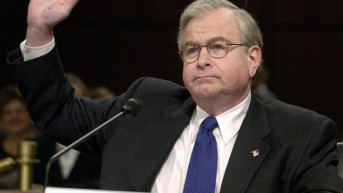
The conversation on May 3, with American Vice President Al Gore, National Security Advisor Samuel Berger, Deputy Secretary of State Strobe Talbott, and from the Russian side Viktor Chernomyrdin and American Ambassador in Washington, Yuri Ushakov, demonstrates the extent of unfulfilled promises discussed while preparing to take the “sword of surrender” from Milosevic. It's possible that these promises were given deliberately or with the belief that they would be fulfilled or due to a misunderstanding of the events, but they essentially show how little such promises are worth today. In any case, the Americans unequivocally claimed that Kosovo remains in Serbia and that certain, then still undefined, Serbian forces remain in Kosovo.
GOR: Our discussion in the Oval Office was productive and interesting. Perhaps we spoke past each other on some nuances. But mostly, we understood each other well. You heard and understood our terms. Certain methodological issues could benefit from tonight's discussion. You asked certain questions to Strobe in Moscow and he told you that we will give you answers. We made a non-paper just to respond to these questions. Peter will translate the document while Sandy reviews the five questions for which you sought greater clarity.
BERGER: First, the size, pace, and manner of the withdrawal of FRY forces. There are two points: NATO needs to stop strikes when Belgrade unequivocally accepts NATO's conditions and clearly begins to withdraw forces according to a precise schedule; all Serbian forces must be withdrawn within a certain number of days. It says 7, but that's not a magic number. Second, how will the withdrawal be verified, and will Russia participate? It can take place under international forces; Russia is welcome to participate and mechanisms for verification need to be developed. Regarding an alternative mechanism for precise verification – we can discuss that. Third, the remaining military presence of Serbs in Kosovo.
GOR: We have shared this document with NATO allies, and therefore it is a joint product that cannot be easily changed without difficult consultations within NATO.
BERGER: (on the third point) All forces withdraw. A limited number could be allowed to return under agreed conditions to protect Serbian heritage...
Fourth, the nature of the international military presence. Chapter VII UN SCR, with American forces under NATO, Russian forces. We would expect other non-NATO countries to participate, especially Ukraine and other Orthodox countries. Fifth, the nature of the international protected area. It will be under the UN Security Council mandate.
CHERNOMIRDIN: What is meant by a protected area?
BERGER: What is the status of Kosovo? It would remain within Yugoslavia, but since there is no government or Serbian administration, we would need at least initially some mechanism for administration.
GOR: To protect Serbs from violence by Kosovo Albanians and against Kosovo Albanians by Serbs.
Berger repeated that "Kosovo should remain part of Yugoslavia," but initially, "Albanians would not accept Yugoslav administration," so "the UN would manage," to which Al Gore added, "under Yugoslav sovereignty." Berger explained the condition for the withdrawal of Serbian forces from Kosovo as being that Albanians wouldn't return "if Serbian forces were not out; and wouldn't return unless there are international security forces to protect them. That is the mechanism by which Kosovo remains in Yugoslavia, we avoid civil war, and ironically, the only way Milosevic can keep Kosovo," again said National Security Advisor Samuel Berger.
Berger then asked Strobe Talbott to explain what it means for Kosovo to be "an area under international protection," because there is concern in Moscow that it's just a disguise that would "permanently separate Kosovo from Yugoslavia."
Talbott emphasized that the intended consequence is exactly the opposite – "it would help keep Kosovo in Yugoslavia." He reminded that the return of refugees is a fundamental point agreed upon by the Russians and Americans. There are four options available:
First: Belgrade authorities remain competent in Kosovo. We believe Milosevic would like this. But it's impossible because with Belgrade in charge, the right kind of refugees won't return. The only ones who will return are armed KLA terrorists with Kalashnikovs wanting to kill Serbs.
Second, the main ones are Kosovo Albanians. This would mean that the KLA, which believes power comes from the barrel of a gun, wins. This is unacceptable and would lead to a war for independence or secession.
Third, no one is competent. This would mean chaos, the disintegration of Yugoslavia, and the spread of violence in the region.
Fourth, the only possible option. We – the international community – would take temporary responsibility. This could mean that the UN and the OSCE, with details and structure to be worked out in talks like this one, would take over management. An internationally protected zone does not mean a military administration led by NATO," Talbott reassured the Russian representatives again.
BERGER: These are the answers, but let me note where there is flexibility and where there is not. There is flexibility in the nature of the international forces, recognizing that we cannot participate except in the context of NATO. This is partly for domestic political reasons. So, there must be a NATO core – but these are words, and we can discuss them.
All Serbs must leave, but we can envision a saving way for Serbian forces to be at special places of historical and cultural significance. But 10,000 Serbian soldiers mean that refugees won't return. The KLA will return and fight against the Serbs. This is the gray area the president was talking about. And there is flexibility in the design of the verification regime and the exact nature of the international presence. We don't need NATO flags. We can give form if the substance is okay. And there is some flexibility in the schedule, though we would say days and weeks, not months.
So, in certain matters concerning the return of Kosovo refugees – practical realities – there is [less flexibility]. On the other hand, there is more room for discussion.
GOR: Another methodological issue. I think it's easy to imagine an agreement to stop the bloodshed, stop the forced displacement of refugees, and stop the bombing. But it might be hard for Milosevic to say "yes" even though he has said "yes" to the US or NATO, and maybe even Russia. If there is some mechanism through which the UN can play a role to give him a way to say "yes," but that doesn't put us at the mercy of Kofi Annan who is going on his own adventure – we have had unpleasant experiences with him – then we are open to this kind of method. But otherwise, the bombing will continue, all 19 countries are united, our public is horrified by the killings as I know the Russians are whenever they see evidence. And history is intertwined in these areas, the Balkans is the Balkans... Yevtushenko recently wrote that history is like Raskolnikov – it always returns to the scene of the crime. Every now and then, when he is sober, he comes up with a great line.
CHERNOMIRDIN: I have several questions. Withdrawal of forces – how do you imagine it? Who will have control? Who will verify?
GOR: Russia can play a role in the verification with us.
CHERNOMIRDIN: While bombs are falling?
GOR: No. If the withdrawal begins after an agreement by Milosevic to the plan that envisages withdrawal, the bombing would stop.
BERGER: Think about the next steps: Step 1 – agreement with a roadmap;
Step 2 - Milosevic gives an advance, because he has broken many previous agreements. It doesn't have to be measured for 10 days. As long as we see him pulling out. It wouldn't make sense to continue bombing.
CHERNOMIRDIN: What do you mean by an advance?
GOR: First steps.
BERGER: If Milosevic were to commit to withdrawing forces, it wouldn't make sense to continue bombing.
CHERNOMIRDIN: That's not an advance. Those are conditions. Payment is like when I put a watch on the table.
BERGER: We made an October agreement about withdrawal, and he didn't do it.
CHERNOMIRDIN: I'm not arguing.
GOR: Let me explain the phrase. In the US, if a family wants to buy a house, they sign a contract and agree to payment. But they start with a large payment - an advance - and are required to continue. It's almost like buying gas.
CHERNOMIRDIN: [jokingly] Almost the same – but buying and selling gas are two different things. Everything is clear. In Moscow, I discussed with Strobe the protection of heritage in Kosovo - there are many monasteries, historical sites, etc.... More than 30,000 locations and 8,000 that are already protected by international organizations such as UNESCO. So, it's about sanctuaries for every Serb. How can they be protected? How do you imagine it?
GOR: Let me give some answers. If you ask people from any country, what are your sacred places, they would have a list of sacred. But if you wanted to list every place, you'd name every cemetery, etc. So, 8000 sounds too high. Let's agree on a reasonable number of important locations. We could imagine how it would be impossible for Serbian police or guards to be stationed to protect that many people. So, we could list some important sites – for example, the center of the Serbian Orthodox Church is in Pec, there is Kosovo Polje.
CHERNOMIRDIN: I understand and agree. Let's say we named 500 locations - what would you have in mind? Would the guards be armed?
GOR: 500 is too much.
CHERNOMIRDIN: Okay
GOR: Let's say 10. I think we could negotiate a force that could symbolize Serbian sovereignty, protect against desecration, but not large enough to cause fear of attack – so somewhere in between in terms of size.
BERGER: From Milosevic's point of view, his worst option is insufficient force in Kosovo. With 2, 3, 4 thousand soldiers - he would be in a guerrilla war.
CHERNOMIRDIN: With whom? If there were no Serbian troops, there would also be a guerrilla war – but on behalf of 250,000 Kosovo Serbs. Nationalist paramilitary forces would enter the country to fight Albanians.
BERGER: That's why it's so important that you and we be there.
CHERNOMIRDIN: I agree.
Second, you say that some Serbian forces must be left to protect locations. Third, you say it makes no sense to leave an insufficient level of troops. We want to avoid a guerrilla war. But who will protect the border?
GOR: Initially, it would have to be international security forces, until conditions normalize, until there is order, peace, and trust that would allow this function to gradually return to Yugoslavia. But that would mean big problems at the beginning because that's how the ethnic cleansing started.
CHERNOMIRDIN: I acknowledge that there was ethnic cleansing – but after the bombing. NATO helped promote total...
GOR: We disagree. I don't want to argue. But, I'll note that 350,000 refugees were expelled before the bombing.
CHERNOMIRDIN: Now it's a million. I included 300,000, that's one thing. But now it's a million.
GOR: And think about the potential somewhere else – in Vojvodina, there are 350,000 Hungarians.
CHERNOMIRDIN: Again – think about historical sites, borders, some protection of municipal authorities. If there's a drunken street fight, there must be someone who will take care of it, because soldiers won't do it. There are so many life issues that a professional army can't handle.
GOR: I see where you're going, but our trust in Milosevic is practically at zero. If he said he wanted his police to maintain order, that would be enough to keep Kosovo Albanians away. But I agree this isn't a military function. For dealing with drunks, neither an army nor NATO is needed. But there is a way to train people whom Kosovo Albanians wouldn't suspect of ethnic cleansing. If the general principle is accepted, there are ways for NATO, OSCE, and Russia to establish mechanisms for ensuring normal public functions. We did this in Bosnia and it worked well.
BERGER: Two more points. We would anticipate that one of the responsibilities of international forces would be to disarm the KLA.
CHERNOMIRDIN: But you can't find them. Milosevic got rid of them all.
BERGER: Our information is that today there are more KLA than when Milosevic started in March, but they are in the mountains or in Albania.
CHERNOMIRDIN: There's no one to disarm, but that's not the point. They will return. I'm trying to understand your logic. How will this be applied in real life? Now they will have to withdraw all troops, and then maybe some troops will return. Let's say I agree to 10-12,000 or 8,000. Need to return Albanians - Muslims - Roma, Serbs. There are not only Albanian refugees, there are others. Also, coordinate them by groups of nationality. Albanians, Roma, Serbs. So why put obstacles in the way? Why take away their chance to build their lives? Also, you say that with the military force there, no one will allow guerrillas or hostilities. But if there are 5, 7, or 10,000 soldiers who will take care of a huge region. The international presence should be at least 27-30,000 soldiers. 32,000 soldiers to allow...
GOR: This depends on whether there is a genuine will on both sides to resolve issues peacefully. If so, I think fewer would be sufficient. In Bosnia, we have a total of 8-10,000.
CHERNOMIRDIN: I think 8-12,000 would be effective against guerrillas.
BERGER: I disagree. We must demilitarize Kosovo except for the international military presence. Otherwise, there will be a civil war. With 8,000 Serbian soldiers - and the hatred in the region - there comes natural burning with tens of thousands of Kosovars who have been expelled from their homes, angry and seeking revenge. If I were a Serbian soldier, I wouldn't want to be stationed on the Albanian border.
CHERNOMIRDIN: I understand the point. But don't think that Albanians will form guerrilla units and wage guerrilla warfare just because of the Serbs. Serbs will form guerrilla units. [They are the best guerrilla fighters in the world.] Hitler fought with them for four years and couldn't do anything. Albanians are not born guerrillas. But Serbs are. Then this force of 32,000 people will have their hands full. It's not up to me to decide...Why insist on complete withdrawal?
Guerrilla warfare will be waged by Serbs - you would need 100,000 soldiers. Milosevic would be ready to order that. Would you allow him 8-10,000 soldiers? We can make calculations to allow him forces to protect the border and historical sites - as many as needed. Why withdraw forces to create problems and send them back to solve them?
GOR: Well, we differ.
CHERNOMIRDIN: Let's minimize our differences.
GOR: After everything that Serbian troops and paramilitaries have done, I don't see how they can retain thousands of soldiers in Kosovo and return refugees.
CHERNOMIRDIN: No. Not with 100,000 of his soldiers there. Some should be withdrawn. He's ready for a big war, ground operations, and then to fight with 100,000 Serbs, NATO needs at least 200,000. And Milosevic agreed to reduce some forces. What's the point of pushing him to zero? We can count the forces and agree to tell him the number he needs. If he had kept [8,000?] there would have been no guerrilla war. Kosovo is similar to Chechnya. I can show you [brings out a map]. Look. There's only this road to Pristina, another to the border, the rest is forest...
BERGER: Why does he need 8,000 soldiers?
CHERNOMIRDIN: For the protection of historical sites.
BERGER: 8,000?
CHERNOMIRDIN: I don't know. It is necessary [to assess] his needs. We can ask how many for sacred sites - say 500, then for the police, then for the border say 2000, in total 2500-3000. We haven't discussed this issue. I don't know what the situation is. I don't know what he needs. First, you said all troops must leave, then some must return. Then you say Kosovo is part of Yugoslavia. At the same time, you have eliminated his presence while the international community oversees it.
GOR: The international community must play a role or there will be endless bloodshed.
CHERNOMIRDIN: I agree.
GOR: Let's be honest. History has distorted the image of the Serbian. In the US, we have the story of Rip Van Winkle. He left the village and lay down in the forest and slept for 100 years. When he woke up everything looked the same. But when he returned to his village everything was different. Serbia is like Rip Van Winkle. As a nation, they had their greatest glory in the 14th century. Then came the Ottoman Turks and Serbian nationality slept for 500 years. Then he woke up in 1914-15 and some things looked the same, like Kosovo Polje, but 90% of the people who lived there were Albanians. But there would be a greater injustice. Just because the Serbs woke up from a national dream does not give them the right to kill, rape, and maim. But the national heart is there [in Kosovo]. So, what is a fair outcome? Justice means two things to me; alleviating national suffering [burning, rape, etc.]; but in the injustice towards Serbs and their suffering, some protection of their rights and sovereignty is necessary. Especially for important historical/cultural locations. So, the essence is how to reconcile a dream from 600 years ago [and from Tito's time], their nation, with compassion for the people who live there. If we get stuck on the word "nation" - we can't solve the problem. So, the only way to resolve it is some kind of international protection to build trust that one side won't use violence against the other. So, we are sensitive to Serbian dreams, but also to innocent people and demands for justice... So, that's what it's about. We can argue about formulas, but we must find a way to stop the bloodshed.
CHERNOMIRDIN: I agree. I am not satisfied with arguments that are more form and shape and without substance.
AMBASSADOR USAKOV: What do the US expect from Chernomyrdin as a mediator? What outcome should he leave Washington with?
GOR: We want Viktor Stepanovich to speak in his own name and in that capacity to explain to Milosevic his understanding of NATO's position and what flexibility he can see here. I know you know that you can't solve these difficult problems in one trip. Since we trust you so much and can honestly talk with you, you are in a unique position to describe what you see and hear, and not to enter into negotiations with Milosevic. We are also willing to hear your ideas about the presence of the OSCE or UN. Sandy will describe our ideas.
BERGER: There's another dimension. The Vice President suggested that you convey our points and explain them to Milosevic. But there's also another dimension. The President and Vice President have tried to explain the logic of our position. To get the Kosovars to return, it has to be the departure of the vast majority of Serbian forces and the insertion of international military forces. What you can do is not just convey positions, but also the logic. We are convinced that the only way Milosevic can keep Kosovo is to accept international military forces. Otherwise, it's his Afghanistan or Vietnam. The President explained how it's in Milosevic's own interest: the only way for Kosovo to remain in Yugoslavia; the international community can work on rebuilding the Balkans; and the air campaign will end, instead of continuing.
GOR: We would also be glad if you told him that we are at a crossroads. [The Vice President draws on paper] This first way lies bombing, continued and accelerated. We understand that this carries risks for the region. But NATO is united. One or two countries might be nervous. And here in the US, you can see that some people are unsure, like in Congress. But we will continue. ...and his war material will be completely destroyed. If he takes the other fork, he might keep Kosovo. This also includes international efforts to rebuild Serbia, Serbia and Montenegro integrate into the European economic sphere and with Russia. This will help Russia too. The future of this second path is a return to prosperity. NATO has already agreed to massive assistance. It's one or the other for him.
0 comments