
FEUILLETON The foreign factor and the construction of the Albanian nation (8): Lajos Thalloczy and the construction of the Albanian nation
Writing for Kosovo Online: Dragan Bisenic
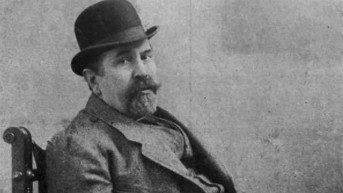
The reconstruction of the history of the creation of Thalloczy's book could change existing views on the origin and development of the Albanian national idea because it seemed that the terms used in the historical book shaped the tradition of Albanian historiography.
In 1911, he wrote a letter to the Minister of Foreign Affairs, Aehrenthal, seeking financial support for publishing a collection of sources on medieval Albanian history, without which the history of Albania could not be written. Thalloczy emphasized that medieval statehood was a prerequisite for contemporary state claims because the arguments of Balkan nations were important in terms of historical self-legitimization that always extended back to medieval statehood. Those nations unable to demonstrate this had to create their own medieval history: first with a critical edition of sources, and then with a historical book about the Middle Ages. This Austro-Hungarian project aimed at the Albanians was actually being implemented until the end of World War I. In this collection, the theses of three Austro-Hungarian experts on the historical borders of Albania along the Bar – Prizren – Ohrid – Vlora line were presented. Following Kallay's "east-west axis", they concluded that Albania was a "par excellence" border country, a boundary between "languages, religions, forces": a fusion of Eastern and Western cultures, Greek-Latin, Roman-Byzantine, with an indigenous Albanian and Slavic element. Thalloczy described Albania as a "Balkancosmos" with Latin, Roman, Italian, Greek, and Byzantine traces.
The documents published in "Acta et Diplomata res Albaniae" were intended to prove the historical presence of the Albanians and their cultural heritage as descendants of partially Romanized Illyrians. According to the author's views, Albanians lived during the Middle Ages in Prizren, as well as in other parts of Metohija and the coastal regions of Zeta.
From the aforementioned letter that Ippen wrote to Goluchowski in 1897, it can be seen that he had already agreed with Thalloczy regarding the possible content of the book. The letter contains many claims about Albanian history, which later became canonical in Albanian historiography. In a subsequent letter, Thalloczy himself confirms these suspicions. (ÖStA HHStA PA XIV. Kt. 20. Thallóczy levele Kállaynak Bécsből. 1897. július 10. Ad. Z. 937/Pr. BH ex 1897; Vertraulich! A német nyelvű levelet és albán fordítását közli: Belüli, 2008. 62-74). The letter is one of the most important documents in Albanian historiography. In it, Thalloczy laid the conceptual foundations from which Albanian historiography has not deviated: 1. Albanians are an independent nation - they have always been an independent nation with a strongly expressed "tribal consciousness" and a desire for autonomy; 2. They have a glorious history; 3. Therefore, they have a political future.
Explaining these goals, Thalloczy wrote, "I tried to create a narrative, a popular story that reproduces all the facts unknown to the Albanians and known to the European public, to put them in the hands of the Ghegs and Tosks, from whom they should remember three main points: that they constitute their nation, that they have a history worthy of praise, and therefore, they can still hope for a political future". Regarding the style of the book, he notes that, for easier translation and reception, it has been adapted to the Albanian way of thinking.
Thalloczy's contemporary historical understanding is confirmed by the fact that he wrote a work that transcends religions, with events that could be identified with by all Catholic, Orthodox, Sunni, and Bektashi Albanians. He considered it extremely important for the book to include illustrations that would help develop common national symbols (coats of arms, flags, symbols of Skanderbeg, portraits of Ali Pasha).
One of the characteristics of Albanian historiography is that the lack of an independent state tradition is compensated by biographies of prominent Albanian families and their distinguished members. This extends to this popular book and can be connected to Thalloczy's understanding of Hungarian history. In 1908, he proposed the publication of the Erdody family's testimonies in four volumes. In memoirs written in the Hungarian language, Thalloczy extensively argued in favor of significant events that influenced Hungary throughout history, emphasizing that the continuity of its statehood was primarily a result of the continuity of Hungarian aristocratic families and the traditions they nurtured. Therefore, researching sources related to them and writing family histories were paramount for understanding the country's history.
Examining the origins of Acta et Diplomata res Albaniae Mediae Aetatis Illustrantia and Illyrisch-albanische Forschungen reveals additional information about Thalloczy's thoughts. From a letter that Alois von Aehrenthal wrote in 1911 to the joint Minister of Foreign Affairs, it is clear that he systematically collected data on the history of the Albanians from 1882, the moment Kallay took over the administration of Bosnia and Herzegovina. Ministers at Ballhausplatz, Gustav von Kalnoky, and Agenor Goluchowski followed this with interest.
In the letter, Thalloczy sought financial support for publishing a collection of sources because, in his opinion, without it, the history of Albania could not be written. The Hungarian historian planned to publish a work whose methodology (editing principles, selection of relevant topics, aspects of preparing the critical apparatus) was envisioned to be one of the highest-quality publications of its time. Lirecek and Sufflay quickly responded and dedicated themselves to achieving these goals.
In the true canonization of Skanderbeg, the "Albania" magazine played a significant role, published in Brussels and available in both French and Albanian. The magazine, financed by Ballhausplatz, set two important goals: to inform the European public about Albanian matters and to influence the Albanian national movement. The authors were partly Albanian and partly foreign, but it was not known until recently that the list of authors for the targeted audience was defined by Ippen, and the completed articles were reviewed by Thalloczy because the actual editing was done in Belgrade, while the Brussels edition was overseen by Faik Konica. Before publication, summaries of the collected material were prepared in French, and the final version of the texts was approved by the Albanian representative at Ballhausplatz – Julius Freiherr von Zwiedinek-Sudenhorst.
Thalloczy's most influential historical works in Austro-Hungarian Albanology are "Acta et Diplomata res Albaniae Mediae Aetatis Illustrantia" and "Illyrisch-albanische Forschungen". When Thalloczy wrote his popular history, he planned to prepare a separate work for the profession to initiate contemporary historical research. For this, an original publication equipped with modern critical apparatus was primarily needed. Originally planned in four volumes, "Acta" would eventually become a two-volume work. The volumes were completed with the help of Jirecek and Sufflay and were based primarily on sources from Dalmatian and Italian archives: a total of 1,646 documents were published between the periods of 344 and 1406, not only political but also economic, social, and cultural sources. Thalloczy wrote several articles in the book "Forchungen...", among them worth mentioning is a study on Albanian diasporas. In this, he summarizes the history of Catholic Albanians in Srem (Petrovaradin border regiment) as well as the history of the "Italo-Albanians". He planned to cover the history of other colonies, as a Hungarian manuscript version of the draft study on Albanians in Egypt is preserved in the National Library in Budapest. (OSzK Kt. Föl. Hung. 1630.)
Continuation tomorrow: No state in the Balkans without the Middle Ages


0 comments