
The forgotten pogrom – The Roma tragedy in Kosovo in 1999 (part 2): Why did we, as a civilization, remain silent while the Roma burned in the flames of history?
Written by: Zeljko Sajn for Kosovo Online
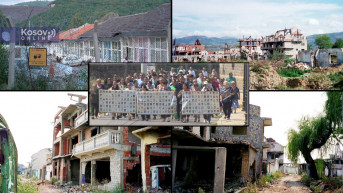
The fear caused by the bombing drove many Roma from Kosovo to all corners of the world. Those who remained have faced daily challenges and conditions that make a free and dignified life nearly impossible. Under pressure, many adopted a new identity as “Ashkali,” using Albanian as their native language and integrating politically only into Albanian structures, whether in government or opposition. Within non-Albanian political options—especially in parliament—they are almost entirely absent.
Another layer of institutional discrimination is their limited access to education, healthcare, the labor market, and justice. Many Roma families still live in improvised camps lacking basic infrastructure, under the supervision of international missions that offer no long-term solutions. Roma are largely excluded from decision-making processes, and their political participation is reduced to a symbolic level, without real influence on matters affecting their community.
This situation raises serious concerns about social and political fragmentation, where the assimilation of non-Albanian populations—specifically the Roma—is masked by formal multiculturalism, often resulting in the erasure of ethnic identity. Of course, everyone has the right to identify as they wish, but the circumstances under which this occurs point to deeper systemic issues.
The phenomenon of mass identity renaming and political absorption reveals the reality of life in Kosovo and Metohija under a quasi-state regime—lacking genuine democracy or pluralism, where national minorities are effectively disenfranchised. In contrast, in internationally recognized states like Serbia and North Macedonia—UN member states—basic rights to freedom of expression, ethnic self-determination, and political participation are guaranteed.
The process of assimilation under new names—“Ashkali” and “Egyptians”—was not a natural result of social integration, but rather part of a political strategy aimed at fragmenting, diluting, and suppressing the Roma community from the region’s political, cultural, and identity map. Thus, under the umbrella of international protection and in the shadow of formal democratization, a form of silent yet systematic cultural erasure is being carried out—what is increasingly recognized in modern scholarly literature as cultural genocide.
A particularly troubling issue is the institutional marginalization of Roma in the post-war period. The 2007 Ahtisaari Plan, which laid the groundwork for Kosovo’s unilateral declaration of independence, mentions Roma only in passing, as part of “non-majority communities.” Their rights are not explicitly protected, and implementation in practice reveals deeply entrenched inequality. The constitution of self-declared Kosovo does not recognize the Romani language as an official language, affirming their systemic invisibility in the political and cultural order.
It is therefore essential that the tragedy of the Roma in Kosovo and Metohija in 1999 be seen not just as part of a local conflict, but as a paradigm of a broader problem—of invisibility, exclusion, and historical injustice toward a European people. Recognizing this chapter is not only an act of justice toward the Roma community but also a test of maturity for modern European societies and international institutions.
In the broader context of selective memory and the ignoring of historical suffering, the role of major religious authorities also comes into question. The Vatican, which has not recognized Kosovo’s independence, still has not officially recognized the Porajmos—the genocide of the Roma—nor has this crime been included in memorial practices conducted in the name of universal justice. In this light, a moral response that could contribute to restoring the historical dignity of the Roma community remains absent.
However, a step in this direction was taken by Pope Francis. During his visit to Slovakia in 2021, the Pope visited a Roma settlement in Kosice, where he uttered words that, for many Roma, marked the first time they truly felt heard:
“You have often endured prejudice and grave injustices, discrimination and stigmatization. This has made us all poorer, poorer in humanity.”
This visit was not merely symbolic—it was a gesture of recognition and confrontation with historical injustice, and a rare act of defying the deeply rooted contempt toward Roma in European culture.
Pope Francis thus emerged as a spiritual leader who understands the depth of suffering of those on society’s margins. His words cannot undo the past, but they can open space for dialogue, collective recognition, and possible transitional justice—topics he also addressed in an exclusive interview I had the honor to conduct with him for Politika. It was the first interview ever granted by the Holy Father to a Balkan newspaper. His words served as a warning about the very events we, unfortunately, now face.
Today, we must ask: Can modern Europe maintain the credibility of its values while ignoring one of the continent’s most vulnerable ethnic groups? If we strive for an international order based on law rather than force, the tragedy of the Roma in Kosovo must be viewed in its entirety—including its cultural, identity-based, and political dimensions. Those who were forcibly expelled, whose language has been suppressed, and whose culture is being systematically erased must not be excluded from the collective memory of modern Europe. Justice for the Roma is not merely a question for one ethnic group—it is a matter of the fundamental principles upon which the international order is—or ought to be—built. This topic deserves a place in conferences, media, educational institutions, and political agendas.
We must reflect on why we—as a civilization, including the media, politicians, academia, and international organizations—persistently remained silent as the Roma burned in the flames of history. Is silence not a sign of approval and complicity?
On the other hand, we must restore collective awareness that Roma culture is not defined solely by poverty and marginalization. Quite the opposite—many individuals of Roma origin have left a profound legacy in global art, science, and culture. You may not know, and you may be surprised to learn, but Pablo Picasso, Charlie Chaplin, and Yul Brynner—all had Roma roots. They left behind works of immeasurable value and influence, even though during their lives they often did not openly identify as Roma. That very silence about their heritage underscores the depth of the problem we discuss today—even among those who succeeded, there was fear of prejudice and social stigma.
Naturally, greater engagement by the Roma themselves is necessary in the areas of education, culture, political participation, and economic development. But equally important is for the majority society to recognize its own responsibility in creating space for such participation. Building a tolerant, just, and inclusive society is not a one-sided task. It is a shared challenge—and a path we must walk together.

0 comments