
Gazimestan: The camp and freedom
"Pray for me," says Kajoko Yamasaki, the Japanese-Serbian poet, at the Merdare administrative crossing on the eve of Vidovdan. The Kosovo Police have called her; there is an issue with her documents. She is not allowed to cross.
"My soul is with you! Happy Vidovdan to us all! I wish everyone, the whole world, much peace, kindness, and beauty! Anastasia Kajoko Yamasaki," comes the message from the poet of Orthodox light and peace from the Far East.
Everything merges into the growing list of incidents, provocations, delays, turn-backs, and tensions.
Marko Kovacevic, the Mayor of Niksic and a poet, will not be allowed through either. Hundreds of others will remain held back by fears and obstacles. Yet thousands of people gather in Gracanica from the early hours of the morning. Events unfold, and a poet from Bijelo Brdo in Slavonia receives the "Golden Cross of Prince Lazar" award. His ceremonial address speaks of a canon that transcends the chaos of the world.
"Lazar's choice always obliges us. It is the day when our eyes and souls are washed with the vidovcica flower, so that through all the mists and trials of history we may clearly see who we are, what we are, where we come from, and where we are going. May this Golden Cross remind us of the triumph of the spirit over matter. I thank you for this most sacred gift, which I accept with the pledge that I will carry it as a defense of the Serbian soul, the Serbian name, and the Serbian language. So help me God."
"Do you have a peony for Simona?" asks Ceda Jovanovic from Prizren. He is pushing a stroller and smiling.
"I have a daughter," announces Boban Jevtic, editor of the film and cinema programs at the Gracanica House of Culture, an institution that organized 33 events, panel discussions, and concerts in June.
Following the announcement, everyone begins suggesting names connected in one way or another to Vidovdan.
Sinisa Djukaric from Teslic arrives at Pristina's Adem Jashari Airport from Stuttgart. He is part of a group of twenty-five people who have flown to Pristina.
"I'm going to buy presents for my children."
This Vidovdan is marked by children. The "Mother of the Nine Jugovic Brothers" medals are also awarded. Father Sasa Mitrovic slowly reads the names of mothers with six, five, and four children.
Outside the monastery gate and beyond the barbed-wire fence stand plainclothes police officers, Slovenian KFOR troops, and an occasional EULEX vehicle.
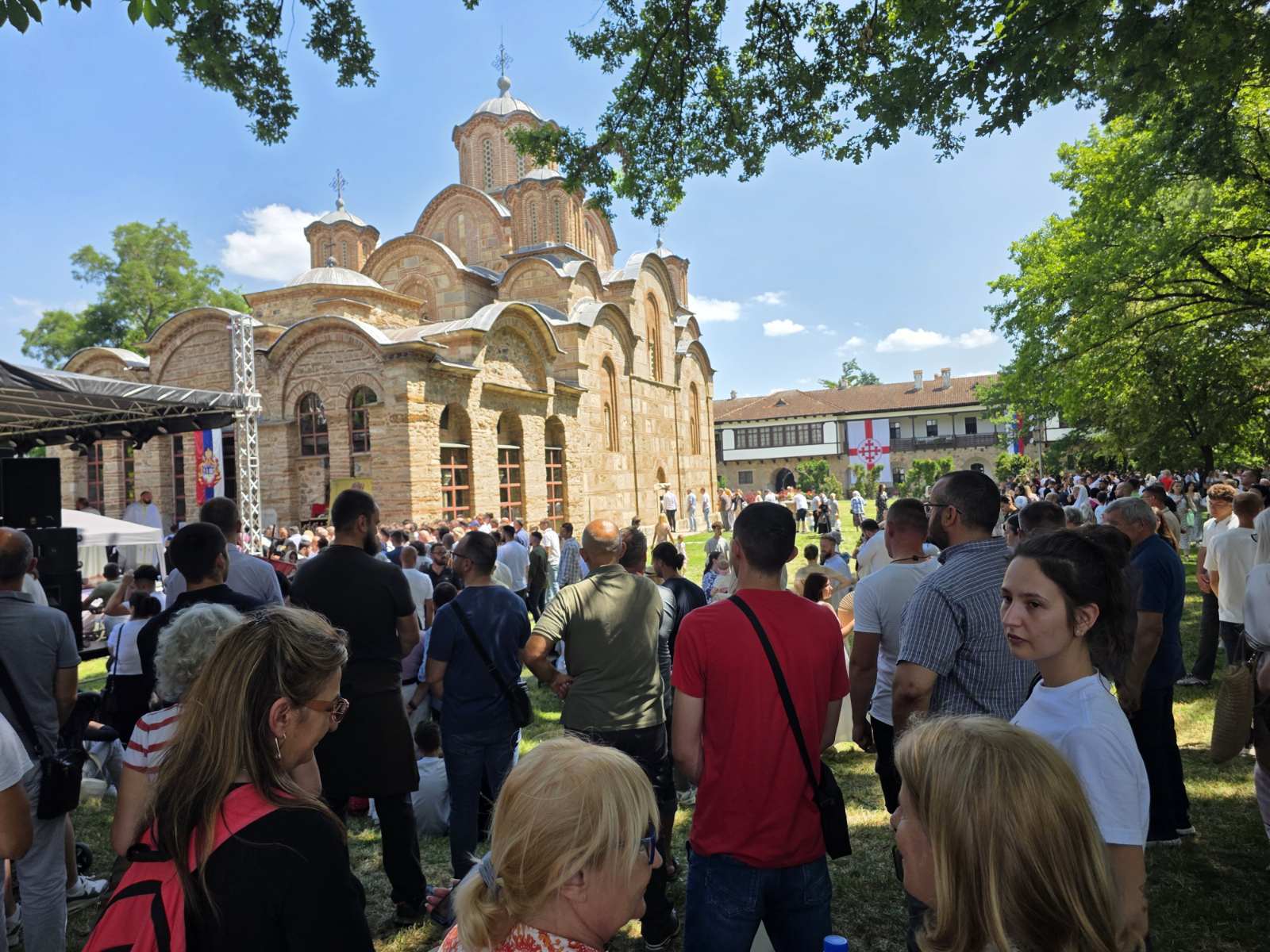
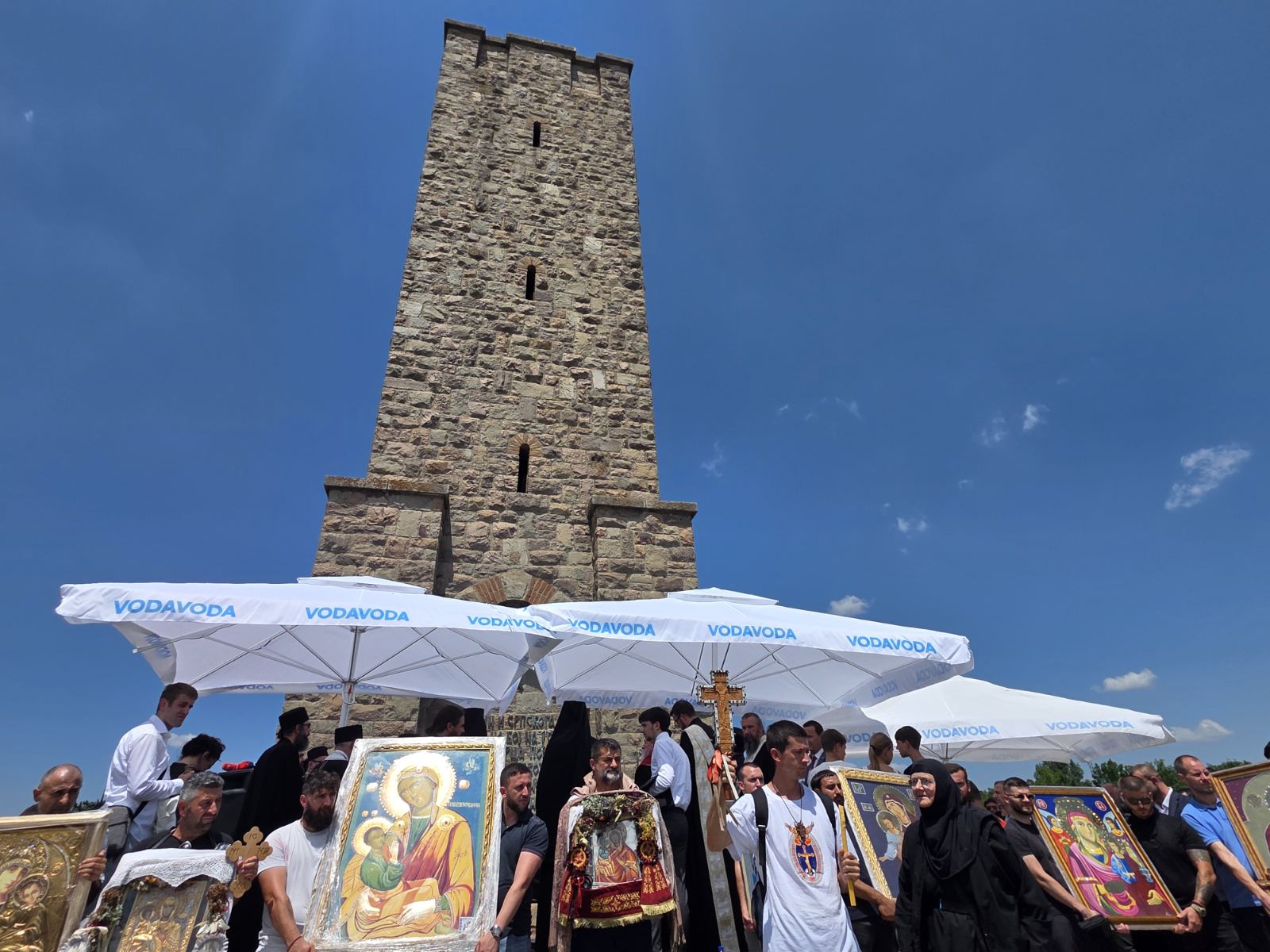


Montenegrin-Littoral Metropolitan Joanikije tells those gathered in front of Gracanica that the mystery of Prince Lazar's character lies in faith, justice, goodness, and God's love.
"Kosovo has the power to lift us up," is the central message of his sermon.
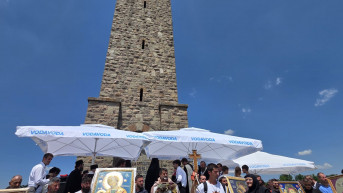
Following the Divine Liturgy in Gracanica, whose walls are topped with barbed wire, thousands of people move toward Gazimestan, itself enclosed by barbed wire.
Entry is restricted by several rows of iron barricades.
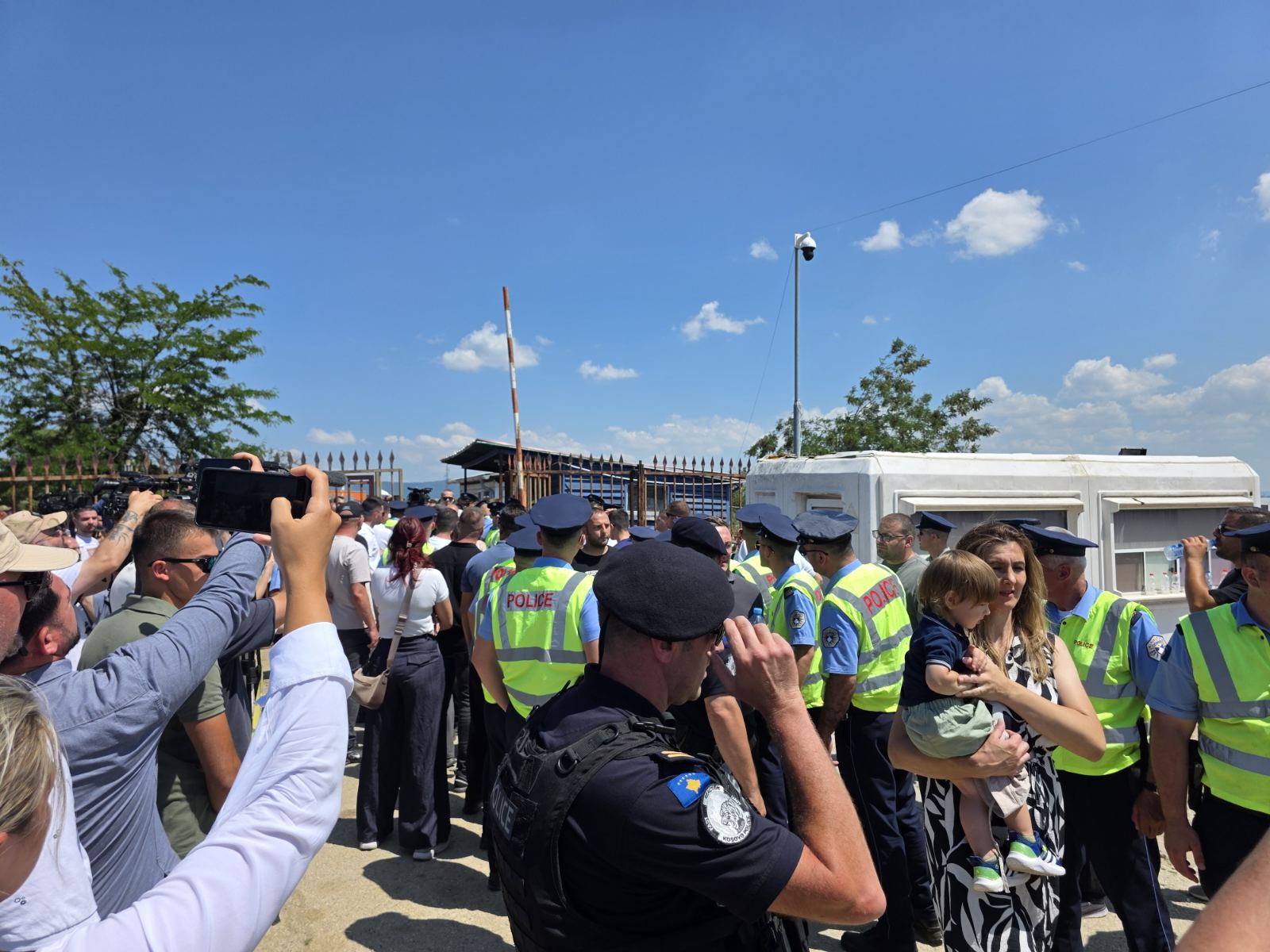
Visitors are directed to checkpoints where police officers inspect bags, lift shirts to read what is written on T-shirts, conduct searches, and pat people down.
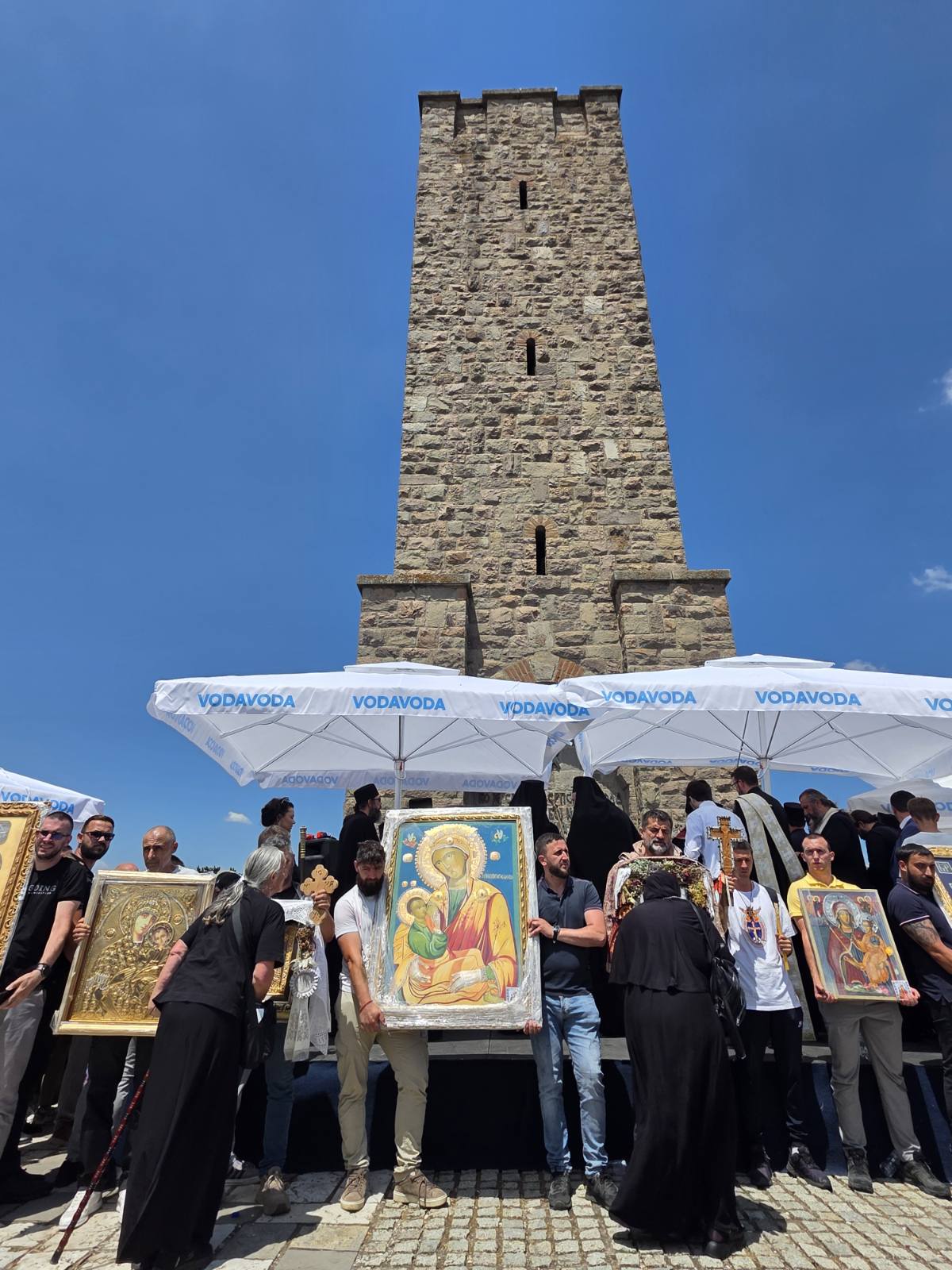
The memorial service before the Monument to the Kosovo Heroes is officiated by Metropolitan Joanikije of Montenegro and the Littoral, Metropolitan Atanasije of Mileseva, Metropolitan Teodosije of Raska and Prizren, Bishop Maksim of Western America, Bishop Jovan of Slavonia, and Auxiliary Bishop Ilarion of Novo Brdo.
Bishop Ilarion says that "nothing can be taken by force" and that the covenant cannot be forbidden because "we preserve our dignity and wish to exist, even in a place of terror."
The memorial service at Gazimestan resembles a gathering of Serbs from across the world.
Nikola Milosevic has come from Nice, France, with his son to show him the place where his great-grandfathers are buried.
This is the first Vidovdan without Serbian flags.
After the memorial service, several dozen young people step onto the stage and sing "Oj Kosovo, Kosovo," "A Thousand Vidovdans," and finally "Njegos Sleeps on Lovcen, the Wisest Serbian Head."
The officials leave, and a large crowd forms at the exit from the memorial complex.
Plainclothes officers, uniformed police, and finally members of the special police line up, watching to decide whom they will take away.
People pass through a corridor where the two lines of officers nearly press against them with their chests, while hands push them from behind to hurry them along.
They wait for their targets, forcing them into a dirty shipping container.
From there they are transferred into police vans and taken to police stations.
A young man is holding a little girl in his arms when he is taken away.
He stands in front of the van as the child cries uncontrollably.
The father's face is frozen.
A teenage girl appears completely overwhelmed as the container door closes behind her.
"My God, how many of them can they fit in there?" one journalist says.
A special police officer immediately confronts him, shouting and trying to drive him away, irritated even by his words.
A young man wearing the traditional costume of the Kosovo Serbs is pushed into a tightly packed group of other young men.
Shortly afterward, on the other side of what the author describes as this purgatory, he is seen with his hands tied.
There is not enough room in the police vans, so police SUVs are also brought in.
It is impossible to tell who has it worse—the people passing through the corridor while officers push them forward, or those singled out and taken aside.
Inside the barbed-wire enclosure at Gazimestan, every song you sing and every word you speak can be heard only by you and is directed only to those around you.
Yet drones and plainclothes police officers indiscriminately identify individuals and seek to suppress every form of their public expression.
Repression, force, hatred, and fear reach their peak at Gazimestan.
The image of what the author describes as a camp will travel around the world, while a Kosovo Serb—such as the young man in traditional dress—passes from a barbed-wire ghetto through police repression and, after being punished, is allowed to return to his village, to what the author calls his Serbian Kosovo ghetto without barbed wire.
Everything is clear to him.
Yesterday, thousands of his peers passed through what the author calls a school of freedom at Gazimestan.
They endured humiliation and paid the price for their songs and their words.
They walked the hardest road, summed up in the words of a young man from Trebinje who, at the end of what the author describes as the Gazimestan camp and the Kosovo police corridor, simply said:
"Next year I'll bring all my people here."
Written for Politika by journalist and writer Živojin Rakocevic
0 comments