
How did the West's attempt to declare Kosovo a "sui generis" case fail, and what are the consequences of that?
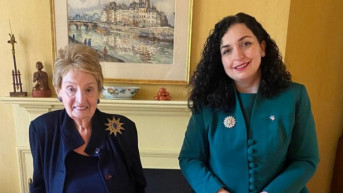
"If Kosovo is not Serbian, why do they ask Serbia to give it to them? If it is theirs, why do they seize it? These questions, long ago posed by the poet Matija Beckovic, still best explain the essence of the Kosovo knot. The attempt to forcibly take a part of Serbia's territory, with all the assistance of the powerful West, has not managed to endure as a unique - sui generis - case. The resolution is still ahead of us..."
Edited by: Milos Garic
The international order after the Second World War was based on two fundamental principles - the right of nations to self-determination and the territorial integrity of sovereign states. Although it may seem contradictory at first glance, in essence, it is actually very clear. For any demand for self-determination and secession to be respected and for that independence to be legitimate and recognized, there must be the consent of the parent sovereign state. Otherwise, it cannot happen.
All successful cases of secession, and there have been many around the world in the last 75 years, have followed this model. One such case was in the immediate neighborhood, with Montenegro, which in 2006 conducted a referendum for independence and exit from the joint state with Serbia. After the "close" result in the vote, explicit consent from Belgrade arrived, accepting the will of the people of Montenegro.
The story of the Albanian attempt to secede Kosovo from Serbia, however, drastically deviated from the fundamental rule. It began with the violent actions of Albanian paramilitary formations of the KLA in 1998, continued with NATO bombs over Serbia in 1999, and ultimately with the unilateral declaration of independence without holding a referendum in 2008. Of course, without the consent and with clear opposition from Serbia. Western military and political powers, however, largely supported the Albanian desire for secession in Kosovo, knowing that they were blatantly violating the United Nations Charter and the main tenets of international law. Their idea was to present it as a "unique" case, a legal "sui generis", allowing the Albanians to form another state in the Balkans and, at the same time, justify their concept of "humanitarian" military attacks on sovereign states.
After years of efforts to hide and blur international criminal activities behind the screen of 'sui generis', perpetrated by those who sought to 'redraw' the borders of states through brutal force and decided to violate the basic principles of the still-valid world order, such intentions have ultimately failed. Legal experts from all major global universities agree with this today, but what is even more important is that the current, never-stronger, pressure from the leading Western countries on Serbia to accept Kosovo's independence demonstrates this.
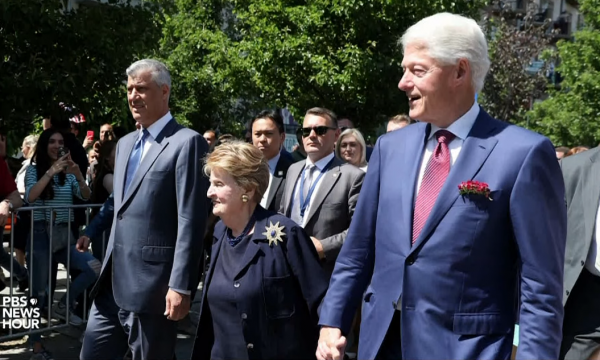
An experienced diplomat and former Minister of Foreign Affairs of the Federal Republic of Yugoslavia, Vladislav Jovanovic, emphasizes for Kosovo Online that, above all, the West's characterization of the violent secession of Kosovo from Serbia as a "sui generis" case is not legally justified.
"Sui generis" does not exist in international law
This, Jovanovic explains, was a form and justification intended to conceal the main goal from 2008 when the so-called independent state of Kosovo was declared.
"Kosovo was physically separated from Serbia by the unlawful action of NATO weapons and placed under UN administration, with an emphasis that Serbia had full sovereignty over that territory. Administration was supposed to last until a final political solution was found. Without waiting for that solution, Western powers that were aggressors against the FRY in 1999 encouraged the local authorities to declare independence in 2008, and those same powers recognized that independence and exerted unprecedented pressure on other countries to do the same. To achieve their goal, they declared that Kosovo was a sui generis case", Jovanovic recalls.
He emphasizes that the term sui generis does not exist in international law but exists in the policies of major states that, as Jovanovic says, have claims on the territories of other states.
The attempt to declare Kosovo as a so-called sui generis case was, as he points out, a way of deceiving the rest of the world that it was not about taking territory but about "something still unclear".
"In essence, it was just a form that was supposed to conceal the main goal achieved in 2008 with the declaration of the so-called independent state of Kosovo", Jovanovic emphasized.
According to the longtime diplomat, this act is a combination of violations of international law in a series of cases.
"Firstly, it is a violation of UN Security Council Resolution 1244, which recognizes Serbia's sovereignty over Kosovo and Metohija. The second is the admission of Serbia and Montenegro to the UN in November 2000, which was unanimously accepted in its entire territory, including Kosovo and Metohija as a province. On the other hand, the OSCE, at its founding in 1975, adopted the Final Act containing principles binding on all members. One of the first principles is the inviolability of the borders of member states, except with their consent. This basic principle was grossly violated first by aggression, then by declaring independence, and finally by pressuring Serbia to accept it", Jovanovic stated.
He also recalls that the OSCE adopted a special document on the rights and duties of members of national minorities in member states. This document explicitly emphasizes that national minorities do not have the right to self-determination or to a state.
"They are guaranteed rights in the field of education and culture, both individual and collective, and as for territorial autonomy, it is left to each state to decide. If it wants, it can grant them territorial autonomy, not independence. That is the maximum to which national minorities can go", Jovanovic said.
Necessary consent from Serbia
Taking all this into account, the question arises as to why the Western powers resorted to this euphemism - a special case or sui generis.
Jovanovic points out that the centers of Western power have turned to many countries with a complex structure and potential candidates for rebellion and secession, even though they do not have the right to do so according to international formulas.

"So they blurred that case to buy time. However, even that doesn't help them. Even if they declare the special case as prevailing, they can't do anything without the consent of the mother country, and that is Serbia. Serbia is the one that matters. It is so according to documents on the immutability of borders, which they violated. Pressure on Serbia is now coming from all directions. All Western countries participating in the aggression against us, plus their allies, are collectively pressuring us to renounce the oldest part of our country and our statehood to please them and cripple ourselves. And that is now a problem for them", Jovanovic explains.
In his opinion, since Serbia has no intention of agreeing to this, Western powers will increasingly face problems and will have to adjust sooner or later.
"They need to explain to their proteges, the Albanians, that they did everything to secure their independence, but unfortunately, it is no longer possible. Therefore, they must enter into talks with Serbia and reach an agreement on what status Kosovo will have. This is an inevitable consequence if they do not obtain Serbia's consent, and it seems they will never get that consent", Jovanovic concludes.
However, that is not the only reason why the West will have to adjust its views and aspirations.
Jovanovic points out the speed of changes in international relations and that many countries are increasingly overcoming their fear of Western hegemonic powers and are rapidly aligning themselves with the leading powers that have resisted, namely the BRICS countries - India, China, Russia, South Africa, and Brazil.
All these countries with complex national compositions, according to Jovanovic, are "in line" to join BRICS, which guarantees an international order in which there will be no room for aggression, pressures, blackmail, and various "sui generis cases".
Cases of Sudetenland and Bangladesh
According to Jovanovic, a case like Kosovo only existed with Adolf Hitler and can be compared to the seizure of the Sudetenland from Czechoslovakia and its annexation to Germany.
"Such a case only existed with Hitler when he pressured Czechoslovakia in 1938 and forcibly took the Sudetenland, which was predominantly inhabited by the German national minority, from Czechoslovakia and annexed it to Germany, using force and ultimatums. The whole world did not accept that; after World War II, Germany had to return that part, along with other things. So, there are no precedents and no successful instances like that", Jovanovic concluded.
As an example that the mother country holds the key to changing borders and the independence of a part of its territory, Jovanovic cites the case of Bangladesh, which could not join the UN without Pakistan's consent.
"For instance, when Bangladesh seceded from Pakistan 30-40 years ago and created the state of Bangladesh, India, and all other countries rushed to recognize it, but that state could not enter the UN until Pakistan, the mother country, consented to it. Only after several years did Pakistan give its consent, and surely, in return, it got something it still won't publicly disclose, probably the right to produce nuclear weapons to align itself with India. This is an example proving that the mother country holds the key for the forcibly seceded part to enter the UN. That part may enjoy support from major powers, but without that consent, it can't", Jovanovic emphasized.
He believes that in the newly emerged geopolitical circumstances, the West no longer has the power to force Serbia by any means to agree to anything that is not in its interest.
"If they were to try, it would expose the West to unpredictable consequences, and the West certainly would not be prepared for that. Simply put, the world's image and the balance of power have changed, and that is promising for us and challenging for the Western architects of the so-called state of Kosovo", Jovanovic concludes.

comments