
How would a potential withdrawal of the West from the war in Ukraine affect the future of the Kosovo issue?
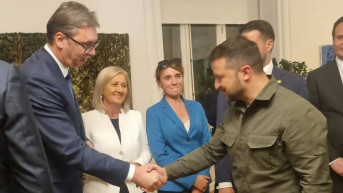
"The war in Ukraine is changing geopolitical paradigms across Western Eurasia. These changes will be extensive in scope and dramatic in character. It is very difficult to predict them, especially when it comes to details. In this context, all current and future events will have an impact on the Kosovo issue".
Edited by: Milos Garic
On February 24, 2022, at five o'clock in the morning Kyiv time, Russia initiated a military intervention in Ukraine, accompanied by tectonic political changes that immediately began to shake the entire planet. Among the first questions raised was the impending impact on Serbia's position regarding Kosovo and Serbian-Albanian relations.
These days, a year and nine months later, some things are clearer, but we are still far from the epilogue of the bloody war, which brought to the surface the complexity and risks of the political West's conflict with the rest of the world.
While the old international order found itself on the brink of a deep abyss, and the outlines of a new one are only timidly emerging on the horizon, after the initial euphoria among the political leaders of Kosovo Albanians, convinced that, due to the Serbian Government's refusal to sever ties with Russia, the time had come for a final reckoning with Serbia, things no longer look so optimistic for official Pristina.
Albin Kurti had long believed that by insisting on the role of a victim in the relationship with Serbia, he could take on the role of Volodymyr Zelenskyy in the Balkans. He was almost convinced that by provoking a conflict, he could pave the way for "mutual recognition" quickly. However, the scenario in which he wanted to portray the Serbs as an extension of the "evil Moscow" and an indictment he personally wrote for Vucic, besides not being based on reality and facts, also turned out to be a "jumping the gun".
Without intending to prejudge the outcome of the war in Ukraine, considering the current positions and conditions on the battlefield, as well as general developments on the world stage among the main actors, it is interesting to pose the question, "In what way would a potential withdrawal of the US and the EU from military and financial support to Kyiv in further wartime actions impact the fate of Serbian-Albanian relations and the status of Kosovo, for which UN Security Council Resolution 1244 remains the most relevant international document?"
Kurti as a pressure tool
Dusan Prorokovic, a Scientific Researcher from the Institute for International Politics and Economy, points out that the war in Ukraine is changing geopolitical paradigms across Western Eurasia and that these changes will be "extensive in scope and dramatic in character“.
"It is very difficult to predict, especially when we talk about details. In this context, all current and future events will affect the Kosovo issue. The war in Ukraine has strengthened Serbia's position in the medium term, despite bringing new short-term pressures. Just as the Israeli intervention has provided new arguments on our side that can now be used for discussions about the events of the 1990s. I think that's why there is increased pressure on Belgrade. Because, in five years, international relations will look different, making it harder for the US and the EU to justify their misconduct in Kosovo. In this context, Kurti is just a tool for exerting pressure on Belgrade. It is unfair to underestimate anyone, but Pristina simply does not have the capacity to impose anything in those major discussions about European security", Prorokovic explains for Kosovo Online.
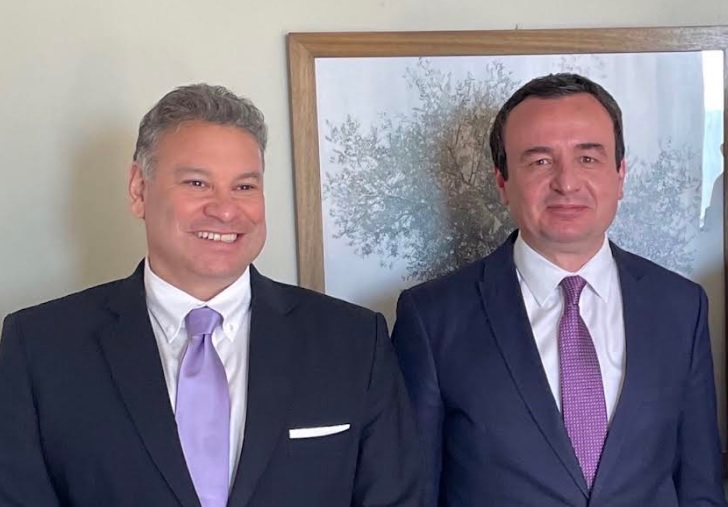
Speaking about the extent to which the Ukrainian war is connected to the issue of the status and security situation in Kosovo, he emphasizes that this process is already underway, and the US and the EU are stepping on it because they want Vucic's signature right away.
"They no longer have time for half-solutions and verbal agreements. However, they no longer have the position or strength they had 20 years ago. That's why there is a new round of destabilization occurring in the post-pandemic period and undermining regional security. Principles no longer apply, so simple comparisons are not good either. In fact, principles will apply only as much as we make them valid. Resolution 1244 can be valid only if Serbia maintains it as a principle, and this is achieved by not giving up on it and insisting on it constantly. This resolution is different from a whole series of others since it has the character of a peace agreement; it is post-conflict, aimed at regulating broader relationships for the sake of establishing long-term stability", Prorokovic emphasizes.
In his view, in the first phase of hypothetical negotiations on Ukraine, discussions must focus on de-escalation and resolving current issues to satisfy the interests of all involved parties. Only in the second phase does the question of principles that will ensure stability in all of Europe come into play.
"Now, that second phase may occur in two, maybe 20 years, or it may never happen. If there are too many dissatisfied parties after the first phase of negotiations, then there may be a new war afterward. Just as a new war broke out after the Minsk Agreements and UN Security Council resolutions on Ukraine were adopted after 2014. The idea that the West will now agree to the division of Ukraine, and as a result, we will eventually have to recognize the so-called Kosovo, is not realistic from a purely theoretical perspective. The dynamics of international relations are complex, and their history shows us different outcomes in a whole series of specific examples", Dusan Prorokovic says.
Consequences for European countries
Prorokovic points out that the political West regarding the war in Ukraine is not homogeneous, despite their presentation.
"Horizontally, various Western states have different positions on Ukraine. For example, Slovakia has stopped sending military aid to Kyiv. And vertically, differences are significant within Western states, in the relations between government and opposition or leading media and intellectual elites. That's why all of this we are witnessing is temporally limited. The political West, especially European countries, cannot tolerate the duration of the war in Ukraine indefinitely. Over time, the consequences become greater for them. I estimate that they will very quickly introduce the dimension of 'negotiations with Putin' into political discourse. First, to gauge public opinion, and then to build some informal communication with Moscow based on that. It is difficult to expect that such an approach will bring express results, but it will contribute to the demotivation of Kyiv and give the impression that they are leaving Ukraine in the lurch. The danger for them in such a development is that other countries will follow Slovakia, and anti-war forces in Western countries will strengthen. However, I don't see an alternative to this. Except for further escalation of the conflict, which can then go in who knows what direction. In any case, this will all take time, even if it enters into new, relatively calmer phases", Prorokovic concludes.
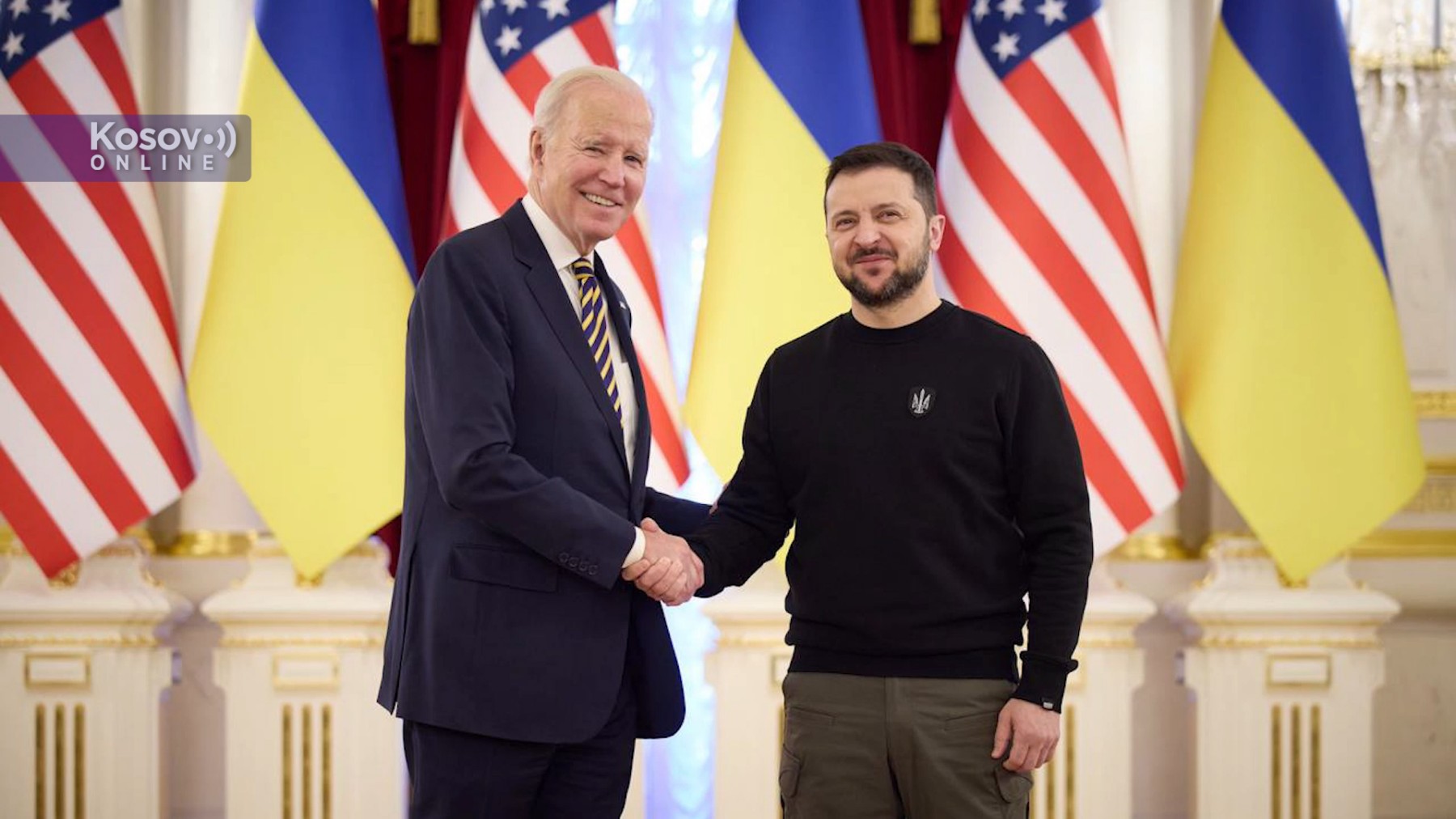
Political analyst Ognjen Gogic, speaking to Kosovo Online, says that the hypothetical scenario of halting Western support to Ukraine is difficult to anticipate in terms of its global implications.
Major changes in international relations
"It seems unlikely. If we were to speculate about it, however challenging it may be, it would mean Russia's victory in the war. The question is how the EU would react in that situation. My assumption is that the focus would be on preserving the security of external borders and internal stability. This would inevitably lead to the halt of the enlargement process. Western European states are aware that this would import new problems but also make it harder to ensure internal cohesion within the EU, which is already seriously undermined", Gogic points out.
The second question, he says, is what geopolitical role the Western Balkans would play in such a scenario.
"My second assumption is that the Western Balkans would be some buffer between the EU and the Russian world, and it would become divided between the European and Russian spheres of influence. The Western Balkans would certainly not have a perspective for membership because it would complicate decision-making within the EU. In that light, the resolution of the Kosovo issue should also be considered. In such circumstances, the EU would no longer be able to play the role of a mediator, and a biased one at that, as it would have even less say in the developments in the Western Balkans. In this regard, there would be less pressure on Serbia to recognize Kosovo, or it could disappear entirely. The Brussels dialogue would definitely be terminated, while relations between Belgrade and Pristina would be in free fall", Gogic believes.
According to his assessment, in that case, the international position of Pristina would be significantly weakened because the West would have less capability and willingness to strengthen it.
"Nevertheless, I think it should be kept in mind that the resolution of the Kosovo issue has proven quite resistant to factors in international relations. Over the past 20 years, there have been significant changes in international reality, and the Kosovo issue has remained open. This shows how problematic and unsustainable the unilateral secession, by which the West tried to resolve the Kosovo issue, is as a solution. Returning to the state before 1999 is also not possible. In that sense, the Kosovo issue would still remain open, with reduced pressure on Serbia to accept the independence of Kosovo as a solution", Gogic concludes.
0 comments