
Will the "balanced" proposal from Brussels for the CSM be a chance for an agreement or another stumbling block?
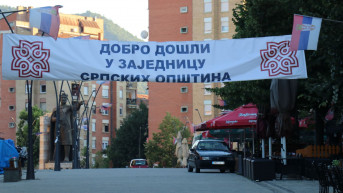
At the meeting in late October with the leaders of Kosovo and Serbia, representatives of the European Union presented, according to messages coming from Brussels, a "balanced" proposal for the establishment of the Community of Serb-majority Municipalities, which the Serbs in Kosovo have been waiting for over a decade. The specific solutions envisaged by this document are still unknown, and Kosovo Online's interlocutors point out that the new offer from Brussels could be a chance for an agreement rather than another stumbling block only if it includes the old obligations that Pristina must fulfill.
According to the spokesperson of the EU, Peter Stano, Serbian President Aleksandar Vucic and Kosovo Prime Minister Albin Kurti hinted at "general" readiness to accept the EU proposal. Stano stated that both sides had conditions that had been unacceptable to the other side, and he emphasized that the EU expected the implementation of the Community of Serb-majority Municipalities to begin without further delay.
President Vucic stated that a good part of the new proposal was already contained in the principles adopted by the 2013 agreement and confirmed Belgrade's readiness to discuss it. Still, he also expressed fear that the Community of Serb-majority Municipalities would not be seen "soon". On the other hand, Kurti claims that the proposal is in line with the Constitution of Kosovo and does not mean that it is the Community of Serb-majority Municipalities envisaged in the Brussels agreements of 2013 and 2015.
US Ambassador to Kosovo Jeffrey Hovenier said today that the US believes that the CSM should be formed entirely in accordance with the existing Constitution of Kosovo, as well as in line with the decision of the Constitutional Court on this matter. He stated that there should be no executive powers, and he did not see how it could be autonomy under those conditions.
Slobodan Zecevic, a Scientific Advisor at the Institute for European Studies, points out that the balanced proposal for the Community of Serb-majority Municipalities was the basic agreement on the CSM from 2013, noting that Serbia then gave up a lot in the north of Kosovo in favor of Pristina's institutions, and in return, it gained the possibility of forming the Community with significant powers.
Zecevic tells Kosovo Online that what the EU is now presenting as a balanced draft of the Statute of the Community of Serb-majority Municipalities, given that European institutions are under the influence of the US, which recognized Kosovo's independence, as well as under the influence of France and Germany, which also recognize Kosovo as independent, can meet the demands of Pristina.
He notes that it is challenging to speak about a document that has not come to light and adds that conclusions can now be drawn from the statements of EU leaders and Kosovo institutions, possibly some statements from representatives of Serbian state bodies.
According to Zecevic, the EU is now facing several problems, and the first is that they are in conflict with their original document.
"In the Franco-German plan from February of this year, it was stated that the agreements that had been valid earlier would be implemented. The Brussels Agreement is something that was concluded earlier and should be implemented. However, now they are saying we have a new, balanced proposal that will suit both sides. This means that we can conclude that the original agreement on the CSM is not valid, that they have revised that agreement and made something else, and they are in conflict with their original document they insist on from February this year", Zecevic states.
As he says, another problem may be that Kosovar Prime Minister Albin Kurti has always linked the formation of the CSM with mutual recognition and full normalization of relations, which he still insists on.
"The question is how operational all of this will be, given that Albin Kurti himself says, 'But, without mutual recognition, we won't implement anything'", he emphasizes.
He adds that there are many unknowns, including whether Pristina will implement what has been agreed upon, what the agreement is, whether it is acceptable to Belgrade, and whether it deviates too much from what was signed in Brussels in 2013.
"Of course, all of this will become clearer when the document prepared by the EU is published," he adds.
Foreign policy commentator Miroslav Stojanovic tells Kosovo Online that the question arises whether the EU's proposal for the formation of the Community of Serb-majority Municipalities, which Brussels claims is balanced, was submitted to the parties on a "take it or leave it" basis or whether there is the possibility of its modification.
"For now, it is not known exactly what the draft of the CSM Statute contains. I'm afraid that the direction is towards relativizing what has already been signed in the two Brussels agreements in 2013 and 2015, and the question is how acceptable it is to Belgrade. So far, Belgrade has officially insisted that what is written there is unchangeable and that a line should be drawn," Stojanovic says.
He reminds that EU Envoy for Dialogue Miroslav Lajcak mentioned 15 different models of autonomy in Europe that could be applied to the formation of the CSM, even before the summer.
"They obviously made some combinations, also considering the old Ahtisaari plan, about how the CSM should really look like. More information about what the EU proposal for the CSM Statute contains comes in some way from Pristina, after the meeting with Lajcak, where local opposition leaders were present. For example, Ramush Haradinaj was very talkative there, saying that he read everything and assuring the Serbian community that it was the winner. But, on the other hand, he insists all the time that it is from start to finish, 'from A to Z', integrated into Kosovo's legal system", Stojanovic says.
He emphasizes that we need to see what Belgrade's positions will be regarding the EU proposal, whether the Serbian side will insist that what has been agreed should not be dismantled, because then we come to a situation, he warns, "where the previously reached agreements are turned into a kind of chaos".
He adds that the international community has always come up with some initiatives and platforms, and for a while, there was insistence on standards before status.
"No one almost mentions standards now. I am among those who believe that normalization is possible, I am not talking about what status Kosovo will have. So far, Belgrade has been uncompromising in accepting the southern Serbian province as an independent state. But in that normalization of life, for people living there, whether they are Serbs or Albanians, some kind of security and certainty should be provided, so that there are no political minefields in every situation, whether it's license plates for vehicles, goods that cannot cross administrative crossings or now medicines. Normalization is important, and if there is goodwill in the international community, Belgrade, and Pristina, it would allow people to think about tomorrow. Now the situation is extremely uncertain for everyone, and that's the worst part. In such situations, small fires can always be ignited that turn into a larger fire", Stojanovic points out.
He emphasizes that he was and remains convinced that the Kosovo knot cannot be untied overnight and that in that square of the circle, especially due to the distant positions of Pristina and Belgrade, it is difficult to find a solution.
"There will be more envoys working on it, I believe, but with less success. Who even remembers Baroness Ashton who started the whole process and Mogherini who continued it? I believe that, for example, in the new reshuffling of the cards after the elections for the European Parliament, probably even Lajcak, who is already quite in that position, will not be on the political scene with such attributes as he came. He had great support from the Germans; he was the choice of former Chancellor Angela Merkel, but things really haven't changed", our interlocutor notes.
Milan Krstic, an Associate Professor at the Faculty of Political Sciences, believes that there is room for compromise regarding the formation of the Community of Serb-majority Municipalities, as well as for the principles from 2015 to be implemented with changes to the Constitution of Kosovo or with some broader interpretation of certain provisions. He also emphasizes that it is easier to reach an agreement than to implement it because there must be the will of Pristina to establish the CSM. Regarding messages from Brussels that a balanced model for the formation of the CSM has been proposed, Krstic tells Kosovo Online that at this moment, we can only speculate about what the draft of the CSM Statute contains from statements we had the opportunity to hear from officials in Belgrade and Pristina in recent days.
"President Vucic said that the draft of the statute contains the majority of things that were previously agreed upon. Whether this means there is something not included, remains to be seen. Probably, if everything were included, it would be stated. Similarly, if it's about a balanced approach, as emphasized by the EU if everything demanded by Belgrade were included, it would mean that Pristina considers it unbalanced", Krstic notes.
He reminds that, regarding Pristina, it demands that everything adopted be in line with the decision of the Constitutional Court of Kosovo, which declared some provisions or aspects of the 2015 agreement unconstitutional.
"Of course, there is room for compromise. There is also room for the provisions from 2015 to be implemented with amendments to the Constitution of Kosovo or with a broader interpretation of certain provisions. Whether this is what the statute will contain, a proposal on how to resolve these problems, or this collision of views, I believe it is. I believe that there will be no deviation from the basic principles. So, what Albin Kurti proposed at the time, which was actually a deviation from the foundations agreed upon in 2013 and 2015, I doubt it can be a part of the agreement based on everything Belgrade clearly stated as its position, whether it will or will not accept, and what the international community has emphasized must be implemented", Krstic emphasizes.
Regarding the mention of European models that could be applied to the CSM, Krstic notes that there are various examples of territorial autonomy that function in Europe, but each of them has been applied in different contexts and circumstances, such as South Tyrol, the Aland Islands, or certain regions in Spain.
"The Community of Serb-majority Municipalities should actually represent the consolidation of existing competencies that the Serbs have through local self-government, plus the addition of certain elements of self-government. And, of course, most importantly, linking all of this to Belgrade, i.e., to the functioning of the institutions of the Republic of Serbia. How much will be added, whether these things will be executive, and how funding will be implemented in practice remains to be seen. In that regard, this is an exceptional context, but, unfortunately, I don't think any proposal that is adopted now can reach the level of greater self-government that exists in, for example, the mentioned cases, which I think would be necessary for the survival of the Serbian community in Kosovo. But, it doesn't seem to me that any proposal will go in that direction", our interlocutor says.
In response to the question of whether the fact that the parties had not rejected the EU proposal regarding the CSM was a good sign that further negotiations were possible or if it was due to significant pressure faced by both Belgrade and Pristina, and they were now merely showing at least a minimum of goodwill and not undermining the continuation of the dialogue, Krstic believes that both factors are at play.
"I believe that one step forward will be taken, as was done in Brussels and Ohrid in terms of formal discussions and progress in the dialogue. On the other hand, when it comes to implementation, I believe there will still be obstacles, primarily coming from Pristina, as has been the case so far. However, now, due to the Banjska incident, Belgrade is under pressure to make concessions as well. So, it might be easier to reach an agreement, but for its implementation, Pristina definitely needs to decide that it wants to form the CSM. I don't think that will happen soon. There will probably be some progress; the formation process will start, and then we'll likely encounter a similar stumbling block in a month or two", Krstic concludes.
Political analyst from Pristina, Mimoza Gavrani, stated to Kosovo Online regarding the proposal for the draft of the CSM Statute offered by the European Union, that it was important for leaders of both Serbia and Kosovo to demonstrate their readiness to make responsible political decisions leading towards stabilization and peace in the Balkans. Gavrani conveyed this while commenting on the message from EU spokesperson Peter Stano, stating that EU representatives presented a balanced proposal for the formation of the CSM in recent meetings with the leaders of Belgrade and Pristina in Brussels, and that Serbian President Aleksandar Vucic and Kosovar Prime Minister Albin Kurti had hinted at a "principled" readiness to accept this proposal.
When asked about what would constitute a balanced proposal for the CSM from the perspective of Pristina, Gavrani stated that the sensitive and critical question for Pristina had always been whether the CSM would be formed according to the 2013 agreement or if there would be any changes.
"The European Union is trying, I don't know if it succeeds, but it is trying to maintain a balanced approach regarding Kosovo and Serbia; that is their stance and position. It is important that Mr. Kurti and Mr. Vucic are in a position to make political decisions that will show the EU and others assisting in the dialogue that Kosovo and Serbia are ready for stabilization and peace in the Balkans. This is crucial in these challenging times", Gavrani said.
Our interlocutor points out that it is difficult to speculate about what is contained in the "balanced proposal for the CSM", as Stano puts it.
"Even though we are small countries, it is necessary that we finally do not have tensions and do not make political mistakes", she believes.


0 comments