
What is the background of the increasing influence of radical political Islam in Kosovo?
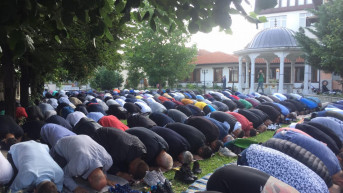
"About 40 percent of Albanians in Kosovo define themselves primarily as Muslims, and only then as members of their nation. Moreover, around 100,000 Albanians in Kosovo not only adhere to conservative doctrines in the Islamic faith but have become fanatical followers of the Wahhabi form of Sunni radical Islam".
Edited by: Milos Garic
An increasing number of Albanians in Kosovo believe that political Islam is the only solution to the accumulated world problems. Data from recent research indicate that in the past 25 years, dozens of young Albanians from Kosovo have been educated in religious schools in the Middle East. Many of these schools promote radical Islam, and some of their followers have been convicted in Kosovo for promoting terrorism.
Some Pristina media reported that in 2022, hundreds of materials promoting political Islam were published on websites in Kosovo, prepared or translated into Albanian, and distributed through social networks. Although the police claim to have closed hundreds of such pages, many statuses are still accessible to the public.
The term "political Islam" in the Oxford Dictionary broadly refers to any interpretation of Islam that serves as a basis for political identity and action. More specifically, it refers to movements representing modern political mobilization in the name of Islam, a trend that re-emerged in the late 20th century. Any movement aiming to take over power and establish state laws based on religious rules is called political Islam.
The presence of political Islam in Kosovo is also evident in a recent initiative to introduce the obligation of wearing headscarves in girls' schools, which had as many as 37,000 shares on the Facebook social network.
Shukrije Gashi, the director of the "Conflict Management Organization", stated that "Serbia failed to divide the Albanians in Kosovo, but political Islam has done that", Koha reported.
"The defenders of faith" against Western secularism
Gashi emphasized that the division of people had begun with groups of political Islam, conditioning young Kosovo women to wear headscarves in English or computer skills courses.
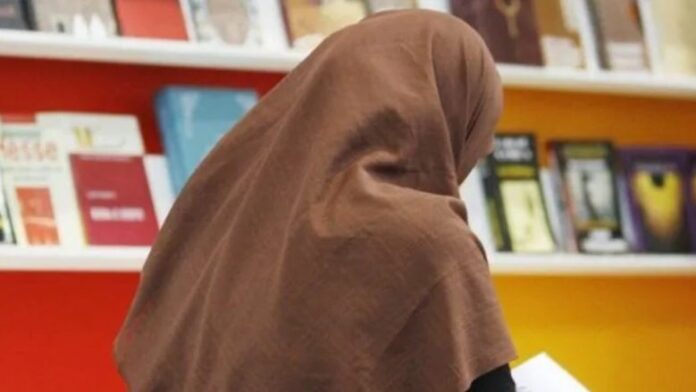
"The beginnings of political Islam in Kosovo date back to the 1990s. Serbia failed for decades to sow discord among the Albanians, but this was achieved after the war when the process of massification of this phenomenon began with the Arab Spring", Gashi stated.
Die-hard believers among the Albanians tend to adhere to the Arab interpretation of Islam and consider themselves defenders of the faith, resisting the penetration of Western secularism into Kosovo.
One of the most illustrative examples is the small Municipality of Elez Han in the southern part of Kosovo, with about 10 thousand inhabitants. Until 2012, it bore the name General Jankovic, after the renowned Serbian military commander from the Balkan Wars and First World Wars, Bozidar Jankovic, which the Serbs still use today. Despite being ethnically entirely Albanian since the summer of 1999, it is interesting that, according to research by certain Kosovo media, over 20 extremists from General Jankovic (Elez Han) went to wars in Syria and Iraq.
In the immediate vicinity of General Jankovic, on the way to Urosevac, is Kacanik, a municipality known for the most extreme Albanian nationalism, where the most significant influence on recruiting people into ISIS has been documented.
Poverty and the porous border with Albania
However, the UN and the EU continue to underestimate the danger of this type of extremism in Kosovo, where poverty and the porous border with Albania create fertile ground for radicalization.
"When we talk about the influence of Islamist political groups on the situation in the southern Serbian province, we should first distinguish the influence of 'conservatism in Islam' on political and general socio-cultural processes in the Albanian population structure in Kosovo and Metohija, in relation to the appearance and then affirmation of the extreme or radical Islamist movement in separatist Albanian political communities, as well as in the broader layers of local society", Ognjen Karanovic, a historian and director of the Center for Social Stability, explains for Kosovo Online.
According to him, it is undoubtedly true that, in its political, often extremely irredentist work, the Albanian national and separatist movement in Kosovo and Metohija relied on conservative Islamic doctrines that had been nurtured within the Muslim community since the time before and after the First League of Prizren at the end of the 19th century.
"The rise of these doctrines in the spiritual-political setting of the separatist movement of the Albanian ethnicity in Kosovo developed after the liberation of Old and South Serbia from Ottoman rule in 1912, reaching its first peak during the years of World War II, certainly within the framework of Italian, fascist, and German, Nazi occupation structures in Kosovo and Metohija. The spiritual and sociological sentiments of the collective consciousness of the Albanians from the ranks of the most dominant Muslim confessional community, especially their political, clan-tribal elites, were maintained permanently over a span of a hundred years in the coordinates of these conservative doctrines. That's why the Albanian population in the southern Serbian province, until a few years ago, remained one of the most closed, conservative societies in Europe", Ognjenovic continues.
He adds that for these reasons, the influences of radical Islamist ideas, generated from politically, ethnically, and ethnologically very heterogeneous conditions and movements of Muslim communities in the Middle East and Central Asia in the mid-previous century, were almost seamlessly integrated into the structures of Albanian separatist forces in Kosovo and Metohija.
"Especially since the moment when the terrorist and criminal activities of the so-called Kosovo Liberation Army began in the 1990s. The presence of leaders and groups of the then most powerful Islamist terrorist organization in the world, Al-Qaeda, is known in the criminal units of the KLA in Kosovo and Metohija, while the then leader of that infamous community of terrorists, Osama bin Laden, is said to have visited Albania, and secretly the southern Serbian province, in the early 1990s. We are obliged to point out the fact that under the influence of communist ideological teachings, both in Albania and in Kosovo and Metohija, the Albanian separatist movement in Kosovo, as well as the Albanian population of Muslim confessional provenance as a whole in the southern Serbian province, had a stronger "stamp" of secularism than religious fanaticism in their political doctrines until the end of the NATO aggression on the Federal Republic of Yugoslavia in 1999, and especially until the moment of the unilateral declaration of independence of so-called Kosovo and its recognition by the political West, whose political creature and caricature it represents", Karanovic emphasizes.
The crumbling of traditional Albanian society
He points out that since that period in Kosovo, extreme political forces have been strengthening, grounding their ideological-spiritual foundations within the framework of global Islamist radical interests or activities.
"The mentioned activities are particularly materialized through the involvement of these radical Muslim groups from Kosovo and Metohija in terrorist movements such as the Islamic State or various factions of the Muslim Brotherhood, operating in the Middle East. Within the Albanian ethnic community, but of Muslim religious provenance, a sociological phenomenon has occurred, whose patterns we can recognize in the traditions of the postmodern stratification of societies in the political West since the second half of the last century. Namely, parallel to the processes of collapsing the traditional Albanian Muslim society in Kosovo and Metohija, structured on conservative spiritual-confessional traditions, a movement of important elements of that society has been affirmed, especially in the layers of the younger population, towards the ideological-religious doctrines of radical Islam. The liberalization of the collective spiritual values of this society, a process carried out under the strong influence of the mass culture of liberal societies of the political West, has conditioned the mobilization of conservative political groups, but their mobility is based on the values of radical pseudo-religious values of the Islamic religion", historian Ognjen Karanovic emphasizes.
"Grandiose influence on the growth of Islamic extremism within the Albanian population in Kosovo, he says, had Arab states in the Middle East, primarily Saudi Arabia, and Turkey.
"Islamic extremism, Wahhabism, has become a 'powerful ideological weapon' in spreading the political influence of the 'guardians of Mecca and Medina' in Kosovo. Saudi Arabia, as well as Turkey, openly finance the work of numerous Islamic, so-called 'humanitarian' organizations, which build mosques, and hospitals, sponsor young Albanians... There is a well-documented and indisputable relationship between these organizations and extremist and terrorist groups, such as the Islamic Jihad, Jabhat Al Nusra, and Al-Sham, operating in the Middle East. All these groups and organizations are funded by powerful Arab monarchies, even the majority of them, but also by governments from the political West. Some of the most well-known organizations in Kosovo promoting religious extremism are Prizren Youth, Student Islamic Front, Albanian Youth for Kosovo, United Aid for Kosovo, Global Aid Foundation, World Assembly of Muslim Youth, International Islamic Aid Organization, Al Haramain Foundation, and others. Therefore, it should not surprise us that around 40 percent of the Albanians in Kosovo define themselves primarily as Muslims, and only then as members of their nation. Also, about 100,000 Albanians in Kosovo no longer practice only conservative doctrines in the Islamic faith but have become fanatical followers of the Wahhabi form of Sunni radical Islam", Karanovic concludes.

0 comments