
Ismail Kadare (1936-2024): The Rebellious Angel
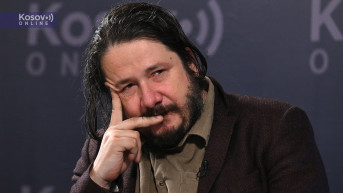
Muharem Bazdulj Writes for Kosovo Online
There are still people who remember well the "Bor Meetings of Balkan Writers" from some year in the late 1980s, when there was already some tension between Serbian and Albanian writers and intellectuals due to the situation in Kosovo and Metohija, perhaps just a year or two before Milan Komnenic, in Belgrade, in front of Ibrahim Rugova, Rexhep Qosja, Azem Shkreli, Jusuf Buxhovi, and Hasan Mekuli, among others, uttered those famous words: "Gentlemen, we are at war." It was at that time in Bor that Ismail Kadare (1936-2024) appeared and delivered a brief programmatic text about Ivo Andric (1892-1975) as the paradigmatic writer of the Balkans. From some great connoisseurs of Andric's character and work, I learned that they had never heard a more powerful, pregnant, and suggestive text about that crucial and decisive connection, the connection between Andric and the Balkans.
Andric has not had a true successor, at least so far, in either Serbian or other South Slavic literatures. He had one in Albanian. Although, that should be taken with a grain of salt, as they say. Despite being about forty years younger than Andric, they are writers of the same spirit and era. This is not actually surprising. When writing about his generation as a generation of rebellious angels ("It is a generation of rebellious angels, in that brief moment while they still have all the power and all the rights of angels and the fiery pride of rebels. These sons of peasants, merchants, or craftsmen from a remote Bosnian small town received from fate, without any special effort of their own, an open exit to the world and a great illusion of freedom."), Andric refers to a kind of jackpot in the historical lottery, the arrival into the world some fifteen to twenty years after liberation from a long monotonous colonial occupation and the opportunity to meet a new civilization on equal footing, the rare chance to make seven-league strides in one generation for which usually several are needed. A similar thing that the Berlin Congress of 1878 brought to Bosnia, the Balkan Wars and the London Peace Treaty of 1913 brought to Albania. The time difference between these two events is close to the time difference between Andric's and Kadare's birthdays, so both could be what they are in their culture.
They were similarly long-lived: Andric died just before his eighty-third birthday, Kadare at eighty-nine. Kadare was a more prolific writer but did not receive the Nobel Prize. Neither did Nikos Kazantzakis (1883-1957), who is for Greeks probably the closest to what Andric and Kadare are for Serbs and Albanians. Today we know that Kazantzakis was nominated for the Nobel nine times, but ultimately did not receive the prize. In thirty-forty-fifty years, when the archives of the Nobel Foundation from the years of Kadare's greatest international fame are opened, I am quite convinced it will be revealed that he was nominated for the Nobel more than nine times.
I don't mention Kazantzakis accidentally. Kadare often said in interviews that the Balkans are shared by Albanians, Greeks, and Slavs. He did not say Serbs, but he obviously considered the smaller nations of the same or related languages to belong together with the Serbs. Politically speaking, he was an Albanian patriot but did not underestimate Serbs and Greeks.
He had that beautiful Old Testament and Quranic name of the son of Abraham and Hagar, or Ibrahim and Hajara. It suited him well because he rejected religious differences within his nation, and Ismail belongs to both Christian and Islamic traditions.
He was one of the greatest writers of the twentieth century, one for whom it was probably the hardest to gain the world reputation he achieved. A writer of a small language, which at the same time does not belong to any large linguistic "family," he actually had the help of French as an intermediary language.
He has been present in Serbian since 1968 when he was not yet thirty-three, with the first local edition of his famous novel "The General of the Dead Army." The novel was translated by Esad Mekuli, and that first edition was published by "Bagdala" from Krusevac. There is also something nice about that: that his first book in Serbian came out in Krusevac and that he participated in literary meetings in Bor. On that geographical line, between the lines Dubrovnik – Sarajevo and Thessaloniki – Vidin, lies the heart of his Balkan world.
To me personally, he was important like few other writers. Some books I would not have written if doors had not opened for me through his work. I tried to leave traces of that in those books.
He died on July 1, the geometric middle of the year. He was from Gjirokastër, from the Mediterranean. Albert Camus spoke of the "Mediterranean measure." The Mediterranean was Kadare's world, as it was Andric's, as it was Kazantzakis's. Great writers connect worlds.


0 comments