
JD Vance and making Europe Hobbiton again
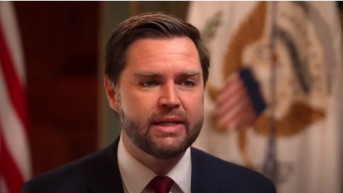
Written for Kosovo Online by Srdjan Garcevic, founder of The Nutshell Times
While the human intrigues in Geroge R.R. Martin's "A Song of Ice and Fire" offer a nuanced and realistic description of politics, it is unsurprising that the much more idealistic and Manichean "The Lord of the Rings" holds a significant sway on popular political imagination.
For many nerdy millennials who are now slowly assuming the reins of power worldwide, such as JD Vance, Peter Jackson's film adaptation came as they were discovering the world as teenagers. While the fantastic chiaroscuro images of the battles between the forces of good and evil are etched in the memory of almost every millennial, the true nerds know, that the most political part of Tolkien's masterwork was omitted from the films. The part in question is "The Scouring of the Shire," which would have broken up the straightforward narrative of the final movie and tells a story of how the provincial little Hobbit-land was almost destroyed by the external chaos as well as internal squabbles, even after the humans, elves, and dwarves vanquished the most significant threat in Middle Earth.
The first few weeks since Trump's inauguration brought significant changes in global politics - from the ceasefire in the Middle East to the start of negotiations about Ukraine - as well as political culture. From Trump's bold proposal for Gaza to be potentially turned into a luxury resort, to the dissection and dismantling of USAID (and similar agencies) at the hands of Elon Musk's DOGE, there is a sense of a clean slate in global politics, where new, more openly transactional, less moralistic and covert principles will be at play.
JD Vance's groundbreaking speech at the Munich Security Conference set out things that were, some decades ago, considered commonsensical but seemed radical and dangerous to the defenders of the previous globalist liberal order: namely, that countries should prioritize the freedom and prosperity of their citizens, even at the cost of broader abstract principles (even when those have shown to fail on their terms).
The speech was a critique of the continent that prided itself on Shire-esque landscapes and Hobbit-like love of leisure but finds itself at the mercy of people who are making it dysfunctional and miserable through policies ranging from the restriction of free speech and political action to the overregulation of the economy.
However, despite these winds of change and the lack of progress, much of Europe's establishment still seems stuck in its ways and willing to risk the safety, freedom, and prosperity of its citizens.
Not only that, in a bit more than two weeks after the speech, there were terrorist attacks in picturesque small towns throughout Europe, such as Mulhouse and Villach, enabled by overly permissive and chaotic immigration policy, which JD Vance warned about, but there were moves which threaten the very ideas of freedom and stability that European leaders purport to defend.
The continued persecution of Calin Georgescu, the front runner in the Romanian presidential election, and the show trial and indictment of Milorad Dodik, the president of Republika Srpska, show the unwillingness of European leadership to adapt to change. Much like the immigration policy, they almost ensure blowback: complete loss of public legitimacy of state institutions in Romania and even worse functioning of Bosnia and Herzegovina, which is already strained by the unwillingness of European (and formerly US) diplomats to respect the Dayton agreement. What is worse, given Europe's overstretched economy and especially defense capabilities, these are crises that it cannot resolve on its own, and would, isolated as it is from the rest of the world since 2022, have to rely on the US to solve or risk causing even more global chaos.
European diplomats' support for Sarajevo authorities' demands for unitarisation of a very fragile country and the unlawful imposition of Christian Schmidt as the High Representative without the agreement of the UN Security Council or Republika Srpska are as damaging to the region as faint critiques of Kurti's aggressive policies in Kosovo and Metohija. Neither has resulted in a more functional society. Indeed, after some initial progress, Bosnia and Herzegovina will celebrate the 30th anniversary of the Dayton Agreement in as dysfunctional a state as ever.
Much like in "The Scouring of the Shire", the old, broken system seems to be clinging for its life, causing as much chaos and damage, without any chance of winning, seemingly only out of spite. No wonder that Tolkien enthusiasts from the Western lands across the ocean feel the need to interfere.



0 comments