
Marko Djuric: Recalling a Bombing 25 Years Ago
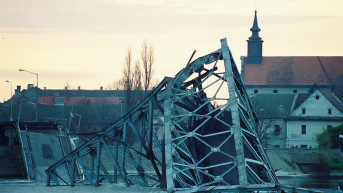
Twenty-five years ago, today, on March 24th, NATO commenced a terrifying bombing campaign against the then Yugoslavia. The sorties lasted 78 days, and by the Serbian government’s estimates, led to the loss of several thousand civilian lives in the bombings and the displacement of more than 250,000 citizens.
Heavy damage was inflicted on our armed forces, which were – only declaratory – the main target of the attacks. In order to exert higher political pressure on the authorities in Belgrade, NATO conducted an extensive bombing of vital civilian infrastructure as well – including the destruction of bridges in key cities such as Novi Sad, the second largest city in the country, located hundreds of miles away from Kosovo and Metohija. Among civilian targets, there were also electric and energy power plants, hospitals, schools, kindergartens – even the building of the Radio-Television of Serbia (RTS), the biggest national broadcaster, was bombed, which led to the killing of 16 media workers.
Fighting in Kosovo and Metohija erupted in 1996 between radical Albanian extremists and the Serbian people in the province. Those radical Albanian separatists – the so-called Kosovo Liberation Army (KLA), built from an odd mix of Maoist and neo-fascist fighters, was designated as a terrorist organization by the U.S. State Department long before the NATO bombing. The Western air attack, therefore, represented a decision by NATO member countries to join with the most extremist separatists in what was an insurgence – they chose to make common cause with KLA leader Hashim Thaci, a man who is today on trial in The Hague on ten counts of war crimes and crimes against humanity.
Without the prior approval of the United Nations Security Council, NATO made an unprecedented decision to start a bombing campaign against Yugoslavia. The decision was widely criticized not only by the much-scorned Milosevic government, but also by most of the Serbian democratic opposition that, just a year later, would help end the regime of Milosevic. As a young activist in Otpor, a civic group that helped lead my country’s rejection of Milosevic’s Communist rule, I, too, was horrified by NATO’s decision.
The consequences of NATO’s allying with the radical KLA echo to this day. As a result of KLA wartime actions and rule – especially its leaders who were subsequently appointed to lead the highest institutions in Pristina – and the internationally supported unilateral declaration of independence of Kosovo in 2008, the status and livelihood of Serbs and other non-Albanians continues to gravely deteriorate daily. Its Serbian population continues to suffer long-term discrimination, repression, and persecution. The Kosovo region’s community of some 350,000 Serbs has declined by 250,000. And the 100,000 or so who remain in the province are denied basic rights and harassed on a daily basis by the Albanian-controlled institutions in Pristina—all with the intention of forcing these last remaining Serbs to flee and creating a mono-ethnic territory.
In 2013, the Brussels Agreement –negotiated by the E.U.—was a breakthrough in resolving tensions between Belgrade and Pristina, and included key provisions protecting the rights of Kosovo Serbs and offering them significant self-rule-- including self-policing-- with the aim of fostering reconciliation and stability. While Belgrade has implemented each and every provision of the Agreement, the authorities in Pristina are still failing – more than 10 years later – to honor their commitments and have only exacerbated tensions and deepened divisions that were healing.
Indeed, the leader of the regime in Pristina, Albin Kurti, has not only reneged on commitments, he has exacerbated the plight of the Kosovo Serbian population there. Under Kurti, Kosovo Albanians have launched numerous police raids on Serb towns and villages; placed impediments to the free movement of Serbs into the central part of Serbia, where some hold jobs and have families; illegally banned the Serbian dinar which according to U.S. officials may cause a “humanitarian crisis”; denied property and land rights to ethnic Serbs; and even launched a recent crackdown on medical facilities and community centers. All these actions represent a fundamental violation of human rights and undermine efforts toward reconciliation and peace in the region. Despite the constant, decades-long pressure on a desperate population, Serbs in Kosovo and Metohija remain committed to peaceful, negotiated solutions.
While Serbia, along with Argentina, Brazil, China, India, Indonesia, Mexico, Spain, Ukraine, and many other countries representing the majority of the world’s citizenry—does not share the same position with the U.S. on the status of Kosovo and Metohija, we cooperate closely to maintain stability in the region and defend the rights of the Serb minority in the province. Indeed, the recent increase in the sufferings of Serbs has paradoxically opened the door to even closer relations with the U.S. The United States has been a strong advocate of establishing the Community of Serb-majority Municipalities in Kosovo and Metohija and is exerting pressure on Kurti to honor signed commitments and back away from his policies of repression. A poll in April 2023 showed that ten times more Serbs believe the U.S. will defend their interests than side with the Albanian majority in Kosovo.
Time, too, has begun to heal the wounds in Serbia’s relations with international partners, as has the commitment of our President Aleksandar Vucic, our government, and the ruling Serbian Progressive Party to E.U. integration and an even closer partnership with the U.S. Serbia has renewed cooperation and joint military exercises with NATO through the Partnership for Peace program. And a spurt in U.S. investment in Serbia’s economy, including the important presence of Rivian, Microsoft, Google, Coca-Cola, NCR, and Ball Packaging, along with the U.S. being Serbia’s No.1 export market for ICT services, has played an important role in improved relations by creating tens of thousands of jobs.
All these factors have led to a point where, twenty-five years after NATO bombers attacked our cities, Serbia-U.S. relations, established in 1881, are perhaps the strongest they have been since we were allies in World War II, and only promise to get even stronger.
The best way we can honor all our civilian casualties in NATO bombing is to continue to create a successful and strong Serbia – Serbia as an oasis of peace and cooperation.
Writes: Marko Djuric, Ambassador of the Republic of Serbia to the United States of America

comments