
Much ado about nothing
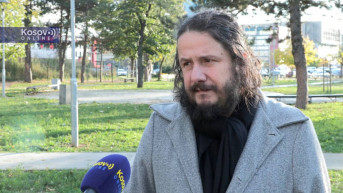
Writing for Kosovo Online: Muharem Bazdulj
After much effort and twists, Kosovo passport holders have made it onto the white Schengen list and can now travel as tourists to Schengen countries, starting from January 1st of this year. This news has been met with ambivalence both in Belgrade and Pristina. In Belgrade, on the one hand, any new "legitimization" of Kosovo's international position is viewed negatively; on the other hand, the announcements that this could lead to the exodus of the Albanian population from Kosovo are seen as a positive development from the Serbian perspective. Similar sentiments are echoed from the perspective of Pristina, but with different intensities of value – there, the "legitimization" of the position is seen as a good thing, in contrast to the potential exodus.
This news has long been announced and time-bound, so it hasn't attracted excessive media attention. The "Spanish exception" garnered more attention. Initially, it seemed that Spain would not join this liberalization, as it does not recognize Kosovo travel documents. Some Kosovo influencers celebrated on social media that Kosovo passport holders were finally equal to other Europeans, while some of their Serbian counterparts cynically pointed out that they might be able to go to Vienna, Berlin, or Budapest, but not to Madrid.
Then, just a few days after New Year, the news came that Spain was starting to recognize Kosovo passports. The mentioned Pristina influencers went into an orgasmic frenzy. It was a digital variation of the old Croatian "Danke Deutschland" story; pathetic, I mean, were the sweet-worded thanks to Spain on social media. Some Serbian influencers perceived this news as disappointing. However, both are wrong and exaggerated. The Spaniards did what they had to do in the given circumstances. This can also be illustrated by a personal anecdote.
Until a few years ago, there was no direct flight between Belgrade and any city on the Iberian Peninsula. During that period, I traveled once to Malaga. I flew via Munich, so Belgrade – Munich, then Munich – Malaga. And as always, when you land at a non-Schengen airport and then fly to an airport in the Schengen zone, you have to go through border control. There, the border guard might ask you where you're going, or maybe not. But anyway, when you enter the Schengen area, no one asks for your passport anymore. You can fly to Malaga, you can travel by land through France to Barcelona, you can do whatever you want, but if you enter Spain from the European Union territory, no one will verify your identity. In that sense, when Spain, in this "stopping time", recognizes Kosovo's passport, it is only agreeing to an accomplished fact. Spain cannot afford not to officially recognize Kosovo's passport while allowing holders of that passport from other Schengen countries to enter Spain normally, with the only exceptions being those departing by plane from Pristina, Belgrade, Skopje, Tirana, Podgorica, Tivat, or some other non-Schengen airport. With this move, Spain is just preserving its own seriousness as a state.
In that sense, speculations that this is an introduction to the recognition of Kosovo's independence by Spain are complete nonsense. The passport issued by the authorities in Pristina has long been practically recognized by many countries that have no intention of diplomatically recognizing Kosovo's independence. Those Pristina lobbyists who present this as a "turning point" are either naive or manipulators. Those in Serbia who are genuinely afraid of the possibility that Spain will recognize Kosovo are just uninformed.
At any rate, the media buzz about the news that "Spain recognizes Kosovo's passport" is a clear example of that Shakespearean "much ado about nothing". Spanish authorities have simply aligned the "de jure" situation with the factual one. Resistance to the idea of official diplomatic recognition of Kosovo in Madrid remains the same. Moreover, the Kosovo national football team has already played in Spain, meaning a group of athletes and their coaching staff were already there with their documents, so this is not a significant novelty.
In any case, the priority in this new situation from the Serbian perspective is to ensure that the Serbs from Kosovo with Serbian passports do not remain the only Europeans needing a visa to travel to the territory of the European Union. The focus on Spain's recognition of Kosovo's travel documents is just spin. In recent years, Kosovo has had more "de-recognitions" than new recognitions, so announcements that some important countries might eventually recognize them are essential for them. From Serbia's position, it is crucial to distinguish between spin and lobbying from reality.

0 comments