
Bazdulj: Senseless criticism of "Veseli se srpski rode"; the song has no territorial claims
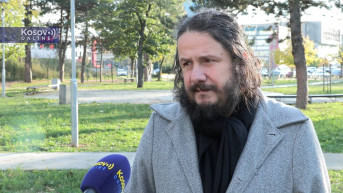
A writer and journalist Muharem Bazdulj, in an interview with Kosovo Online, states that the song "Veseli se srpski rode", heard before the Serbian national team's match in the Davis Cup in Malaga, only bothers those who are trying to find any opportunity to accuse the Serbs and Serbia of territorial claims to neighboring countries. According to him, this is a complete misrepresentation of the issue and nonsense.
"It seems to me that people who have raised a fuss about this song already have a problem with the Serbs and Serbia. That's why they are trying to find any reason to create a misrepresentation and a sophism. I found this idea most common among the Montenegrins. Due to mentioning Rumija, which is located in the territory of Montenegro, they see it as some kind of territorial claim of Serbia towards Montenegro. This is absurd. We know that about thirty percent of the population in Montenegro is Serbian. So, when the Serbian people are mentioned, it does not imply that all Serbs live in Serbia. Moreover, 100,000 Serbs live in Vienna. In Vienna, people celebrate whenever Novak or some Serbian team wins. This is an attempt to use any situation as an accusation against the Serbs. In that text, there is no idea; it simply says ' Veseli se srpski rode'(Serbian kin, rejoice) It doesn't say 'Rejoice, people living on the territory of the Republic of Serbia'. Just as some Albanians live in Macedonia, Serbia, and Montenegro, just as Hungarians live in Romania or Slovakia, simply, historical fate has determined that Serbs do not live only in Serbia but also in Bosnia, Croatia, Montenegro, and Macedonia. I really don't see anything problematic in the text and the message of the song", Bazdulj said.
In his opinion, there is no one who controls the content, meaning, or messages of songs used to celebrate sports victories. Athletes have the greatest right to choose the songs with which they will celebrate their successes.
"I am ambivalent about this song. I find all criticisms of this song that I hear completely senseless. On the other hand, the song is not my thing, as the kids would say. I think it is aesthetically bad. I think it has a pre-melodic structure; obviously, it wasn't made by a proper composer. Even aesthetically, its lyrics are bad, with some poor rhymes. I understand that while the country was called the Socialist Federal Republic of Yugoslavia, you sang 'The whole Yugoslavia plays rock and roll'. A new paradigm was needed. Of course, I am not a sports hero like Novak Djokovic; he has a much greater right to choose the song with which he will celebrate. But if someone asked me what to sing on the balcony or when entering a Davis Cup match, I would prefer Zahar's song sung by Gordana Lazarevic, 'Vidovdan'. I think that song is much better melodically; it's simply a catchy tune. Again, on the other hand, I can see that this song 'works' for some other people. I think Novak chose it. If someone has the right to choose a song to celebrate, to use when coming out on the balcony, it's the man who has brought the greatest sports successes to Serbia in the last few decades. If Novak likes the song, as far as I'm concerned, there's really no problem", Bazdulj emphasized.
Our interlocutor considers the comments of individuals who see irredentism or chauvinism in this song as malicious.
"They say the problem is Prizren. According to the Constitution of the Republic of Serbia, Prizren is the territory of the Republic of Serbia. So, from Serbia's perspective, there is no problem at all. I already tried to respond about Rumija. Serbia recognizes Montenegro; we have our ambassador there, and they have their ambassador here; there are diplomatic relations, and there are no problems. Similarly, both here and there, we acknowledge that there is a six-figure number of Serbs living there. More than 100,000. So, if the Serbian kin, as the song says, rejoices in some success of Novak Djokovic or some Serbian team, it doesn't mean that it's irredentism or territorial claims. Those are foolish things", the writer emphasized.
He added that other nations behaved in the same way, so the entire western Herzegovina celebrated all the successes of Croatian athletes, and in Slovenia or Austria, our people from the diaspora celebrated because borders had become irrelevant in the last few decades.
"Some Milos who moved to Graz won't necessarily start cheering for Austria. He still cheers for Serbia. Even if he takes Austrian citizenship for some practical reasons, he may still remain a fan of Serbia in sports. The idea that songs that serve people to celebrate some kind of sports success have a deeper political dimension, I think that's misuse and a confusion of terms. But again, I say, there are people known for deep and systematic anti-Serbian activities, so it doesn't surprise me. Tomorrow, they will use a video of children in kindergarten singing 'Boze pravde' to say that it is indoctrination", Bazdulj concluded.

0 comments