
New Caledonia and Kosovo: “Independence Without Independence” and “A Special Case” (1)
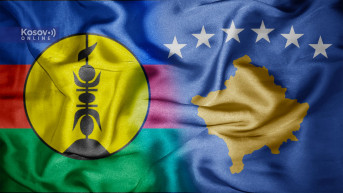
Written for Kosovo Online by: Habib al Hadi
To explore the parallels between the granting of independence to Kosovo and the continued denial or delay of independence for New Caledonia, we must examine the historical, political, legal, and socio-economic contexts.
In the new political agreement between New Caledonia and France, the devil is in the details. The Bougival Agreement, signed on July 12, is set to undergo a long and slow implementation process, aimed at establishing a “State of New Caledonia” within the French Republic, according to its provisions. The signing of the agreement—described as “historic” by French President Emmanuel Macron—came after ten days of closed-door talks in the town of Bougival, on the outskirts of Paris. It follows years of tensions, including deadly riots in 2024 that left 14 people dead and resulted in 2,600 arrests, sparked by disputes over electoral reforms and the rights of the indigenous Kanak people.
The compromise in the Bougival Agreement—which offers a “State of New Caledonia” within France—strongly resembles the former solution proposed for Kosovo and Metohija in 2007, known as “supervised independence.” For New Caledonia, full independence remains out of reach unless global pressure or internal unrest escalates beyond current levels—a scenario the agreement aims to avoid.
The agreement proposes a New Caledonian nationality and expanded voting rights for French citizens, which potentially contradicts the UN decolonization principles, as New Caledonia was re-listed in 1986 as a non-self-governing territory under French colonial rule.
Economic stakes are high, and the agreement promises support for New Caledonia’s nickel industry—a crucial part of its economy and a strategic resource for Europe. However, previous French policies, like the hastily organized referendums during the COVID-19 pandemic in 2021, fueled distrust, with independence supporters boycotting key votes.
After years of delay, achieving a mutual agreement is a major accomplishment. The agreement obliges signatories from all parliamentary groups to promote the agreed text among their members and constituencies in New Caledonia (the signature page bears the title: “All partners commit to presenting and defending the text in accordance with the Agreement on the Future of New Caledonia”).
Despite this, extensive debate is likely to unfold in both New Caledonia and France before the agreement is legally adopted, and many of its provisions will be contested by both independence supporters and opponents in the coming months.
The agreement envisions the creation of a “New Caledonian state” within the French Republic, transforming New Caledonian citizenship into New Caledonian nationality, and the future possibility of transferring sovereign powers currently held by the French state to the New Caledonian government. It includes key proposals for economic, political, and administrative reforms in Nouméa, as well as Paris’s commitments to funding and supporting the nickel industry—a critical sector for this Pacific nation’s economy.
However, the document signed in Bougival is not a final, legally binding agreement. Instead, it sets a timeline for incorporating the key elements of the July 12 framework agreement into law, which will then be subject to a referendum in New Caledonia in early 2026.
For more than 25 years, New Caledonia’s decolonization process was governed by the 1998 Nouméa Accord, culminating in a series of three referendums between 2018 and 2021. However, the process broke down in December 2021, when France rushed through a third referendum during the COVID-19 pandemic—an election widely boycotted by independence supporters. As a result, the manipulated referendum outcome showed 99 percent against independence. In subsequent years, hardline foreign ministers like Sébastien Lecornu and Gérald Darmanin implemented policies that alienated independence supporters and exacerbated long-standing social and economic inequalities.
Then last year, President Macron’s poorly executed electoral reforms triggered six months of conflict beginning on May 13. France cracked down brutally on the local population, as it has often done during its colonial rule. The unrest resulted in 14 deaths and 2,600 arrests, with key Kanak independence activists imprisoned across France. The local economy was devastated—businesses closed, and one in six private sector workers lost their jobs.
Between February and May of this year, under the leadership of French Foreign Minister Manuel Valls, a series of talks finally brought all sides back to the negotiating table. But after loyalists walked out of negotiations at Hotel Deva in May, President Macron stepped in to soften provisions of the draft agreement submitted by his minister, promising a “new project.”
From our perspective, these negotiations resembled Rambouillet. The difference was that the New Caledonian delegation included both independence supporters and opponents, whereas the opponents of Kosovo’s independence were exclusively in the Serbian delegation—even if they were Kosovo Albanians. After negotiations resumed on July 2, a basic consensus was reached on key areas between the six delegations from New Caledonia. Delegates came from four anti-independence groups (Loyalists; Occupation - Republicans; Oceania; and Ensemble Caledonia) and two pro-independence groups: UC-FLNKS (linking the Caledonian Union and other members of the main independence coalition FLNKS) and the National Union for Independence (UNI), which includes the Kanak Liberation Party (Palika) and the Melanesian Progressive Union (UPM). A parallel meeting of business and community leaders discussed economic and social reforms.
The final agreement was reached only after lengthy bilateral and trilateral discussions, which lasted into the night between July 11 and 12. Despite areas of overlap between supporters and opponents of independence, all parties made significant compromises and concessions, which they must now “sell” to their members.
The document’s preamble states: “The people of New Caledonia are once again looking toward trust, dialogue, and peace through this agreement, which proposes a new political organization, greater shared sovereignty, an economic and social reset, and a newly created shared destiny.”
Tomorrow: New Caledonia and Kosovo: “Independence Without Independence” and “A Special Case” (2)



comments