
New Caledonia and Kosovo: “Independence Without Independence” and a “Special Case” (2)
Written for Kosovo Online by Habib al Hadi
New Caledonia has faced years of uncertainty — three referendums between 2018 and 2021, followed by the COVID-19 pandemic, a crisis in the nickel industry, and last year’s clashes between Kanak demonstrators and French police. Business and community leaders have long called for a new political agreement to address these crises, but not everyone will welcome the final arrangement.
On Facebook, loyalist leader and President of the Southern Province, Sonia Backès, stated:
“This compromise will not fully satisfy anyone. But I am firmly convinced that it allows us to lead New Caledonia out of the spiral of violence, uncertainty, and destruction.”
Many local pro-independence activists will be deeply disappointed that their key demands have not been met. The call for full and sovereign political independence has once again been postponed. The Southern Province — a stronghold of anti-independence forces — will be granted new fiscal and administrative powers, along with additional seats in the expanded 56-member Congress.
In contrast to the proposal presented in May by former Minister Manuel Valls, the French state will now retain control over sovereign powers — including policing, judiciary, currency, and defense — rather than transferring them to New Caledonia (although new frameworks will be introduced for greater involvement of New Caledonians in these areas). Voting rights for local political institutions will be expanded to include more French citizens — a blow to many young people who manned the barricades last year.
However, there are also bitter pills to swallow for anti-independence forces.
The agreement allows for the creation of a “State of New Caledonia” within the French Republic, through a loi fondamentale (fundamental law) that will be enshrined in the French Constitution. This new state “may be recognized by the international community.”
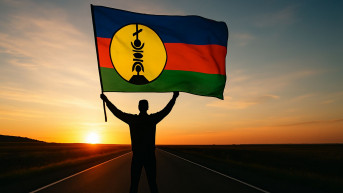
Following the next elections in mid-2026, New Caledonia will be able to adopt its own fundamental law, paving the way for significant legislative changes. This would enable modifications to New Caledonia’s national symbols (name, flag, anthem, and motto), and the development of a citizenship code and a charter of “New Caledonian values.”
The new agreement proposes changes to New Caledonia’s parliamentary structure and powers. Congress will expand from 54 to 56 members, with the possibility of changing the number of electoral constituencies and redistributing seats among the three provincial assemblies (with reduced representation from the Loyalty Islands and Northern Provinces, where Kanak communities form the majority).
While France will retain control over sovereign domains — currency, judiciary, police, and defense — existing shared powers over foreign affairs will be transferred to the New Caledonian government. The islands have deepened their “regional integration” (especially since becoming a full member of the Pacific Islands Forum in 2016), and this new authority in foreign affairs will be welcomed by locals who have witnessed French diplomats delay or block trade agreements with neighboring island nations of the Forum.
According to the new agreement, New Caledonia will conduct its diplomatic efforts “in accordance with the international obligations and interests of France.” This sets the stage for potential disputes on issues such as nuclear disarmament, maritime boundaries, trade policy, and the nickel industry, as France’s Indo-Pacific strategy clashes with New Caledonia’s regional priorities. For example, during President Macron’s recent visit to Jakarta, France announced plans to expand arms sales to the government led by President Prabowo Subianto — even as FLNKS (Kanak and Socialist National Liberation Front) criticized the Indonesian police and military for human rights violations in West Papua.
Although France retains authority over courts and policing, provisions of the Bouznival Agreement allow for the creation of provincial and local police forces. This may lead to changes in the routine deployment of French gendarmes, like those who clashed with Kanak demonstrators last year. There is a long-standing history of racist and militarized policing in New Caledonia, with more than 90 percent of inmates at Camp Est prison being indigenous Kanaks. (Corrective measures from Paris are slow — the French government’s 2024 promise to build a new prison has now been postponed at least until 2032, according to a recent parliamentary inquiry.)
These policing provisions could also create complex dynamics in Kanak-majority areas, given experiences with community policing in neighboring Melanesian states. (There are mixed views among women’s and youth groups regarding custom-based policing initiatives, with many cautious about the conservative values promoted by community elders.)
Under the Bouznival Agreement, an economic recovery pact proposes “facilitating nickel ore exports as part of a ‘renewed nickel doctrine’” and continuing value-added production through local smelters or coastal processing facilities in the Northern Province tied to Korea and China. Once again, tensions emerge between French and New Caledonian interests. Currently, the primary importers of New Caledonian nickel ore are countries across Asia and the Pacific (China, Korea, Japan, Taiwan, and Australia). In contrast, President Macron has claimed that New Caledonia’s vast nickel reserves are “a major strategic asset for France and Europe, at a time when we have embarked on massive reindustrialization efforts... Nickel must be considered under European legislation on critical strategic materials.” What conditions accompany the renewed French support for this key sector?
Tomorrow: New Caledonia and Kosovo: “Independence Without Independence” and a “Special Case” (3)



comments