
Putin and Trump Towards a “New Yalta” Through Journalists
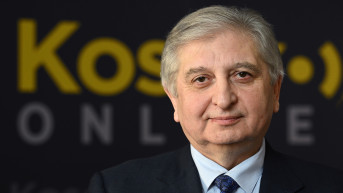
Written for Kosovo Online by: Zeljko Sajn
President of the Russian Federation, Vladimir Putin, traditionally hosted representatives of the world's most significant media at his annual press conference last December, among whom was the signatory of these lines. In addition to addressing questions from Russian citizens, the president of this large and significant country in the world spent four and a half hours answering questions from journalists, as important actors on the global political scene. In doing so, Vladimir Putin demonstrated that he is one of the few statesmen in the world who, in his own way, contributes to the restoration of journalism to its rightful place in the currents of the contemporary world, especially today when humanity faces the threat of a third world war.
In the last quarter of last year, both at the 16th BRICS Summit in Kazan and at the annual conference in Moscow, Vladimir Putin expressed Russia's readiness for negotiations, but noted that the opposing side continues to reject them. On this occasion, he sent a clear message to the entire world and all UN member states: he will negotiate everything that does not undermine the interests of Russia, but only with the legitimate and legal representatives of the states and their institutions. He meant, of course, that Zelensky lacks legitimacy, and that Russia would talk with Zelensky if he ran for elections and received a legitimate mandate. Thus, it is quite certain that the fate of Ukraine will depend on a roundtable discussion where only the Presidents of the Russian Federation and the USA will sit.
As we learned in Moscow, based on statements from Yuri Ushakov, assistant to the President of the Russian Federation, there are several proposals from countries ready to organize a platform for negotiations between Putin and Trump. This indicates that the process of arranging the format of the negotiations already exists, which is certainly a significant step forward. Which country or city will be the “new Yalta” is uncertain. However, what is certain is that Belgrade cannot be it in this geopolitical situation. Some indications about the meeting place might be obtained during the anniversary of the Yalta Conference on February 4th. It can be inferred that Ushakov - who, as a former ambassador of Russia to the USA, is an excellent connoisseur of circumstances in America, and who was the chairman of the organizing committee for the BRICS Summit in Kazan - will be Russia's main man in organizing the future Putin-Trump summit.
Putin has indirectly invited the newly elected President of America for a meeting after his inauguration. The media conveyed this message to Trump, who, also through the media, responded that he would meet with Putin at the first opportunity to discuss the situation in Ukraine.
At the meeting of these two leaders, a compromise based on Russian conditions and proposals could be reached. On the other hand, still during the American presidential campaign, Trump's Vice President Pence saw the possibility of freezing the war for ten years and creating a buffer zone between the warring sides, where international peace forces would be stationed, similar to the model of the Treaty of Karlowitz (325 years ago), which provides experience that in the further development of events, both sides will sit at the table with positions gained on the ground.
This could also mean that Ukraine will be divided into three parts - the eastern part annexed to Russia, the western part managed by Hungary, Romania, and Poland but under US control, and the central part, including Kiev, as a state under Russian control. It is also possible that a creation similar to the Berlin Wall might be revived. According to unofficial information from diplomatic sources in Moscow, Ukraine could be divided similarly to how Germany was divided after World War II. This time, the agreement would be between the leaders of Russia and America.
Putin, on this occasion, demonstrated the skill of people's diplomacy, bringing his views closer not only to the Russian people but also to the American and British peoples, by responding to direct questions from their journalists. He also conveyed a message that was agreed upon by BRICS leaders: the world needs a new, sustainable international order based on a reformed mechanism - the UN.
To find their place in the new world order, the Balkan peoples will have to wait until this historical saga is written to the last lines, as it seems that the Balkans are outside the center of attention at this stage. The question from the signatory of these lines, as a special correspondent for "Politika," about the fate of the Balkans, was not given the opportunity to be asked either at the BRICS Summit in Kazan or at the annual press conference in Moscow, which indirectly indicates that Serbia and the Balkans are not on the agenda at this moment, at the first meeting between Putin and Trump, which both are tracing through the media.


0 comments