
Resolution on the Genocide in Srebrenica – a fuse in a powder keg and the reincarnation of fascism

Written for Kosovo Online: Zeljko Sajn
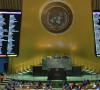
The UN General Assembly session, where the adoption of a resolution on the Srebrenica genocide will be discussed, is awaited with great uncertainty. Will the Serbian people be branded with a German label of genocidal, certified by Rwanda, with Britain and the USA as silent initiators, opposed by Russia, which denies the existence of genocide? Or will the resolution be rejected? We will likely find out on May 23, if the resolution on the Srebrenica genocide even enters the UN General Assembly.
Undoubtedly, the proposers and silent initiators have prepared based on the fact that the International Court of Justice, in its 2007 ruling, essentially relied on the judgments of the Tribunal for the former Yugoslavia, which in some vital elements deviate from the spirit and letter of the Genocide Convention. Moreover, the legitimacy and legality of this resolution are questioned from the outset, as it comes from Dayton Bosnia and Herzegovina, where High Representative Christian Schmidt does not have the consent of the UN Security Council to hold this position, which is required by the content of the Dayton Agreement.
Germany and Rwanda have taken this issue from the pocket of history, initiated it, and drafted the text of the resolution. They were supported by 32 other UN member countries, becoming "co-sponsors" tasked with presenting the draft resolution before the 193 member states of the UN.
Recently, Bujar Osmani, as the Minister of Foreign Affairs of North Macedonia, stated that this neighboring country will not only support the resolution on the genocide in Srebrenica but will also be one of its co-sponsors. North Macedonia recently concluded presidential elections, where constitutional law professor Gordana Siljanovska Davkova won a convincing victory and took office as the head of state a few days ago.
Goran Ilijevski, president of the Macedonian Party in Serbia, sent a letter to the new president of North Macedonia, requesting that she distance herself from Bujar Osmani's unilateral decision for the Republic of North Macedonia to be a co-sponsor of this document, alongside Germany, Rwanda, and the USA. Although the resolution is not binding for states, it is burdensome for Serbs, wherever they live. We will see what position the new president of our neighboring country will take and the sincerity in her statements about continuing to develop good neighborly relations with Serbia.
Why is this already resolved issue being brought up again? Considering that the member countries of the Tripartite Pact from World War II—Germany, Italy, and Japan—twice rejected the Russian resolution in the UN against the development of fascism and Nazism in the world, while advocating for the adoption of the resolution on the genocide in Srebrenica, it is undoubtedly a reincarnation of the goal from past times when Serbs, Jews, and Roma were victims of Hitler's Nuremberg Laws, which included two laws enacted in Nazi Germany in September 1935, on the anniversary of the Nuremberg Rally: the "Law for the Protection of German Blood and German Honor" and the "Reich Citizenship Law." From that moment, racial theory induced by party ideology was legalized.
This law entailed the genocidal destruction of Slavs, Jews, and Roma. Besides shootings, victims of Hitler's purges suffered numerous brutal criminal methods for their extermination, including the infamous practice of making soap from their bodies. However, this remains shrouded in history, unlike the events in Srebrenica.
The Nuremberg Law on pure Aryan race was implemented under the orders of the German Nazi government, with strict control by the SS, in all occupied countries under the fascist boot. Fascist occupiers in the area of the then Kingdom of Yugoslavia, including today's independent republics of Serbia and North Macedonia, embraced the role of extending the executioner's hand, with Bulgaria being a frontman. Recall that in 1941, Bulgaria passed a law on a "pure race" in its Sobranje, approved by Tsar Boris III, joining the Tripartite Pact in March of that year, and began committing crimes in the form of genocide. Yet, this is not brought out from history, while the issue of Srebrenica is made a priority on the UN Security Council's agenda.
Let us briefly recall the slap North Macedonia recently received from its Bulgarian neighbor when Bulgarian cultural centers were opened on its territory, bearing the names of proven Hitler collaborators—Tsar Boris III and Vanco Mihajlov. This occurred during Osmani's mandate. Remember, the opening of the Bulgarian club "Vanco Mihajlov" in Bitola in October 2022 was attended by the entire Bulgarian delegation, led by Bulgarian Prime Minister Petkov: Ilijana Jotova, vice president of Bulgaria, then Foreign Minister Teodora Gencheva, as well as Foreign Minister Ekatarina Zaharieva and Defense Minister Krasimir Karakachanov from the Boyko Borisov government, known traditionalists of the VMRO terrorist movement from Bulgaria, which participated in the assassination of the Yugoslav king. With the police protection of North Macedonia, under Osmani's auspices, the name of a proven Hitler collaborator, who played a significant role in preparing the assassination of King Karadjordjevic, shone in this Macedonian city.
Additionally, Karakachanov and Zaharieva advocated to then-Macedonian Prime Minister Zoran Zaev to remove the term "fascist" from the name of their people on historical Macedonian monuments. Elections followed in Bulgaria, Borisov lost, Petkov became the new prime minister, but the glorification of fascism did not cease, as evidenced by the name of the new cultural center.
Despite all these actions by the Bulgarian leadership on the territory of North Macedonia, there was also a request to change the name of the Skopje high school "Josip Broz Tito" because it is a thorn in the side of the Bulgarians, whose thorns scattered along the Macedonian path prevent Macedonians from moving forward, with wholehearted support from the West. Does the West then support fascist ideology when it remains silent on the reincarnation of fascism on the soil of North Macedonia by Bulgaria? And does it not threaten Serbia with a slap of the same magnitude from North Macedonia if Bujar Osmani's decision is not thwarted?
Kosta Nadj sent Tito a telegram from Slovenia on May 15, 1945: "Comrade Tito, the war is over!" Perhaps it is not, after this resolution written by Germany, which stirs relations in the Balkans, potentially igniting and destroying historical, familial, and even political relationships built at the highest level, both secular and spiritual, especially among Slavic peoples, due to an act not committed in a collective criminal spirit against the people of Srebrenica. Of course, this does not mean that the acts committed by individual Serbs should not be condemned, as they already have been.
Although Osmani, as the Foreign Minister of North Macedonia, had the formal legal right to decide how North Macedonia would behave at the UN General Assembly regarding the Srebrenica resolution, his decision, in a very complex political moment, can affect relations in the region. Although Osmani said that such a stance should actually serve peace in the Balkans, his decision has caused division among politicians, primarily along ethnic lines, but relations have also become strained between Balkan countries, especially among politicians from North Macedonia and Serbia. Prime Minister Talat Dzaferi has not commented, but it is certain that he supports Osmani both on party and state lines, while former President of North Macedonia Stevo Pendarovski pointed out that he supports the court decision from The Hague, which we recall deviates in some vital elements from the spirit and letter of the Genocide Convention.
"The crime in Srebrenica was committed against members of the Army of Bosnia and Herzegovina. Women and children were spared, which automatically excludes genocide, which involves the physical destruction of members of a racial, ethnic, or religious group based solely on group membership, regardless of gender and age," emphasized Judge Milenko Kreca in his dissenting opinion.
The number of killed soldiers and military-capable men does not meet the quantitative standards of the crime of genocide. A pragmatic example can be taken from the Rwanda tribunal's genocide verdict. Rwanda, before the genocide, had 11‒12 million inhabitants, and the Tutsis, as genocide victims, made up about 10 percent of the population. According to estimates from 2000, about a million Tutsis were killed in 100 days, along with some Hutus. Therefore, if the atrocities in World War II by Germany and the Tripartite Pact or Rwanda in 2000 are carefully analyzed, by their very nature, the crime in Srebrenica is a war crime.
Germany has bombed Yugoslavia three times, under different ideological conditions, after which a new global world was always shaped, where every German leadership expected a new leadership-hegemonic role in the world, especially in the Balkans, where Serbia was crushed as the culprit for the dissolution of countries—from Austria-Hungary to Hitler's Germany. A similar thesis is now being presented by Schultz at the UN—blaming the Serbian people for the dissolution of Dayton Bosnia and Herzegovina, with the label of a genocidal nation.
How similar this is to the Austro-Hungarian ultimatum after the assassination of Franz Ferdinand by Gavrilo Princip in Sarajevo in 1914! If Princip was the trigger for World War I, the uprising organized by the Communist Party of Yugoslavia, which prevented Hitler's Germany from conquering the USSR in World War II, it is not excluded that Christian Schmidt, as an illegal entity without the consent of the UN Security Council, could be the fuse in a powder keg for World War III. The Minsk agreements were a replay of the USSR's non-aggression pact with the Tripartite Pact, after which the war between the Russian Federation and NATO broke out, just as the USSR and Hitler's Germany did, killing about 35 million Slavs, Jews, and Roma in World War II.
What irony it is that Germany, which bears the mortgage of the world's greatest genocidal country from the First and Second World Wars, brands genocide on a nation it has bombed to extinction three times! And that's not all; it also supported Netanyahu's genocidal attack on Palestinians. The USA withdrew precisely because Americans could be branded similarly to Germany. Britain is yet to do so, leaving political negotiators with a clear position at the negotiating table around balanced interests of the new world order, where Germany should remain on the margins of the security sector. When allowed to possess weapons, it becomes conscienceless. Hence, Schultz's statement that bombing Yugoslavia and participating in battles on Ukrainian soil marks a new era for Germany.
Given Germany's actions throughout history and today, if North Macedonia supports it, is this a continuation of accepting the fascist form of Nazism under modern conditions? The world and state leaderships face a clear question: do you want peace, without fascism and Nazism, or war with Nazi ideology, where fascism will destroy country after country?

0 comments