
Serbia and the United States – A new chapter
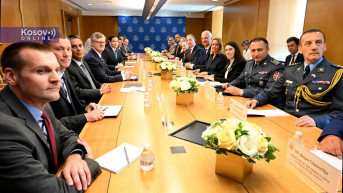
There are moments in diplomacy which, at first glance, may not appear spectacular, yet in the long run fundamentally reshape the course of bilateral relations. The launch of the Strategic Dialogue between the Republic of Serbia and the United States of America is one such moment.
After 145 years of diplomatic relations, Serbia and the United States have, for the first time, established an institutional framework through which the most important political, security, economic, and technological issues will be addressed at the highest level. This marks the beginning of a new phase in bilateral relations, in which the future of the partnership will no longer be built through occasional political initiatives, but through regular dialogue, joint projects, and long-term strategic planning.
Such a format is reserved for only a limited number of countries. The Strategic Dialogue demonstrates that the United States regards Serbia as a partner with whom it seeks to shape the future of bilateral relations on a continuous basis, rather than cooperating only when challenges or crises arise. For Serbia, this is particularly significant in light of the complex history of bilateral relations and the fact that, only a few decades ago, such a level of political trust would have seemed almost inconceivable.
This milestone did not occur by chance. The sustained commitment of the President of the Republic, Aleksandar Vucic, to advancing relations with the United States, together with the intensive efforts of the Ministry of Foreign Affairs of the Republic of Serbia—and in particular the Embassy of the Republic of Serbia in Washington, which worked actively through daily engagement with relevant U.S. institutions and administration officials—as well as the support of numerous partners in the United States, helped transform the idea of a Strategic Dialogue into an official element of the foreign policy agenda of both countries. This was not merely the organization of a single meeting; it established a permanent mechanism that will ensure continuity in political consultations and the development of joint initiatives.
The greatest value of the Strategic Dialogue lies not in its title, but in its substance. For the first time in the history of bilateral relations, the agenda between the two countries is no longer primarily defined by unresolved issues of the past, but by energy, investment, technological development, defence and education. The Joint Statement adopted following the inaugural meeting clearly demonstrates that these areas have become the foundation of future Serbia–U.S. cooperation. Bilateral relations are thus being redirected toward issues that have a direct impact on economic development, technological advancement, and the long-term security of both nations.
Energy occupies a particularly prominent place. The signing of the Memorandum on the Development of Energy Infrastructure and Regional Energy Security has created an opportunity for more intensive involvement of U.S. institutions and companies in the development of Serbia's energy sector. The Joint Statement specifically highlights the Djerdap 3 project, thereby sending a clear signal to international financial institutions and investors that the project enjoys the political backing of both governments.
For Serbia, this means greater energy security, accelerated infrastructure development, and stronger integration into the regional energy market. For American companies, it opens the prospect of a long-term presence in one of the most important infrastructure sectors in Southeast Europe.
For investors, political stability, predictability, and reliable institutional mechanisms are often just as important as economic indicators. Consequently, this mechanism of cooperation sends a strong message that outstanding issues will be resolved through dialogue and institutions rather than through ad hoc political decisions. In practice, such a framework frequently serves as an incentive for new investment cycles and a more sustained corporate presence in the market.
That this perspective is not confined to political circles is further demonstrated by the fact that, late last year, the American Chamber of Commerce in Serbia (AmCham Serbia) sent a letter to Members of Congress, the U.S. Department of Commerce, and the U.S. Department of State, emphasizing the importance of establishing a Strategic Dialogue with Serbia. The letter stressed that such an institutional framework would contribute to stronger economic relations, increased U.S. investment, and a more predictable business environment. Support from the American business community itself provides additional confirmation that the Strategic Dialogue is not merely a diplomatic initiative but also a response to concrete economic needs and a shared interest of both Serbia and the United States.
At the same time, it is important to understand that the establishment of the Strategic Dialogue is not a unilateral political decision made solely for Serbia's benefit. The United States views Serbia as a partner capable of contributing to the stability of the Western Balkans, regional energy security, and the development of resilient supply chains. For that reason, the Joint Statement places particular emphasis on energy, security, science, technology, and education—areas that constitute the foundations of a modern strategic partnership. From this perspective, the institutional framework is not merely a diplomatic format but an instrument through which both countries pursue their respective national interests while building a relationship based on mutual trust and joint initiatives.
The very fact that Serbia has been granted such a mechanism of cooperation demonstrates that the U.S. administration recognizes it as a partner with whom it seeks regular and substantive political dialogue. At the same time, this sends a strong signal to international financial institutions, American companies, and investors that bilateral relations are entering a more stable and predictable phase.
Security cooperation constitutes the second pillar of the new partnership. The Joint Statement envisages the continued development of defence cooperation, enhanced interoperability, and further strengthening of the State Partnership Program between the Serbian Armed Forces and the Ohio National Guard, which for two decades has represented one of the most successful models of cooperation between the United States and a European country that is not a NATO member.
At the same time, continued U.S. support for humanitarian demining and joint participation in international peacekeeping operations demonstrate that the partnership is not based solely on military cooperation but also on a shared commitment to international security.
One of the most significant elements of the Joint Statement concerns science and technology. It welcomes Serbia's decision to accede to the Artemis Accords, thereby making the country part of the international community working alongside the United States to shape the rules governing future civilian space activities. This opens new opportunities for cooperation among universities, research institutions, and technology companies.
The expansion of the Fulbright Program represents an investment in future generations and in the long-term ties between the two countries, which often become the most enduring legacy of diplomatic relations.
The United States' participation in Expo 2027 Belgrade is another indication of the trust that has been established between the two countries. The decision to take part in the first Specialized World Expo to be held in the Western Balkans creates additional opportunities for strengthening economic and technological cooperation.
Nevertheless, the true significance of the Strategic Dialogue will not be measured by its establishment alone. Its value will ultimately be reflected in the results it delivers: new investments, infrastructure projects, scientific partnerships, and expanded economic cooperation.
At the same time, the Dialogue confirms that Serbia pursues a foreign policy based on openness to cooperation, the protection of its national interests, and a readiness to engage with its most important international partners on all issues of mutual concern.
For this reason, the establishment of the Strategic Dialogue represents far more than a single diplomatic event. It marks the beginning of a new phase in Serbia–U.S. relations, one in which development, investment, energy, innovation, security, and education become the central pillars of bilateral cooperation.
History demonstrates that no strategic dialogue, in and of itself, transforms relations between states. What changes those relations are the tangible results that emerge from it. For that reason, the success of this process will not be measured by the number of meetings held or documents signed, but by the number of joint projects, new investments, technological partnerships, and political initiatives that follow. If it continues to develop in the spirit in which it was launched, the Strategic Dialogue will represent far more than a new stage in Serbia–U.S. relations—it has the potential to become one of Serbia's most important foreign policy instruments for attracting investment, strengthening political trust, and positioning the country as a reliable long-term partner of the United States.
0 comments