
Srbljak: I still remember the screams from Bistrica, I have not yet recovered
To my younger self, I would say the same thing I tell others today – listen to your instincts. I often still feel that I shouldn’t go somewhere, and when I ignore that feeling, something bad happens. It was the same on that day, 22 years ago.
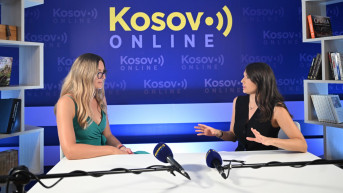
I didn’t want to go to the Bistrica, I went only because of a friend. It gets harder and harder for me to speak about it, and at one point I decided not to give statements to the media anymore because it only reopens wounds—I repeat the same story every year, and nothing changes. Still, at some point I thought I must not remain silent—because of those who fired, because of those monsters, for I know no other word to use. At the very least, August 13 should remain as a reminder to them of what they did, said Dragana Srbljak from Gorazdevac, one of those wounded in the Bistrica shooting in 2003, speaking on the program Context.
Nearly 100 bullets were fired at children swimming in the river. One young man and one boy were killed, four children were wounded. Among them was Dragana, who was only thirteen at the time. Three bullets in her leg left lasting consequences—her ankle joint was damaged by 80 percent.
“I remember everything. My friend and I switched slippers on the way because hers were too big. We were rushing, running, as if something was waiting for us there. If we hadn’t run, we wouldn’t have arrived right at the time of the shooting. She went to swim, I went to get my slippers, and then I just fell. In that moment, I went completely deaf and mute from the gunfire. I fell on the path where everyone had to pass and flee, but I didn’t see anyone. Later, when I researched it, I understood—that is trauma, that is actually a freeze response. Our brain recognizes that something is about to happen and thinks it can avoid it by freezing. And since that trauma is still frozen within me even today, now I understand why I always retold the story as if it were some kind of film, and not something I had actually lived through,” Srbljak explained.
She said that the Bistrica River, which separates Serbs and Albanians in Gorazdevac, was never safe, but it was the only place where children could cool off in the summer. Although her parents had forbidden her to spend time by the river, she explained why, on that day, they did not protest.
“In these 22 years, I have never publicly told this. The day before the crime at the Bistrica, my mother traveled to Ostrog, where she had a dream of crowds of people chasing after their children. And at one point, someone took her hand and said, ‘Madam, step aside, at least yours are safe.’ My mother returned from Montenegro at dawn, and the shooting happened at one o’clock in the afternoon. She came back calm and peaceful because of the dream, and only told me to go and return before lunch,” recalled the guest of Context.
Her older sister was also at the river that day, with her then-boyfriend, now husband, who was the first to rush to help.
“When I fell, as the bullet twisted through my heel and ankle, it pinned my foot into the ground. Blood was spurting everywhere. I was completely covered in blood. My brother-in-law carried me until the first police car arrived. He left me there and went back to save others. My sister was beside him and, unfortunately, saw everything. Her best friend, Ivan Jovovic, died—he was behind me. I still remember his scream as he fell. Another boy, Pantelija Dakic, was also killed,” Srbljak said.
She recalled that the road to the hospital was long and difficult.
“To this day, I still don’t understand how it happened that the army was changing shifts that day, that satellites weren’t recording. A KFOR vehicle was at the entrance to the village, in the center, near the church, near the school, near the river. But that day, there was no one. They took me to the Italian base, where we usually received treatment, but they said there were no doctors. We went to the Pec base, but KFOR blocked the road and said they would take us to the hospital in Pec, where Albanian doctors worked. They put a cast on my gunshot wound, even though I was bleeding. Pantelija Dakic arrived alive at the same hospital, but later his father was told that his son had died. At my mother’s insistence, we went to the hospital in Mitrovica, where I arrived just in time. The doctors said I was ten minutes away from death,” the podcast guest said.
Years of therapy followed, which continue to this day. In the meantime, Dragana completed her studies in psychology at the Faculty of Philosophy in North Mitrovica. In search of work, she moved to Belgrade in 2016, where she has lived and worked ever since.
0 comments