
Is stabilitocracy back in fashion?
Written for Kosovo Online by Srdjan Garcevic, founder of The Nutshell Times
A bit more than a decade ago, a new term entered the Balkan pundit lexicon: stabilitocracy.
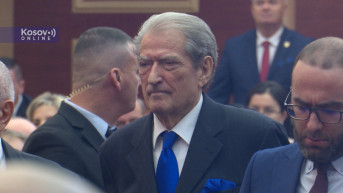
Its first use was in 2012 to characterize Sali Berisha's government in Albania as providing external stability but oscillating "between democracy and autocratic tendencies" internally. It became very popular among the people in the know by the end of the 2010s. The fact that within months of the term being first used, Berisha was replaced by Edi Rama (who reigns to this day), did not make the predominantly liberal pundits investigate why such an arrangement may be attractive to people in small, relatively underdeveloped countries on the borders of global and regional powers, but was used disparagingly for pretty much any government that managed to hold onto power in the past, very turbulent decade.
On the other hand, the regional governments that escaped the taint of stabilitocracy managed to do so only by failing to deliver not only on the "stability" front but also as "democracies."
While beloved by the Balkan pundit sphere and the local managerial class, the Zaev government in Northern Macedonia managed to not only invite additional Bulgarian interference into the nation's fraught ethnic politics but also was marred by significant corruption scandals. Its democratic credentials were certainly not helped by a referendum of dubious legitimacy on the change of the country's name, which remains popular with most ethnic Macedonians to this day.
Similarly, the popular "destabilitocracy" of Albin Kurti not only resorted to gross manipulation in the last elections to weaken the Serb "Srpska lista" but also failed to secure enough votes to retain its control of Priština institutions. This was in no small part because, for all of its high-minded rhetoric and managerial approach, it only managed to create further instability and escalate regional divides, as most glaringly shown by the Serbian investigation into the attack on the Ibar-Lepenac canal, blamed on the Serbs, but which can be traced to Kurti-controlled "security forces." In pursuing its maximalist, destabilizing strategy, the Kurti regime managed to alienate many of its backers, most notably the United States, even before the arrival of President Trump.
The backing for destabilitocracies and destabilizing policies, such as lawfare against President Dodik in Republika Srpska, now only comes from parts of European political elites who are now, ironically, happy to pursue strategies that can be described as "stabilitocratic" at home. Whether it is canceling elections, banning political opponents, or attempts to transfer more power to unelected local and transnational institutions they inhabit, there seems to be renewed interest in stability at home, which they feel is threatened by "populists" who are relying on standard democratic procedures.
Who knows, maybe "stabilitocracy" is back in fashion this spring?



0 comments