
Summary of the Week 83
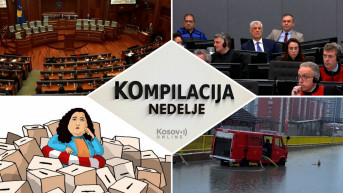
When there is no progress, when agreements fail, and goals drift irreconcilably apart, the best solution is a new beginning. One such beginning, which should be brought by new elections, was announced this week. The problem with a new beginning, however, may arise if it actually brings nothing new.
While we are still not certain who won the previous elections, we are already preparing for new ones. A new beginning through new elections. Right now, few people believe in that.
“The scenario everyone fears is that the elections will not solve anything,” says political scientist Stefan Surlic. He adds: “In that case, all the current divisions will remain exactly the same.”
To the divisions from the elections earlier this year, new ones have since been added—between leaders, parties, the government and the opposition, foreigners and locals… With all those layers, the new beginning seems even further away.
“With this kind of political philosophy,” says professor Nexhmedin Spahiu, “you cannot move forward anywhere. Nothing can be achieved!”
The arguments of the domestic public have been lost in political ambitions. The messages from foreign actors, it seems, have been lost in translation. Analysts remind the public of them.
“Both European and global officials insist that a government must be formed. Then, that new rounds of dialogue with Belgrade must begin, and at the highest political level,” journalist Nikola Dencic tells Kosovo Online.
Few still remember the beginning of the dialogue. Few believe in a new beginning.
“Something has to start somewhere,” suggests Dragisa Mijacic from the National Convention.
“Perhaps that beginning is the lifting of punitive measures on Kosovo and the opening of clusters for Serbia,” Mijacic believes.
This week, new details in well-known biographies were supplied by witnesses at The Hague.
“Every commander acted on his own, in his own zone,” recalls Amer Alija, lawyer from the Kosovo Humanitarian Law Center, referring to some of that testimony.
On their own initiative, they made decisions about others’ lives. And as we heard, rather casually, without command from a central structure. It sounds as though the defense witnesses knew the accused better than the accused knew themselves.
“The fact is that the witnesses, including Clark as the most recent among them, said that it was a completely decentralized group. Farmers during the day, fighting for the freedom of their villages at night,” comments security expert Nikola Vujinovic.
With the lack of good news—and a flood of the same dark ones—the citizens might have handled it more easily if they had not been struck by another misfortune this week. Real floods.




0 comments