
Summary of the Week 94
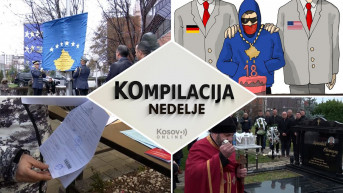
After pre-election promises to voters, and post-election promises to party and international partners, the messages continue to be sent — some optimistic, others cautionary. What messages did we read, watch, and experience this week?
Praise, songs, and flags. Birthday greetings and the message that coming of age is the right time to celebrate.
Citizens of Pristina who feel like celebrating say: “Kosovo has long been independent, and especially since the declaration of independence. Now it is,” as one interviewee told Kosovo Online, “among the most independent states in Europe.”
Messages and congratulations also arrived from Europe. Assessments of independence, however, were left to others.
“ Kosovo’s foreign policy subjectivity remains permanently disputed, and it has not changed over these 18 years,” says Stefan Surlic, assistant professor at the Faculty of Political Sciences in Belgrade.
Debates over who is to blame, and to what extent, have lasted even longer than 18 years. Ahead of the court’s final ruling, messages of support are being sent — more openly now than in previous years.
“It is not direct support, but rather demands that human rights be respected in the proceedings before the Specialist Chambers,” believes Amer Alija of the Humanitarian Law Center.
On the other hand, lawyer Dragan Pasic sees the message differently.
“This is a political decision by which the current government presents itself as maintaining continuity in its support for the so-called KLA,” Pasic says.
Continuity in government policy — in both messages and decisions — was promised by Prime Minister Kurti in his exposé. Given that some familiar faces are no longer present, the question remains whether continuity is also expected in the dialogue process.
Milos Pavkovic of the Center for European Policies states that everything indicates that dialogue is still not a priority for Pristina.
“It was not a priority when it was handled by the Deputy Prime Minister, and it will not be now either,” Pavkovic says.
Those who remember the crimes of two and a half decades ago also fear continuity. They grieve continuously, commemorate regularly, but not without anxiety. Messages — spoken and unspoken — unsettle them.
“I am afraid that there will be no one left to light a candle and hold a memorial service in Kosovo and Metohija,” says Jelena Stojanovic, sister of one of the victims of the bombing attack in Livadice near Podujevo.
Some messages are direct and harsh; others are wrapped in a softer layer to make them easier to deliver. For those who receive them, they are neither easier nor sweeter.
“They stated, as an order and as the reason for closing the café, that the sugar packets did not have a declaration,” testifies Nemanja Nedeljkovic, the owner of a café that was closed this week by an inspection decision.
Whether openly stated or coated with a veneer, the messages have been sent with a clear plan: to show that 18 years is enough time to achieve goals and demonstrate determination and independence.


0 comments