
Summary of the Week 92
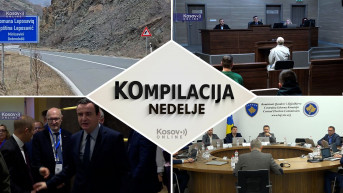
Bidding with figures, estimates, verdicts… is one of the frequent disciplines in Kosovo. This week as well, in the absence of solid information, there was speculation. Who came closest, we will find out in some of the upcoming Summaries.
When there are no precise facts, there are guesses, assumptions, and bidding. Unacceptable for justice, often sufficient for judges. Lawyers, too, are astonished by the kinds of arguments that are brought into the courtroom.
“Today, the final question we had was what you heard in the village about the event that took place. What does it matter what they heard? Well, I’ve heard things about the judges of this court too, but that is not evidence,” says attorney Nebojsa Vlajic, defense counsel for Djordje Arsic.
Sometimes the skill of persuasion is stronger than the evidence. Sometimes it is the interlocutor you are persuading. The level of human rights of Albanians in Serbia, Serbs in Albania, and Serbs in Kosovo—as we have seen—is also subject to bidding.
“If we look at everyday life,” historian Petar Ristanović told Kosovo Online, “the rights of Albanians in Serbia and their opportunities are incomparably greater than the opportunities of Serbs in Kosovo—and not to mention in Albania.”
Those who are higher on the list can one day be lower. Reversing the order is actually the goal. For some, it is still very distant and unattainable, especially when it comes to military rankings.
“Out of 145 countries on the list, Kosovo ranks 139th,” analyzes security studies researcher Nikola Vujinovic. “That one armored vehicle could raise Kosovo slightly on the list,” Vujinovic adds.
There are estimates and rankings we like, and those we don’t. After elections, there are also those we would most like to hide—both from ourselves and from others. That practice has recently been established by the CEC.
“Well, you can refuse to accept election results simply because you don’t like them,” warns Aleksandar Rapajić from the Center for Advocacy of Democratic Culture.
More important than the results and public assessments of who will be in the new government is another kind of bidding these days—public jockeying over the names of potential presidential candidates.
“His choice of a presidential candidate,” political scientist Ognjen Gogic assesses, “depends on his calculation of whether that person would represent a greater threat to him or not.”
More than a month after the elections, we managed to reconstruct the electoral arithmetic this week. Who disrupted the calculations and who made them without consulting the innkeeper—we will see in the weeks to come.



0 comments