
Taylor Swift vs the Balkan terrorist networks
Written for Kosovo Online by Srdjan Garcevic, founder of The Nutshell Times
Taylor Swift's historic Eras tour, whose immense cultural and economic footprint will undoubtedly be written about in the years to come, sadly did not stop over in the Balkans. However, Swift and her team found themselves affected by Balkan politics or rather our sad history of terrorism, in a city where most of her Balkan fans would have came to see her.
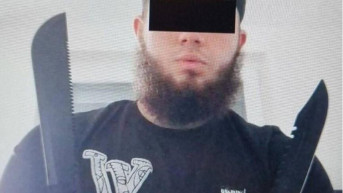
A youth of Albanian origin from Gostivar in North Macedonia allegedly planned to stage a terror attack on one of her three concerts, akin to the one at Ariana Grande's concert in Manchester in 2017. The foiled attempt, which saw three concerts cancelled in the penultimate stop on the European leg of the tour, comes almost four years after another Albanian youth with origins from North Macedonia killed four and injured 23 in the centre of Vienna, which indeed made the Austrian authorities very cautious after getting a tip-off from the US Intelligence agencies.
In her Instagram post, which came after a series of spectacular concerts in London, Swift was grateful to the Austrian authorities as “we were left grieving concerts and not lives”, but admitted to the whole situation leading her to feel both fear, as well as guilt for having fans miss out on the once-in-a-lifetime experience.
The main suspect, like the perpetrator of November 2020, seems to have been a sympathiser of ISIS, which recruited heavily among Albanians in the Balkans during its heyday, drawing from the popularity and successes of the existing and interlinked Albanian terrorist organisations in Serbia and North Macedonia, all of which are under the banner of UÇK.
North Macedonia, from where the suspects hailed from, sadly experienced the most Albanian terrorist activity since 1999, with massive and bloody uprising in 2001 and repeated clashes with Macedonian authorities, including a particularly bloody one in Kumanovo in 2015. Nevertheless, a drive around the Albanian-majority parts of Northern Macedonia will reveal many tributes to the local militants, and their memory is very much celebrated by the most prominent political representatives of Albanians in the country.
The situation in Priština-administered parts of Kosovo and Metohija is the same, despite the ongoing trials of the UÇK leaders for war crimes. The culture of violence seems to be taking even more concrete forms as one self-professed former member of the UÇK killed a Serbian policeman, Nikola Krsmanović, in Loznica while carrying German papers, only to receive a hero's funeral back home in Drenica region, a fertile UÇK and ISIS recruiting ground. A few days ago, another Albanian youth, who lives in Switzerland but with origins from Kosovo and Metohija, issued terrorist threats against Serbian diplomats in several European cities, showing that extremism does not stop at national borders.
That was sadly well-known since the most egregious spillover of terrorism from the Balkans was the 9/11 attacks. Two of the five hijackers, Khalid al-Mihdhar and Nawaf al-Hazmi, had fought in Bosnia as Mujahedeen, a fighting force invited by Alija Izetbegović for his war effort that was in part financially supported by Osama Bin Laden.
While a tragic attack was averted against the Swfties in Vienna and Serbian embassies, things are more difficult in the Balkans. The Wahabi extremist, who succeeded the mujahedeen in the Balkans, started clashing twice with the Serbian police this summer: once in Belgrade while attacking the Israeli Embassy and a few days ago in a village by Novi Pazar.
The fact that the resurgence of extremism is driven by radicalised young men who find themselves shunned by their new societies and who look up to their violent predecessors is hardly the news. What makes it more tragic, though, is the lack of critical look at how the glorification of the UÇK and similar organisations leads to Skopje and Belgrade being unsafe and Zurich and Vienna. When a teenager sees stars like Rita Ora proclaiming the same radical goals as the UÇK, and go without censure while taking up the garb of multiculturalism and tolerance, one may assume that fighting for such or a similar cause is noble. While this exploration indeed needs to be handled delicately and consider the fact that the great majority of people with emotional ties to various dubious organisations would not attack anyone, it still needs to happen if we want to make Skopje, Belgrade and Vienna, as well as Gostivar and Novi Pazar, safe for Swfties and everybody else to have fun without fear.
0 comments