
Trump, Putin, Alaska and Kosovo
Written by: Habib al Hadi for Kosovo Online
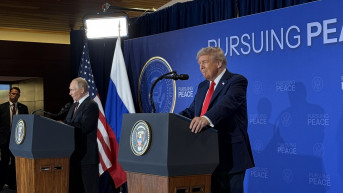
The recently concluded summit between Putin and Trump in Alaska may be counted among political gatherings that symbolically seek to demonstrate a break with past perceptions and understandings of the global order. Why this is so was explained from an entirely different angle—Africa. On the eve of the Putin–Trump meeting, the African Union called for the world to stop using the Mercator map projection.
The Mercator projection is a cylindrical cartographic projection created by Gerardus Mercator in 1569, which represents lines of constant compass bearing (loxodromes) as straight lines. This property made it extremely useful for navigation, as it allowed sailors to easily chart their courses. However, this representation of space severely distorts the size of land masses, particularly at higher latitudes, making areas near the poles appear disproportionately large.
Thus, it became a geographical expression of a Eurocentric world, misrepresenting the dimensions of the globe and its continents. Europe appeared much larger than Africa, serving for centuries as an unjustified basis for European supremacy, while in reality Africa is five times larger than Europe. It is therefore a wholly false image of the world that we have lived with for 500 years.
Part of that false worldview created by the Mercator map concerns America and Russia. In that geography, Russia and the U.S. appear separated by about 8,000 kilometers across the Euro-Atlantic expanse, with Europe serving as the geographic factor dividing them. But the reality is different. Russia and America are only 3.8 kilometers apart across the Bering Strait, with Alaska and Russian land only 85 kilometers apart. It was precisely for this reason that Trump and Putin chose to meet on territory that was once part of Russia, later sold to America—not only to demonstrate their shared history through Alaska, but more importantly to show how geographically close Russia and the U.S. are, in fact next-door neighbors. This is why they discussed European problems without Europe.
Alaska thus serves to illustrate the proximity of the two superpowers. A similar symbolic meeting occurred when Gorbachev and Reagan met in Iceland at the end of the Cold War, among the rocky hills, far from any settlement. Few understood the symbolism of that encounter. It lay in the fact that Iceland is situated on fault lines dividing the European and American tectonic plates. The meeting of the two still-Cold War leaders was meant to show that they would no longer be yet another reason for division between these two tectonic entities. But that spirit did not last long.
Russian presence in the American hemisphere is nothing new. Russia established itself in Alaska through settlements, trading posts, religious proselytism, and even force. This interest was motivated by the profits offered by the flourishing fur trade. Without Russia, one may question what America would be today—or if it would exist at all. During the American Civil War, the Russian Empire not only diplomatically supported the Union, but even sent warships to strategic American ports to deter direct military intervention by Britain or France—rivals with whom Russia had scores to settle after the Crimean War—in favor of the Confederacy, which London and Paris were inclined to support.
In the Civil War, only Russia, alongside Switzerland, unconditionally supported the North. At the same time, the threats to Lincoln’s government in the early 1860s came not only from rebellious southern states, but also from London and Paris, who pursued their interests by backing the Confederacy.
Britain maneuvered diplomatically and recognized the Confederate States of America, boosting its international legitimacy. In the summer of 1863, a squadron of five ships from Queen Victoria’s navy arrived at the Canadian port of Esquimalt, signaling readiness to support opponents of the federal government in Washington.
France also played its geopolitical game, with designs on neighboring Mexico, supporting the secessionist states and secretly supplying the Confederacy with weapons.
Following the order of Tsar Alexander II on June 25, 1863, two Russian squadrons were dispatched to American shores. The first, under Rear Admiral Lesovsky, sailed to New York with six ships and 3,000 crew. The second, under Rear Admiral Popov, comprised six ships and 1,200 officers and sailors, and was sent to San Francisco.
With this move, Alexander II’s government sought in grand style to achieve political and strategic military objectives, altering the balance of power not only within the United States but beyond.
Soon after the Union’s decisive victory, Alaska was sold to the U.S., as the costs of maintaining it outweighed the benefits for the Russian Empire. Russia expected that U.S. absorption of Alaska would weaken Britain’s position on Canada’s eastern coast. In return, Washington wanted Alaska as a gateway to Asia and as a spearhead of American naval power in the Pacific.
This development laid the groundwork for the Monroe Doctrine: the conception of the American hemisphere as Washington’s exclusive sphere of influence. It must be remembered that according to the theoretical views of Nicholas Spykman, the geopolitical perimeter of American national security stretches from Alaska and Greenland to Colombia, covering Canada, Mexico, the Central American isthmus, and the Caribbean basin.
Trump’s perspective on Russia can be seen from the interview he gave to Fox News immediately after the summit, in which he explained his claim that within the “first two minutes” he would know whether there would be a deal or not. That deal, however, is not limited to an unconditional truce, as interpreted by those who see this meeting as a mere encounter of two foreign ministry officials, but concerns global relations and America’s place in the world.
Trump described Russia as an “incredible, rare country,” calling it “the biggest piece in the world,” and added that he believes they “have 11 time zones, if you can believe it—that’s a big deal.” He emphasized that America and Russia could have accomplished “many great things if we hadn’t had the Russia hoax, which prevented us from doing so.” This was not merely Trump’s personal rhetoric. Undoubtedly, it was part of the briefing materials prepared for the meeting with Putin, highlighting U.S.–Russian compatibility and the possibility of inclusion—even integration—of Russia into the American hemisphere, given that European integration of Russia failed and was definitively abandoned in Moscow. The remaining partners are Beijing and Washington. Moscow–Beijing cooperation is already confirmed and has become very deep.
Russia has always been open to cooperation with America. Armand Hammer did business with Lenin and continued until his death. Many other American businesses had open doors even during the era of “Bolshevism” and the Cold War—not to mention President Yeltsin. The same holds true for Putin’s early years, now referred to in Russia as the years of the “first Putin” (2000–2007), when he was more than cooperative with President Bush in everything, which could be called Russian readiness for accommodation.
However, U.S. involvement in the so-called “color revolutions” in the former Soviet Union and NATO’s eastward expansion provoked Moscow’s backlash—just as realist thinkers such as George Kennan, Henry Kissinger, Kenneth Waltz, and John Mearsheimer had long warned.
Up until the moment when Condoleezza Rice, as Secretary of State, returned to the platform of Central European paranoia and the anti-Russian doctrine for which NATO was instrumentalized. NATO, despite all of its modifications, has remained the center of anti-Russian decadence in the West. Its strategists have not been able, in 30 years, to move an inch beyond the anti-Russian strategy that was militarized and shaped by the not particularly gifted, wise, or talented banker Paul Nitze, who succeeded the dethroned George Kennan as head of the State Department’s Policy Planning Staff. Nitze was the initiator of a deviant Cold War opus that has not been stopped to this day, and because of which essentially all wars involving American entanglement since the end of the Cold War have been fought—very few of them without direct U.S. interference.
Paul Nitze was also co-founder of Team B, the intelligence think tank from the 1970s that challenged the CIA’s National Intelligence Estimates, which had indicated that the Soviet Union was no longer a military threat to the U.S. Team B’s reports became the intellectual foundation for the idea of a “window of vulnerability” and the massive arms buildup that began at the end of the Carter administration and accelerated under Reagan. Team B concluded that the Soviets were developing new weapons of mass destruction and had aggressive strategies regarding potential nuclear war. Later it was proven that the analysis of Soviet weapons systems conducted by Team B had been grossly exaggerated, but the anti-Russian ideology and propaganda machinery it created has remained functional to this day.
Trump faces great difficulties in removing this historical burden, but he is fully aware of it. It is neither abstract nor invisible today. For a condensed illustration of this position, one may refer to the interpretation of Ambassador Dennis Ross, a not-so-limited American diplomat who had previously been Clinton’s special envoy for the Middle East. “Putin’s ‘basic causes’—i.e. Ukraine is not in NATO, it is demilitarized, not in the EU, and its political leadership is acceptable to him, plus (+) the withdrawal of NATO’s presence. If he was not flexible in a one-to-one relationship, he is demanding Ukraine’s surrender. The exact answer: give Ukraine the $300 billion in frozen Russian assets as weaponry.” Ross declared. In other words, the alternative being offered is to hand over $300 billion of frozen Russian money to Ukraine in the form of weapons and fight a war for the next ten years.
Therefore, Trump’s America inevitably entails abandoning the transatlantic doctrine as the supreme and priority American orientation. It is now reduced solely to NATO and investment in its obsolescence. Leaving NATO is one step—not an easy one, but an inevitable step—in reconfiguring American global policy so that it aligns with the goals of MAGA.
The meeting in Anchorage was meant to make it clear to everyone that Russia and America are only 3.8 kilometers apart, and that such a perception of the world carries unavoidable consequences for the European order.
A European order in which Macron, Meloni, Merz, Starmer, Stubb, Tusk, Costa, and von der Leyen can calmly sign a joint statement on the Putin–Trump summit with the following words: “It is up to Ukraine to make decisions about its territory. International borders must not be changed by force.” All the while, not giving a thought to the former Yugoslavia, nor to the indisputable military, political, and financial support for the territorial breakup of Serbia and the recognition of what remains, to this day, only the “self-proclaimed state of Kosovo.”
That “principle,” of course, will have its cost. Macron, Meloni, Merz, Starmer, Stubb, Tusk, Costa, and von der Leyen certainly know this. And if they ever ask themselves what destroyed a united Europe, they will at least have a clear answer: it was “Kosovo,” nurtured by themselves and by their predecessors.

0 comments