
Washington’s new perspective on partnership with Serbia
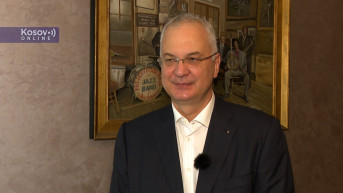
An official U.S. Department of State report submitted to Congress, serving as a roadmap for American policy toward the Western Balkans, confirms a profound shift in Washington’s approach to Serbia—from a relationship burdened by unresolved issues to one increasingly grounded in shared interests.
While global attention remains focused on the war in Ukraine, conflicts in the Middle East, and growing great-power rivalry, a document published in Washington has passed largely unnoticed. It is the official State Department report to the U.S. Congress entitled “United States Policy to Promote Regional Stability and Prosperity in the Western Balkans,” which outlines the future direction of U.S. policy toward the Western Balkans. For Serbia, the document carries far greater significance than may be apparent at first glance.
Its importance lies not in individual formulations, but in the fact that it confirms a profound change in Washington’s approach toward Serbia—from a relationship long burdened by unresolved issues to one increasingly based on shared interests, strategic dialogue, and long-term cooperation. For that reason, the document should be read not only through what it explicitly states, but also through the direction in which it seeks to steer future relations between Serbia and the United States.
First and foremost, the document confirms what could already be discerned from the first months of the new U.S. administration: the era of “nation-building,” international tutelage, and endless political oversight processes in the Balkans is gradually coming to an end. One of its key passages states that “the period of U.S. nation-building is over.” At first glance, this may appear to be just another phrase in a lengthy administrative report. In reality, however, it reveals a significant shift in the way Washington now views the Western Balkans and its role in the region. Put simply, the United States no longer seeks to act as the region’s overseer. Its focus is now on stability, economic interests, investments, and partnerships that deliver tangible results.
This marks the most significant difference compared to the majority of documents that have defined U.S. policy toward Serbia over the past twenty years. During the two decades following the democratic changes of 2000, Serbia was largely viewed in American reports, strategies, and congressional discussions through three principal lenses: Kosovo, democratization, and alignment of foreign policy with the West. The emphasis was on reforms, political conditionality, and issues often portrayed as obstacles to the further development of bilateral relations.
Particularly after the outbreak of the war in Ukraine in 2022, much of the American analysis of Serbia focused primarily on its relations with Russia. Discussions centered on sanctions against Moscow, energy dependence, Russian media influence, and alignment with the foreign policy positions of the European Union. In some congressional documents and analyses produced by influential think tanks, Serbia was frequently portrayed as a challenge to be managed or as a country whose conduct required additional international pressure.
In the new report, however, the tone is entirely different. Serbia is no longer presented as a problem to be solved, but rather as a partner with whom common interests can be advanced.
Perhaps the most important sentence appears in the section addressing the future activities of the U.S. administration: “The Administration plans to hold dialogues with North Macedonia and Serbia during 2026.” While seemingly technical, this formulation carries considerable political weight. It signifies that the strategic dialogue between Serbia and the United States has become part of the official policy of the U.S. administration. Such formats are generally established with countries where there is a clear intention to elevate and institutionalize bilateral relations. The very fact that Serbia is listed among the countries with which the administration intends to conduct an institutionalized dialogue speaks louder than numerous political statements and diplomatic communiqués.
From discussions that we have held in Washington over recent months with representatives of the administration, Congress, the business community, and leading think tanks, a significant shift in focus can be observed. Serbia is increasingly viewed through the prism of energy, artificial intelligence infrastructure, data centers, and regional stability, and less frequently through the exclusive lens of unresolved political issues from the past.
It is no coincidence that energy and digital infrastructure have become some of the most important topics in American political and business circles. In the era of artificial intelligence, access to reliable energy is emerging as one of the key prerequisites for technological competitiveness and economic growth. For this reason, the Embassy of the Republic of Serbia in Washington has, over recent months, sought to further promote Serbia’s development potential, infrastructure capabilities, and strategic importance within the region. The fact that these same themes now appear among the priorities outlined in the State Department report suggests that such efforts have not been without results.
An equally important section of the report concerns the economy and energy. The U.S. administration views the Western Balkans as a region with significant economic potential, important transportation corridors, abundant natural resources, and a growing technology sector. Within this framework, Serbia occupies a particularly important place.
Even more significant is the report’s energy component.
As a foundation for future cooperation, the document references the 2024 intergovernmental agreement between Serbia and the United States on energy infrastructure. It mentions U.S. liquefied natural gas, nuclear energy, small modular reactors, hydropower projects, and new infrastructure designed to connect the region with European energy markets.
It is no coincidence that energy occupies such a central position in the report. Washington now views energy security as a matter of national security, economic competitiveness, and geopolitical stability. In this context, Serbia is recognized as an important partner, while existing agreements and projects provide a foundation for deeper cooperation. All indications suggest that energy will become the first and most important pillar of the future strategic dialogue between Serbia and the United States.
Within this context, major infrastructure and energy projects that can contribute to long-term stability and regional connectivity gain additional significance. Among them, the Djerdap 3 project is frequently mentioned as a development that could enhance energy storage capacities and further strengthen the energy security of both Serbia and the wider region. From Washington’s perspective, such projects carry significance beyond investment alone, as they fit into broader concepts of energy security, technological development, and regional integration.
Viewed through this lens, energy cooperation between Serbia and the United States is no longer merely a matter of individual projects. It is becoming one of the central elements of a future strategic partnership between the two countries.
Only after this comes the second important pillar—security cooperation. The administration explicitly states that it intends to continue expanding security and defense cooperation with Serbia. The document uses the term “expand,” rather than merely maintaining the existing level of cooperation. This confirms that Serbia–U.S. defense cooperation is no longer a secondary issue but one of the key pillars of bilateral relations.
From the partnership with the Ohio National Guard to joint training programs, military education initiatives, and potential new projects, there is clearly substantial room for further development. Particularly significant is the fact that this language appears in a document issued by an administration that simultaneously advocates greater responsibility by European partners for their own security. In this context, Serbia is viewed not as a challenge, but as a partner with whom mutually beneficial cooperation can be built.
An important portion of the report also addresses regional stability. The United States reaffirms its support for the normalization of relations between Belgrade and Pristina, but the manner in which this support is expressed differs considerably from previous approaches. The document speaks of the need to achieve a “negotiated and sustainable agreement acceptable to both sides.”
Notably absent are formulations that in previous years often served as the starting point for discussions on Kosovo. The emphasis is placed on negotiations, sustainability, and mutual acceptability, reflecting a noticeably different tone from what has traditionally characterized the U.S. approach.
This does not mean that the Kosovo issue has lost importance for the American administration. It does mean, however, that it is no longer the sole prism through which Serbia is viewed.
Perhaps this is the document’s most significant message. For the first time in many years, Serbia is not viewed in a major official U.S. policy document almost exclusively through the lenses of Kosovo, democratic reforms, or relations with Russia. Instead, the focus shifts to areas where common interests exist—energy, trade, infrastructure, investment, and security.
The document, of course, clearly identifies Russia and China as the principal challengers to U.S. interests in the region. Moscow is accused of using energy leverage, political influence, and efforts to foster instability, while China is viewed through the lens of economic expansion, lending, and infrastructure projects.
Yet even in this context, Serbia is not portrayed as a problem. On the contrary, it is presented as a country with which the United States seeks to cooperate in pursuing its strategic objectives in the region.
The significance of the report becomes even clearer when compared with many predictions that circulated in Serbia over recent months. Following the adoption of the NDAA (National Defense Authorization Act), the annual law that defines U.S. defense priorities and funding for Fiscal Year 2026, parts of Serbia’s political and media landscape confidently predicted the introduction of U.S. sanctions against political and business actors in Serbia.
At the same time, claims emerged that Washington was preparing a new initiative aimed at a final settlement of the Kosovo issue and that Belgrade would soon face substantial diplomatic pressure.
However, the content of the State Department’s official report paints a different picture. It contains no announcements of new sanctions, ultimatums, or a return to the policy of international tutelage that shaped the region for decades. Instead, the emphasis is placed on economic cooperation, energy security, infrastructure connectivity, and the development of institutional partnerships.
This does not, of course, mean that there are no longer unresolved issues between Serbia and the United States or that all differences have been overcome. It does mean that the relationship is increasingly being viewed through areas where shared interests and mutual benefits exist.
That is precisely why this document is important—not because of individual formulations, but because it points to the direction in which U.S. policy toward Serbia is evolving. Today, that direction appears more focused on partnership than conditionality, and more on joint projects than disputes inherited from the past.
Whether this potential will ultimately be transformed into a lasting strategic partnership will depend on the decisions made by both Belgrade and Washington in the years ahead. Yet for the first time in a long time, the trajectory of the relationship appears clearer than ever.
Dragan Sutanovac, Ambassador of the Republic of Serbia to the United States, writing for Politika

0 comments