
Weakening of Albanian influence in the USA, strengthening of Serbian influence, and what does that specifically mean?
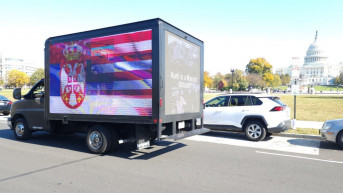
"The time when Albanians were alone on the stage in the USA and achieved their goals by attacking and demonizing Serbia is over, and even some of the most prominent Albanian-American lobbyists agree with this"
Prepared by: Milos Garic
The visit of Albin Kurti to the Democratic Party Convention in Chicago, as well as the meeting of his main political rival Bedri Hamza with the newly appointed U.S. State Department representative for the Western Balkans, Aleksandar Kasanof, have been the main news in Pristina's media these days. The question of how much political profit these two gained from their visit to the USA and who returns home with a better "baggage" has further brought to the forefront the topic of the influence of Albanian lobbying groups in the USA.
A recent statement by Gary Kokalari, a prominent member of the Albanian-American lobby during the bombing of the FRY in 1999, that Albanians in the USA were previously much more active in lobbying for Kosovo's secession from Serbia, but that the situation has now changed and the Albanian lobby in the USA has begun to weaken while the Serbs are increasingly better positioned, has attracted considerable attention in Pristina's media and confirmed that new winds are blowing across the Atlantic when it comes to perspectives on the Balkans.
Gary Kokalari is one of the Americans of Albanian descent who, before NATO's attack on Serbia, demanded from the then influential American diplomat Richard Holbrooke that Washington side with Albanian separatism in Kosovo. He emphasized that they met with Holbrooke at a restaurant owned by an Albanian immigrant in Manhattan, New York, and now Kokalari nostalgically recalls those days and points to the noticeable weakening of Albanian influence in the USA.
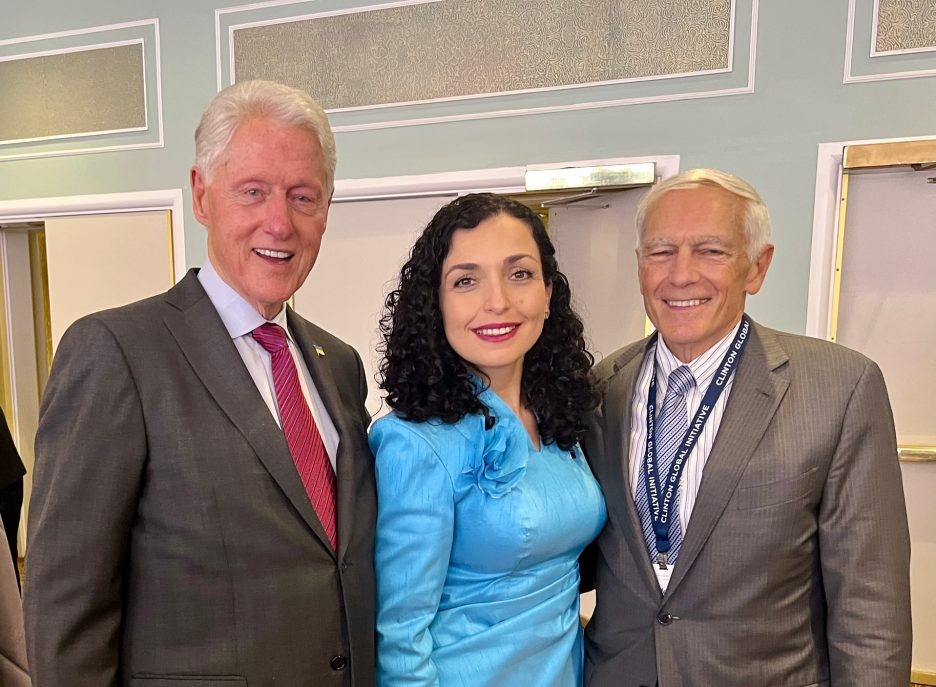
"First, I don't think that Albanians now have the same passion, because they were previously oppressed in Kosovo, but now they are not. I believe that has taken away some of their drive. I don't know if Serbs are lobbying more, but it's something people in Kosovo should think about. It might sound silly to someone, but Serbs are starting to have a positive profile in the USA. Why do I say this? They have the best players in the NBA, they have the best players in tennis, people see that they are Serbs, but Milosevic is nowhere to be found. They look at the Serbs and say: 'Hey, these are incredible athletes.' I don't know if Albanians are doing enough," Kokalari stated with concern.
Geopolitics without Emotions
In the USA, however, a large number of Albanian lobbyists still operate to influence American policy in favor of Kosovo Albanians. Among them, another member of the Kokalari family stands out. Evi Kokalari, who previously worked in real estate and tourism in New York, is noted by American media to be close to former Albanian Prime Minister Sali Berisha, who is under Washington's sanctions, and as a lobbyist, she has not registered in accordance with the law.
How significant is the fact that the Albanian lobby in the USA is no longer able to decisively influence Washington's foreign policy concerning future developments in Kosovo?
"Evi Kokalari, an American of Albanian descent, now zealously lobbies for Kosovo Prime Minister Albin Kurti through social media and practically leads a campaign against anyone who expresses anything positive about Serbia and the Serbs. However, the time when Albanians were alone on the stage in the USA and used lobbying to attack and demonize Serbia is over. It should also be noted that one of the reasons for the weakening of the Albanian lobby in the USA is the scandal involving Senator Bob Menendez due to corruption, which Serbia could have utilized even more," notes Nenad Vukovic, President of the Association of Lobbyists of Serbia, for Kontekst.
There is, he says, an important reason why the USA cannot support Albin Kurti's policies as strongly as he would like.
"The essence of the recent disagreements between Washington and Albin Kurti's policies and the authorities in Kosovo is that the USA does not want to publicly support the transformation of Kosovo into a monoethnic community. America is based on multiethnicity, and Kurti wants to expel all Serbs from Kosovo, and if possible, before November this year. The Albanians in Kosovo are in a hurry to complete as many tasks as possible before the US presidential elections. In this rush, they are becoming disobedient, so Washington has to bring them back on track," explains Vukovic.
At the core of everything, he adds, is geopolitical interest.
"In the USA, Kosovo is often presented as a place where Americans are most loved. They erect monuments to them there. To Americans, this is somewhat bizarre, but they like it due to the growing anti-American sentiment in the world. The possibility that this 'love' might diminish and fade away is unpleasant for them, in a sense, but it is still all just symbolic. The USA's support for Kosovo is grounded in geopolitics, not emotions," emphasized Vukovic.
Diplomacy Stronger than Lobbyists
Political scientist Ognjen Gogic separates the influence of lobby groups from official diplomacy.
"I would say at the outset that the reach of lobbying is still limited. No lobby can replace diplomatic relations. And here, if we take it as true that the Albanian lobby is weakening, and the Serbian one is strengthening, it is not an indication that Serbia is now investing more money, but rather that Serbia is in better relations with the United States on the diplomatic front. Over the past few years, Serbia has significantly improved its relations with the Western world, including America, and is now in a much better position. In Kosovo, the opposite has happened after Kurti's Self-Determination party came to power a few years ago. They are in much worse relations with the Washington administration. And no lobby can make up for that," Ognjen Gogic points out for Kontekst.
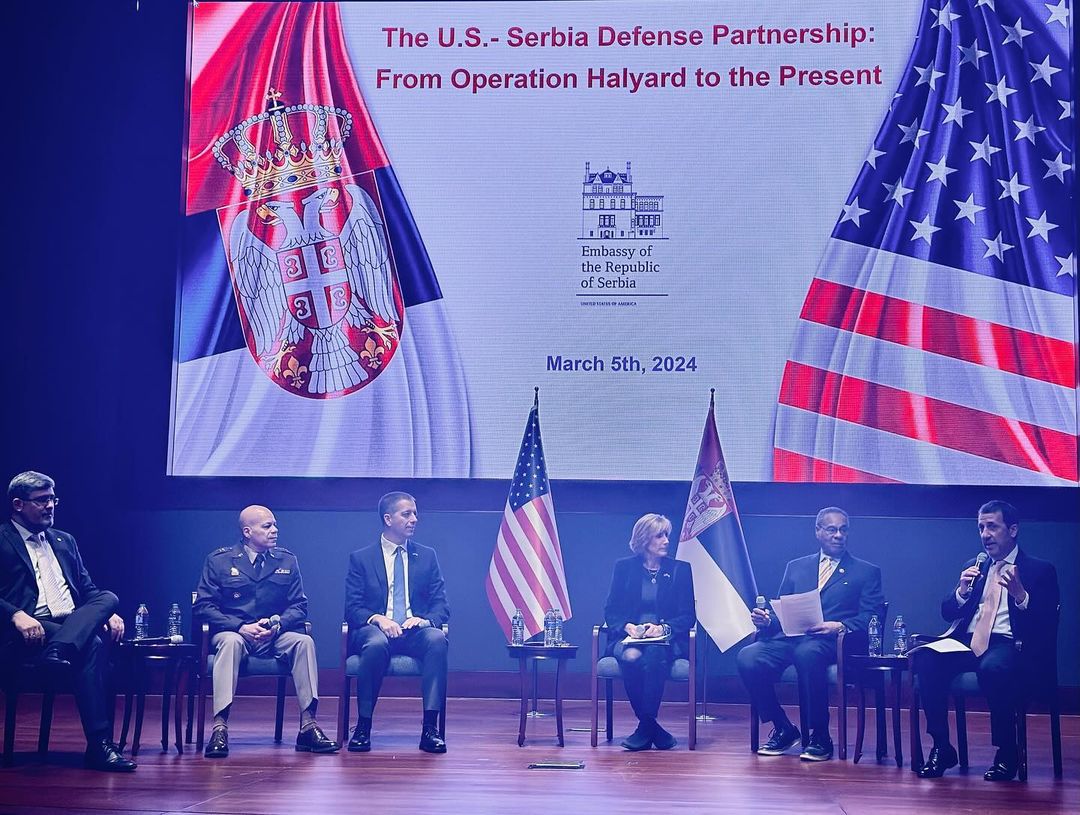
The current government in Kosovo, he notes, obviously does not rely much on the American lobby, nor is it as networked as some were before.
"But even if they relied on and invested a lot of money in lobbying, it would not be able to make up for the diplomatic damage being done at the same time. For example, now with the bridge on the Ibar. Ambassador Hovenier said that opening the bridge would endanger the safety of American soldiers. So, no lobby can now fix that image. Diplomatic positions have changed in the meantime; Serbia has strengthened its position, and Pristina has weakened its position in the USA. Consequently, the strategic position of lobbyists in the USA is also changing. Albanian lobbyists in America now have much less room to maneuver, and Serbian lobbyists have more. When diplomacy ruins relations, lobbying doesn't help. I think that's what it's about, that we're at a much higher level of the game than just the story of lobbying and how powerful they are," Gogic explains.
Jokic without Milosevic
The United States, on the other hand, is the sponsor of Kosovo's independence. That project is their baby, and any lobby will find it difficult to change that.
"But what is possible is that the Serbian side now stands better for specific issues that Serbia points out. Here, it is significant that when the recent crisis with the Ibar bridge occurred, there was no calling out of both sides, but only of Pristina exclusively. This means that the Americans now have more understanding and awareness of what is happening on the ground, especially regarding the problems of the Serbs. For example, in February, when those police actions were taking place to close temporary offices in Gora, Osojan, Pec... The Americans showed up, there was a meeting, and they said this must not happen anymore. Since then, no temporary office has been closed. Svecla has not once repeated that statement that there will be no more Serbian offices in Kosovo except the embassy. So the Americans can draw some red lines and ensure that this is not done anymore," concludes Ognjen Gogic.
Political analyst Darko Obradovic believes that there are areas where Serbia can further improve its increasingly better relations with the USA.
"The perception of Serbia in the USA has significantly improved thanks to the efforts of President Vucic and Minister Djuric. Serbia has decided to actively work on building its image in the USA. There is still a lot of room where we can dominate compared to Kosovo. It is not the same whether they see you as the country of Nikola Jokic or Slobodan Milosevic. The issue of certain concessions and compromises regarding Kosovo directly depends on Serbia's clear foreign policy orientation. Key areas where we can strengthen our positions with America, regardless of which administration is in power, are armament, European integration, as well as energy - lithium and nuclear energy. Energy is high on the list of American priorities in Serbia. At this moment, the organization of an investment-economic summit is something that can really make a difference compared to what is offered in Kosovo. There is nothing of a turnaround regarding the status of Kosovo based on Resolution 1244, but the legitimate security needs of the Serbs are something that is understood in America, and the issue of church heritage is also a very strong argument," Obradovic tells for Kontekst.


comments