
WHO IS WHO – Jeanne Shaheen: Western Balkans expert, opposed to reducing US presence in KFOR
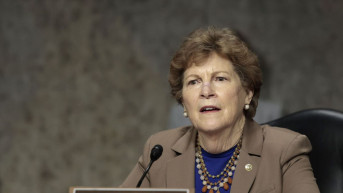
US Senator Jeanne Shaheen, who will not seek another term, has frequently focused US policy attention on the Western Balkans during her career. She is once again visiting the region these days, and ahead of her retirement from politics she has received honors in Podgorica and Pristina, while Sarajevo has named her an “Honorary Citizen.” She is also among the senators who, together with members of Congress, recently urged Secretary of State Marco Rubio not to reduce the US presence in KFOR.
Kosovo’s new President Justina Shiroka Pula yesterday presented her first decoration precisely to Jeanne Shaheen. She awarded her the “Presidential Medal of Merit” for her unwavering support for Kosovo and her contribution to strengthening security, preserving peace and promoting stability in the region.
Several days earlier, Montenegrin President Jakov Milatovic awarded her the Order of the Montenegrin Flag, First Class, for her long-standing contribution to Montenegro, the Western Balkans and the region’s Euro-Atlantic integration.
A few days before that, she became an Honorary Citizen of Sarajevo, receiving the recognition “for her long-standing engagement and support for Bosnia and Herzegovina, as well as her advocacy for strengthening relations between Bosnia and Herzegovina and the United States.”
Meeting with the Serb List
During her stay in Kosovo, in addition to meeting officials, she also held talks with Albanian opposition parties and the Serb List.
Serb List President Zlatan Elek and the head of its parliamentary group, Igor Simic, drew her attention to what they described as the extremely difficult position of the Serbian population in Kosovo, as well as the numerous problems and challenges Serbs face on a daily basis. They particularly pointed to the continued failure to implement agreements already reached, above all regarding the establishment of the Community of Serb Municipalities (CSM) and the representation of Serbs in institutions.
They also highlighted what they described as the consequences of failing to honor assumed obligations for the position, rights and future of the Serbian population.
Focus on the Western Balkans
During her visit to the region, Shaheen also traveled to Tirana, where she said that the United States should focus its Western Balkans policy on three areas: economic opportunity, stability and democratic institutions.
She expressed support for a credible path toward EU membership for Western Balkan countries, saying that the European integration process helped strengthen the rule of law, democratic institutions and economic governance.
However, the Senator warned that the accession process had to remain credible and that the European perspective must not become an endless promise.
“There must be a clear path forward for countries that fulfill their obligations,” Shaheen said.
Among other things, she twice introduced the Western Balkans Democracy and Prosperity Act in the Senate, stressing that maintaining peace and strengthening democracy in the region were crucial to European security and stability, particularly while the war in Ukraine continued.
Concerned about Serbia-Kosovo relations
As a member of the US Senate Foreign Relations Committee, Jeanne Shaheen said three years ago that one of the issues that concerned her most in the Western Balkans was the unresolved relationship between Serbia and Kosovo.
Shaheen, who chaired the Senate Foreign Relations Subcommittee on Europe at the time, said that Congress had sufficient capacity to pay attention to the Western Balkans despite crises in the Middle East and Ukraine and the fact that the United States was entering an election year.
She identified “the current issues between Kosovo and Serbia” as one of the two major security challenges in the Western Balkans.
“We know about the incursion into Kosovo on September 24, when a Kosovo police officer and three Serbs were killed. There is real concern about that border and about how these issues should be addressed in the future. I had an opportunity to meet both Prime Minister Albin Kurti and President Vjosa Osmani, to express my concern about everything that happened and offer my condolences. I also urged Prime Minister Kurti to return to the negotiating table and resolve the issues with Serbia. I had an opportunity to speak by telephone with Serbian President Aleksandar Vucic as well, to express my concern there too and urge him to do the same—to return to negotiations, because normalization of relations between the two countries is the only way we can resolve these issues,” Shaheen told Voice of America three years ago.
She also said that Kosovo and Serbia might never recognize one another, but that she believed they could at least ensure that their citizens did not live in conflict or fear and did not constantly have to worry.
Shaheen also spoke about the need to prevent an escalation of violence in Kosovo. She sent a letter to the administration of President Joseph Biden requesting that the deteriorating security situation between Kosovo and Serbia be treated as a priority. At Shaheen’s request, the Senate Foreign Relations Committee held hearings on the situation in the Western Balkans.
Opposed to reducing US presence in KFOR
Jeanne Shaheen was among a group of senators and members of Congress who recently sent a letter to US Secretary of State Marco Rubio expressing concern over reports that President Donald Trump’s administration could reduce the number of US troops serving in KFOR.
They warned that a premature reduction in US forces could destabilize not only Kosovo but the wider Western Balkans region, particularly Bosnia and Herzegovina, and argued that at a time when the region was facing political tensions and external influence, maintaining the current level of US troops was crucial to protecting US security interests.
The letter noted that reducing the US presence could weaken KFOR’s political and military role and “embolden actors who view a Western withdrawal as an opportunity to encourage destabilization.”
Shaheen recently also said that Russia had an interest in destabilizing the Western Balkans, which Moscow viewed as a “potential second front.”
Member of the Serbian Caucus and meetings with Serbian officials
Jeanne Shaheen joined the Serbian Caucus in the US Congress in 2012, becoming at the time the highest-ranking Senate official involved in the caucus who could influence the US administration’s positions toward Serbia.
In February this year, she met Serbian President Aleksandar Vucic on the sidelines of the Munich Security Conference, where they discussed the situation and changes in Europe’s security architecture and the growing militarization of international relations.
Vucic told Shaheen, who led a delegation of US senators, about the need to preserve stability in the region and stressed that peace was an absolute priority for Serbia.
“At the same time, I presented Serbia’s position that, as a sovereign state, it makes its own decisions independently, pursuing a responsible policy focused on dialogue, but also on protecting its own state and national interests,” Vucic wrote in February.
Last year, Serbian Foreign Minister Marko Djuric also met Shaheen in Washington and briefed her on developments in Kosovo, including the then decision by the Central Election Commission to challenge the Serb List’s right to participate in the upcoming elections, which, he said, seriously called their democratic character into question.
First female governor of New Hampshire
Shaheen was born on January 28, 1947, in St. Charles, Missouri.
She completed her undergraduate studies at Shippensburg University in Pennsylvania and earned a master’s degree from the University of Mississippi.
Shaheen was the first woman elected Governor of New Hampshire.
After serving two terms in the New Hampshire Senate, she was elected Governor in 1996 and re-elected in 1998 and 2000.
In 2002, she unsuccessfully ran for the US Senate against Republican candidate John E. Sununu.
She later served as Director of the Harvard University Institute of Politics before resigning to run again for the US Senate in the 2008 election, when she defeated Sununu in a rematch.
Shaheen became the first Democratic US Senator from New Hampshire since John A. Durkin, and in 2014 she became only the second New Hampshire Democrat to be re-elected to the Senate, after Thomas J. McIntyre in 1972.
She was elected to a third term in 2020.
Following the death of Dianne Feinstein in 2023, Shaheen became the oldest woman then serving in the US Senate.
Last year, she announced that she would not seek another term in 2026.
She is married and has three children and seven grandchildren.
0 comments