
WHO IS WHO – Kreshnik Radonjiqi: Chairman of the Central Election Commission “at war” with the Serb List and the media
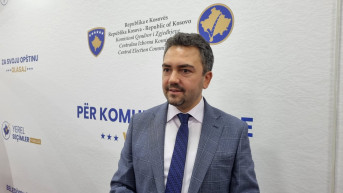
Kreshnik Radonjiqi has served as Chairman of the Central Election Commission (CEC) since 2021. His term has been marked by a series of disputable decisions which, as a rule, were mostly overturned by the Electoral Complaints and Appeals Panel, as well as by a scandal involving vote rigging in the elections held on 28 December last year. It has also been characterized by a “war” waged by CEC members from the Self-Determination Movement against the Serb List and the media, primarily those reporting in the Serbian language.
The latest in a series of controversial decisions came yesterday: at a session of the Central Election Commission, the final election results were published for all parties except the Serb List. Such a decision was adopted after two members from Self-Determination, Sami Kurteshi and Alban Krasniqi, voted against it, even though three members of the Commission, including Radonjiqi, voted in favor, while the remaining members abstained.
Reacting to this highly unusual decision, Eugen Cakolli of the Kosovo Democratic Institute assessed that by publishing partial results of the parliamentary elections, the Commission had fully formalized an unlawful practice, initiated by the publication of final results before the expiry of the deadline for appeals.
The Serb List, the Director of the Office for Kosovo and Metohija Petar Petkovic, and Serbia’s Minister of Foreign Affairs Marko Djuric also reacted to this move by the CEC, while representatives of the international community remained silent.
War against the Serb List
Although unusual, such a decision is not surprising, as this is not the first time that the CEC has adopted decisions against the Serb List contrary to the Constitution and the law. Thus, in December 2024, the CEC decided not to approve the Serb List’s right to participate in last year’s February elections. At that time, to be fair, CEC Chairman Radonjiqi himself stated that such a decision had no legal basis and that the Serb List’s participation should be approved.
“No, there is no legal basis for such a decision. The application went through the Office for Certification of Political Parties, and after all checks it was concluded that everything was in order,” Radonjiqi admitted at the time.
Representatives of the international community also reacted to that decision of the CEC. The Serb List filed an appeal, which was upheld by the Electoral Complaints and Appeals Panel in Pristina, ordering the Commission to certify the Serb List’s application and its list of candidates for participation in the elections on 9 February 2025.
Ahead of the local elections held on 12 October last year, the CEC likewise refused to certify candidates of the Serb List. Once again, the decision was overturned by the Electoral Complaints and Appeals Panel in Pristina.
New elections – same situation. Prior to the snap parliamentary elections held on 28 December, the Commission again refused to certify candidates of the Serb List, but that decision was also annulled.
Denial of accreditation to Serbian-language media
It should also be recalled that the CEC, headed by Radonjiqi, refused to issue accreditations to media outlets reporting in Serbian for the coverage of the local elections held on 12 October last year.
Soon thereafter, following strong pressure, primarily from international representatives, the CEC nevertheless accredited 28 editorial offices reporting in the Serbian language, while, interestingly, only one media outlet remained without accreditation – the Kosovo Online portal.
The appeal filed by VIM INFO, the founder of the Kosovo Online portal, was upheld by the Complaints and Appeals Panel, but the Commission did not reconsider the accreditation of our portal.
Despite this, journalists of Kosovo Online covered the elections under extremely difficult working conditions.
Recounting, discrepancies in candidates’ votes, and mass arrests
During the most recent parliamentary elections, the Central Election Commission faced manipulations during the counting of votes for parliamentary candidates. Although it initially appeared that the process was proceeding faster than last year, the CEC decided to order a recount.
The recount revealed discrepancies in the number of votes won by certain candidates. Some of these discrepancies amounted to thousands of votes, prompting some analysts to assess that the electoral process had been compromised.
The prosecution became involved, arrests followed, and detention was ordered for suspects accused of vote manipulation, with the most drastic examples recorded in Prizren and Malisevo.
CEC Chairman Kreshnik Radonjiqi announced that the CEC would forward the findings resulting from the recounting process to the prosecution and would offer full institutional cooperation in the investigative process, given the discrepancies in the number of votes received by candidates.
Local elections in northern Kosovo in 2023 – Serbian boycott, container voting, and low turnout
During Kreshnik Radonjiqi’s term as CEC Chairman, another set of “unusual” elections was held, assessed by the public as legal but not legitimate – the snap local elections in April 2023 in four predominantly Serb municipalities in northern Kosovo, which were boycotted by Serbs dissatisfied with decisions taken by Pristina.
Those local elections were marked by the fact that many polling stations were improvised in prefabricated containers. While visiting one of them, Radonjiqi stated that they were “the most suitable solution given the circumstances.” In those elections, many ballot boxes remained empty.
Regarding those elections organized by the CEC, Serbian President Aleksandar Vucic said at the time that they would be “the greatest embarrassment for democracy, with a turnout of two to three percent.”
And that is what happened. A very low turnout was recorded, and at the end of election day Radonjiqi announced that only 1,567 voters had cast ballots, out of a total of 45,000 citizens with voting rights in the four municipalities in northern Kosovo.
Thus, by proclaiming the final results, the CEC effectively confirmed a paradox – Albanian representatives came to lead municipalities predominantly inhabited by Serbs.
Law graduate, experience gained at the Basic Court in Peja
Lawyer Kreshnik Radonjiqi graduated from the Faculty of Law of the University of Pristina in 2006 and passed the bar exam in July 2007. In May 2013, he completed a master’s degree in the United States, in North Carolina.
He began his professional career at the District Court in Peja as a trainee, where he worked from May 2006 to May 2007.
From 2007 to 2008, he worked as a senior legal officer at the Ministry of Justice in Pristina, and from February to September 2008 he worked as a lawyer in Peja. During that period, he also served as a legal adviser at the Kosovo Financing Agency.
From September 2008 to August 2012, he worked as a legal adviser to EULEX judges at the District Court in Peja.
In July 2012, he was appointed as a judge at the Municipal Court in Peja. Following changes in the judicial system as of January 2013, he was reappointed as a judge in the General Department of the Basic Court in Peja.
From November 2015 to May 2016, he worked as a judge in the Serious Crimes Department of the Basic Court in Pristina, while continuing his work at the Basic Court in Peja in the same department.
He was appointed President of the Basic Court in Peja on 23 December 2016, but left that position to become a judge in the Special Department of the Court of Appeals on 1 July 2019.
On 14 June 2021, Kosovo President Vjosa Osmani appointed him Chairman of the Central Election Commission.



0 comments